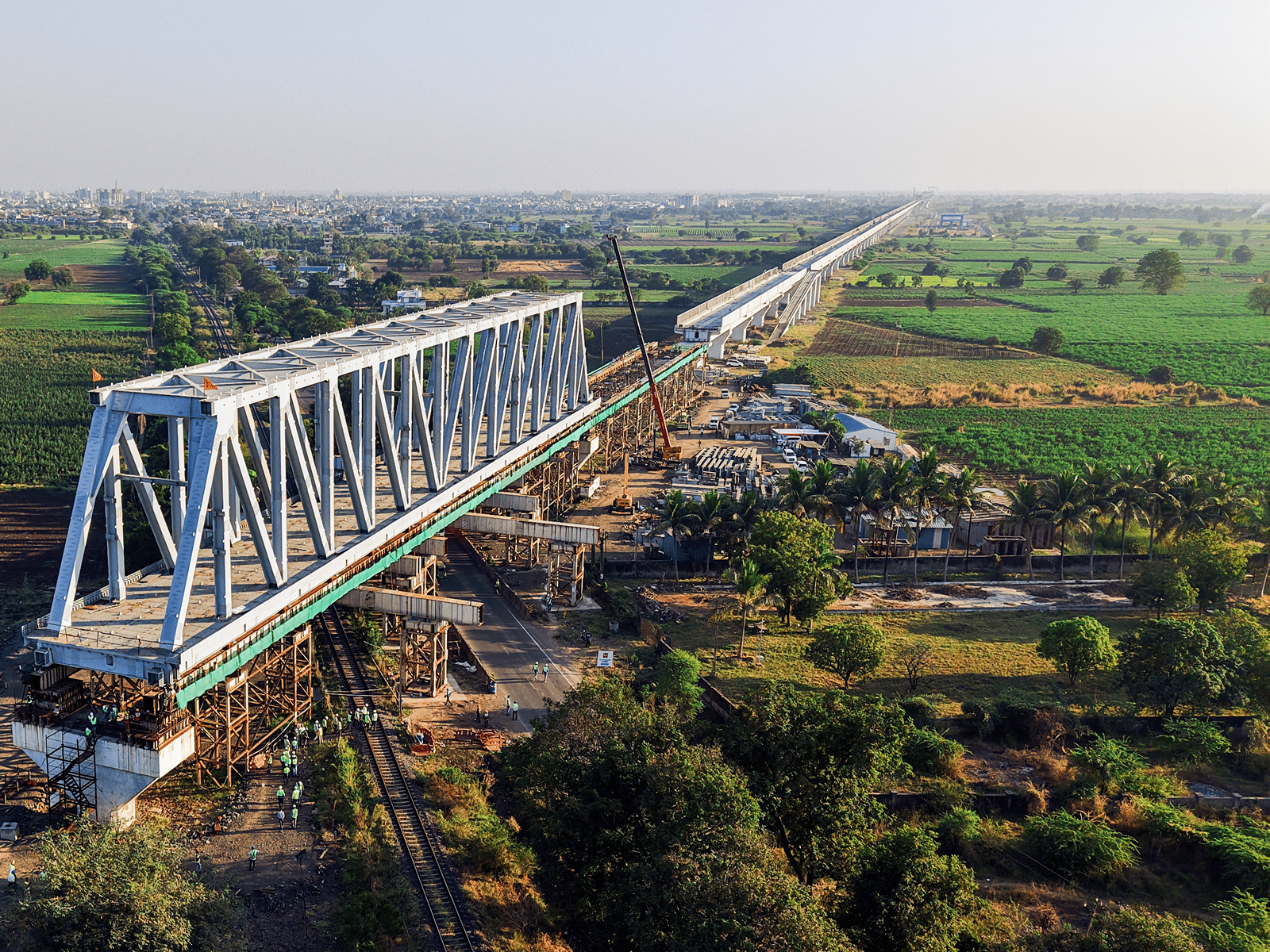
Mumbai-Ahmedabad bullet train project gains momentum with installation of OHE masts
Jan 19, 2026
New Delhi [India], January 19 : The Mumbai-Ahmedabad Bullet Train project is witnessing steady progress with the installation of Overhead Electrification (OHE) masts advancing along the corridor.
This development marks an important step towards enabling electric traction for India's first high-speed rail system and reflects consistent on-ground execution under the 'Make in India' initiative. In doing so, it strengthens domestic manufacturing capabilities while adopting globally proven high-speed rail technology.
Installation of OHE masts is underway across key sections of the alignment, including viaduct stretches, to support safe, smooth, and efficient high-speed train operations. These masts form a critical part of the traction infrastructure required for a reliable power supply to bullet trains running on the corridor.
The OHE masts are being installed on elevated viaducts at significant heights above ground level. In total, more than 20,000 masts, ranging from 9.5 to 14.5 metres, will be installed along the corridor. The masts will support the complete 2x25 kV overhead traction power system, including overhead wires, earthing arrangements, fittings, and other accessories required for bullet train operations.
To ensure uninterrupted traction power, a network of Traction Substations (TSS) and Distribution Substations (DSS) is being developed along the Mumbai-Ahmedabad High Speed Rail corridor.
OHE masts are vertical steel structures installed alongside railway tracks that support overhead electric wires. They maintain the correct height, alignment and tension of the wires, enabling continuous and safe power supply to electric trains.
Once completed, the Mumbai-Ahmedabad Bullet Train will make travel between the two cities faster and more convenient, while improving connectivity across the corridor.
The project is expected to benefit passengers, local economies, and the Indian industry through job creation and strengthened manufacturing. It also marks an important step towards the adoption of advanced rail technology and the development of world-class rail infrastructure in the country.