"National interest will continue to guide our choices": Foreign Secy on reports of India cutting Russian oil imports
Feb 09, 2026
New Delhi [India], February 9 : Foreign Secretary Vikram Misri on Monday said that "national interest" would continue to guide India's energy-related decisions, underlining that the key drivers of the country's energy policy are "adequate availability, fair pricing and reliability of supply", amid reports suggesting New Delhi is cutting its oil imports from Russia.
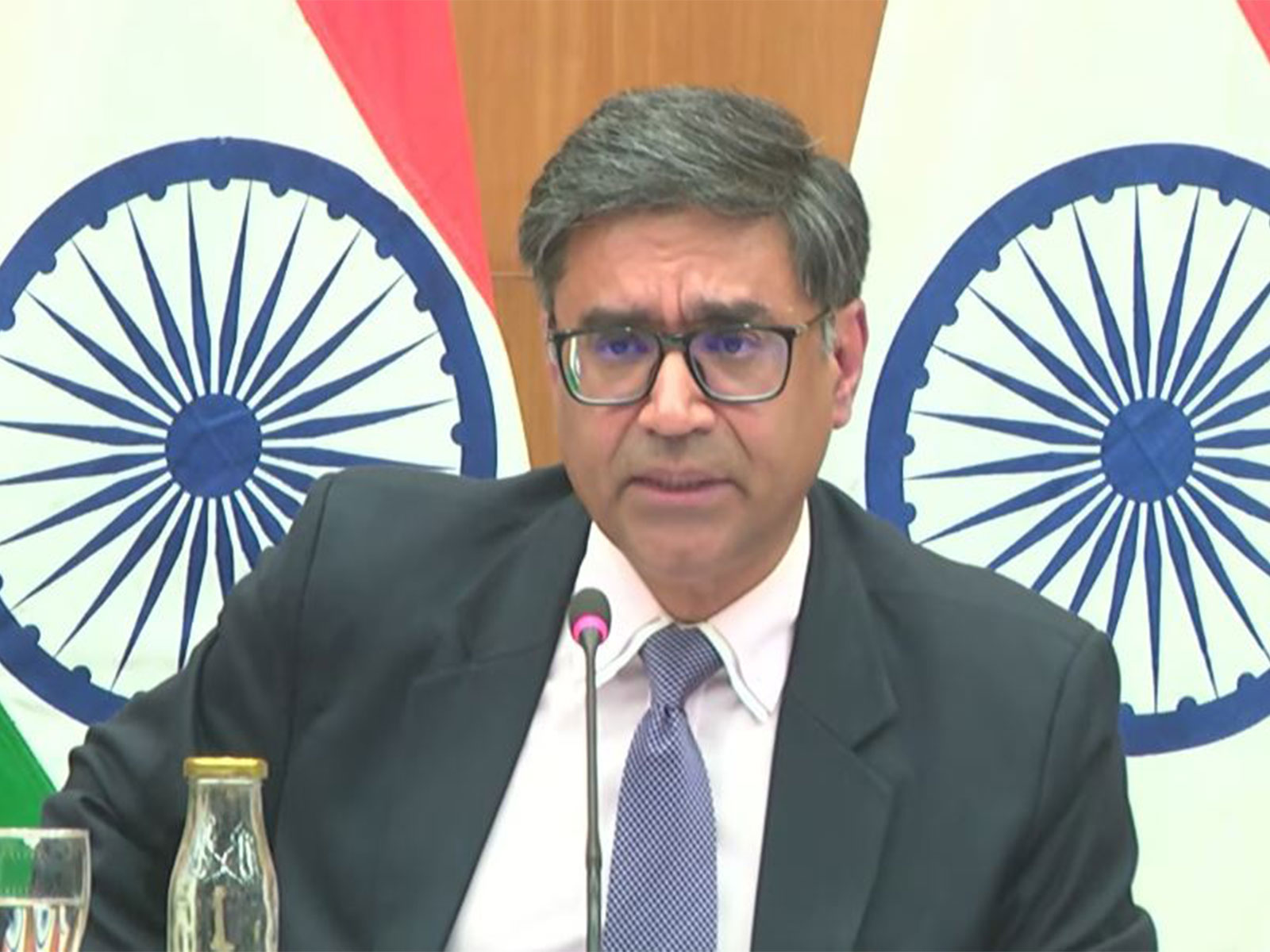
Speaking during a Special Briefing by the Ministry of External Affairs (MEA) here, Misri stated that decisions in the energy sector, whether by the government or businesses, would be guided by national interests, while clarifying the issue of actual sourcing.
Misri clarified that oil companies make procurement decisions based on market conditions, including availability, risk assessment, costs, and logistics, while adhering to internal accountability and fiduciary responsibilities.
"As far as the actual sourcing of energy is concerned, this is undertaken by oil companies, which make decisions based on market conditions. They assess availability, evaluate risks, analyse costs, and follow their internal accountability processes and fiduciary responsibilities. At any given time, there is a complex matrix of considerations, including financial and logistical aspects, that these companies must take into account," he stated.
"What you will continue to see in this sector are business choices being made based on these considerations. Whether it is the government or businesses, national interest will continue to guide our choices," he added.
Misri noted India is a net importer in the oil and gas sector and, as a developing economy, must remain conscious of its resource availability and the impact of import dependence on inflation.
He added that safeguarding the interests of Indian consumers remains a top priority for the government.
"India is a net importer in the oil and gas sector. We are a developing economy and have to be conscious of our resource availability. Naturally, when you are dependent to the extent of 80-85 per cent on imported resources, there is concern about the possibility of inflation driven by import costs. It is therefore not surprising that our foremost priority is to safeguard the interests of Indian consumers as far as energy is concerned," the Foreign Secretary said.
Highlighting the volatility in global energy markets in recent years, the Foreign Secretary said that India, along with many other countries, shares a common interest in stable energy prices and a stable supply, noting India's role as a stabilising factor in global energy markets.
"Our objective is to ensure that they receive adequate energy at the right price through a reliable and secure supply. Our import policy, insofar as energy is concerned, is driven by these objectives," Misri said.
"In recent years, the global economy has faced significant uncertainties, which have had a major impact on the stability of global energy markets. India, along with many other countries, shares a common interest in stable energy prices and a stable supply. I would underline that India is not only one of the largest consumers of energy but also plays an important role as a stabilising factor in global energy markets. That is why we import energy from multiple markets," he added.
Misri emphasised that India does not depend on a single source for its crude oil imports and instead sources energy from dozens of countries.
He also noted that the mix of import sources naturally varies with market conditions.
"The key drivers of our energy policy are adequate availability, fair pricing and reliability of supply. If you look at the data, we import crude from dozens of countries. We do not depend on a single source, nor do we intend to. It is natural for the mix of sources to vary from time to time depending on objective market conditions. Our objective is to maintain multiple sources and diversify them to ensure stability. The more diversified we are in this area, the more secure we are," the Foreign Secretary stated.