New national Research and Development fund will unlock high-risk, high-impact deep-tech innovation: Jitendra Singh
Dec 07, 2025
New Delhi [India], December 7 : India has entered a decisive phase in its evolution from a traditional economy to an innovation-driven nation, and is now shaping global trends in technology driven growth instead of following them, Union Minister of State (Independent Charge) for Science & Technology; Minister of State in the Prime Minister's Office; and Minister of State for the Departments of Atomic Energy and Space, Jitendra Singh said at the 4-day India International Science Festival (IISF).
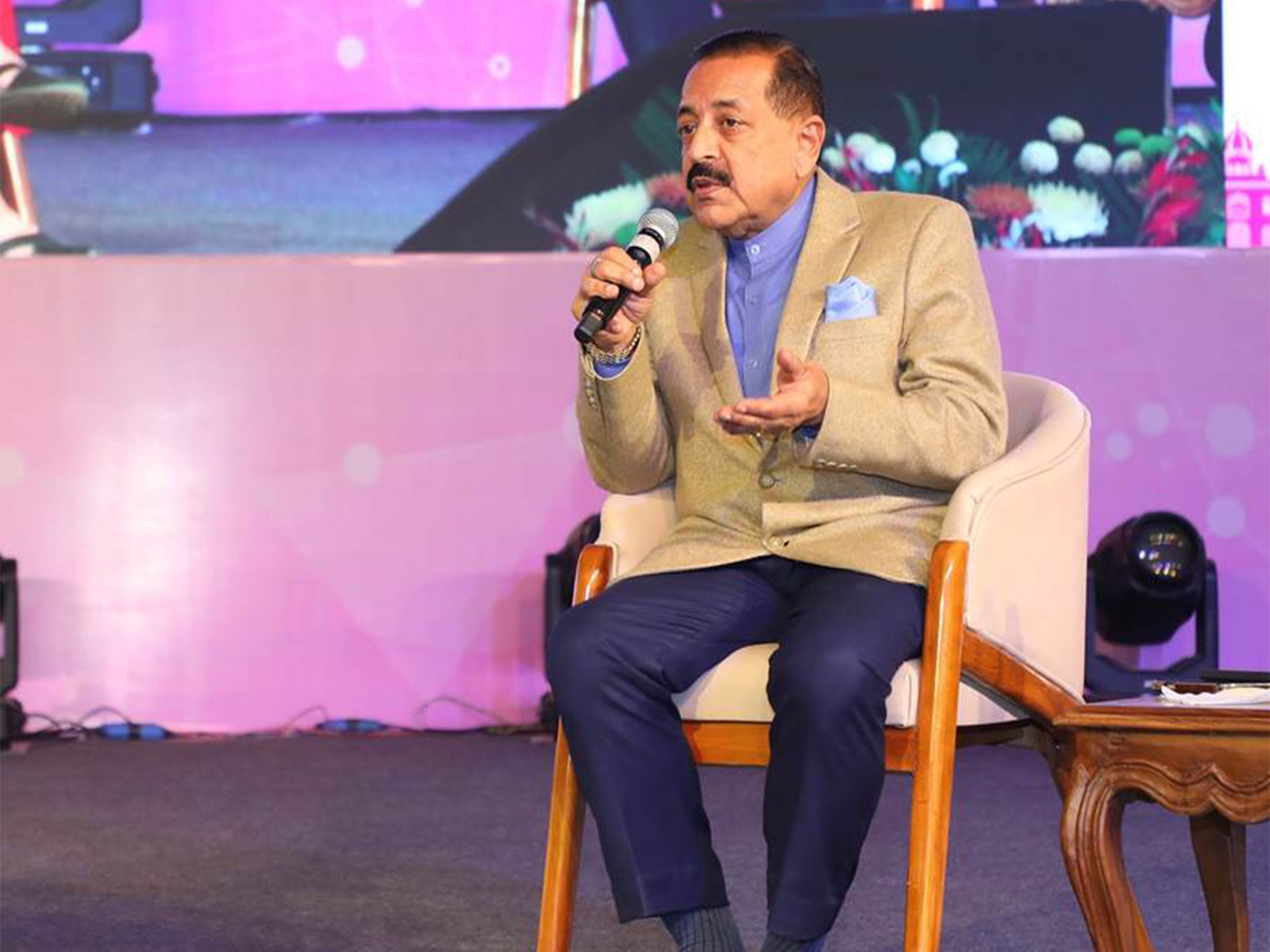
Speaking during a special Fireside Chat at IISF, the Minister said the last decade has brought a fundamental shift in India's scientific temperament, policy direction, and governance approach. He said India's economic growth is now clearly powered by science, technology, research, and innovation, and that the global community increasingly sees India as a source of new models for governance, public service delivery, and technology-led development.
Jitendra Singh said India has never lacked talent, potential or commitment, but what has changed is the quality of political support and the clarity of national purpose. He said India is no longer late to global technological transitions and, in many emerging areas, including biotechnology, nuclear innovation, regenerative sciences and next-generation space technologies, the country is now playing a defining leadership role.
At the festival, the Minister spoke extensively about the launch of the new national R&D fund, calling it a transformative step to unlock high-risk, high-impact innovation. He said this fund will support research and enterprise in sectors that were previously inaccessible to private players, such as space and nuclear energy. He described the initiative as a "catalytic push" designed to help Indian industry build long-term capabilities through low-interest, long-duration financial assistance, enabling companies to scale confidently before they emerge as strong, independent contributors to India's technological rise.
Reflecting on the opening of the space sector, the minister said there was a time when even journalists were not allowed inside the gates of Sriharikota during rocket launches. He said the change brought in under Prime Minister Narendra Modi has resulted in a dramatic expansion, from a handful of players to nearly 400 space start-ups, many of which are now recognised globally. He said India is no longer limiting its space achievements to rocket launches alone, and has created global models for using space technologies in agriculture, healthcare, drinking water solutions and disaster management.
He said the same transformation is visible in the nuclear sector, where innovations are now directly benefiting citizens through cancer care networks, community water purification systems, and other applications. He said India's nuclear and space success stories demonstrate how strategic technologies can profoundly improve ease of living.
Discussing India's growing global stature, Jitendra Singh said that young Indians today enjoy far higher respect abroad than earlier generations. When an Indian professional introduces himself overseas, he said, his credibility in the job market immediately rises, a shift that he described as a "complete reversal" of the situation two decades ago.
He said delegations from countries across regions have visited India in recent months to understand its grievance redressal systems, digital certification mechanisms for senior citizens and other public service innovations, which shows how India has become a creator of globally relevant best practices.
The Minister attributed much of the nation's renewed confidence to the changing work culture brought in over the last decade. He said the government now functions with greater purpose, accountability and responsiveness, and schemes such as Pradhan Mantri Awas Yojana and Ujjwala Yojana represent a new spirit of inclusive democracy where benefits reach citizens without discrimination of caste, religion, or political preference. According to him, this shift has rebuilt trust between the citizen and the state.
The minister also said that India's technological progress is inseparable from the democratisation of opportunity happening across the country. With digital connectivity and affordable information access, youth from small towns and rural districts now compete shoulder-to-shoulder with those from major cities. He said the changing profile of UPSC toppers, from districts such as Poonch, regions near the Punjab-Haryana belt, and other non-metropolitan areas, illustrates this transformation. He described this surge in aspiration from "Bharat" as one of India's greatest strengths.
On the question of how India should measure its innovation progress, Jitendra Singh said the real measure is sustainability. Ideas must translate into viable enterprises with strong industry and market linkages. He said innovation cannot remain confined to idealism; it must also offer dignity, financial security, and a sense of equality in society. He referred to the rise of profitable agri-start-ups, including lavender-based ventures, founded by professionals who left high-pressure corporate jobs to build enterprises that are both meaningful and economically successful.
Looking to the future, Jitendra Singh said India's biggest strength is its talent, cutting across generations. He said space will be one of the areas where India will surprise the world, and predicted that an Indian would set foot on the Moon within the next 15 to 20 years. He said artificial intelligence will rapidly transform everyday life in India if handled responsibly and with maturity. His message to young innovators was straightforward: take risks, seek strong partnerships with industry, and make full use of the linkages and support that the government is offering.
As IISF continues in Panchkula, Jitendra Singh said the purpose of such platforms is to inspire confidence, awaken curiosity and demonstrate India's readiness to lead the global scientific community. He said India stands today in a far stronger, more respected position than at any point in its recent history, and that the coming decade will belong to those who combine scientific imagination with national purpose.