Only God and Trump know when war will begin and end: Ex MoS MEA MJ Akbar over West Asia crisis
Mar 10, 2026
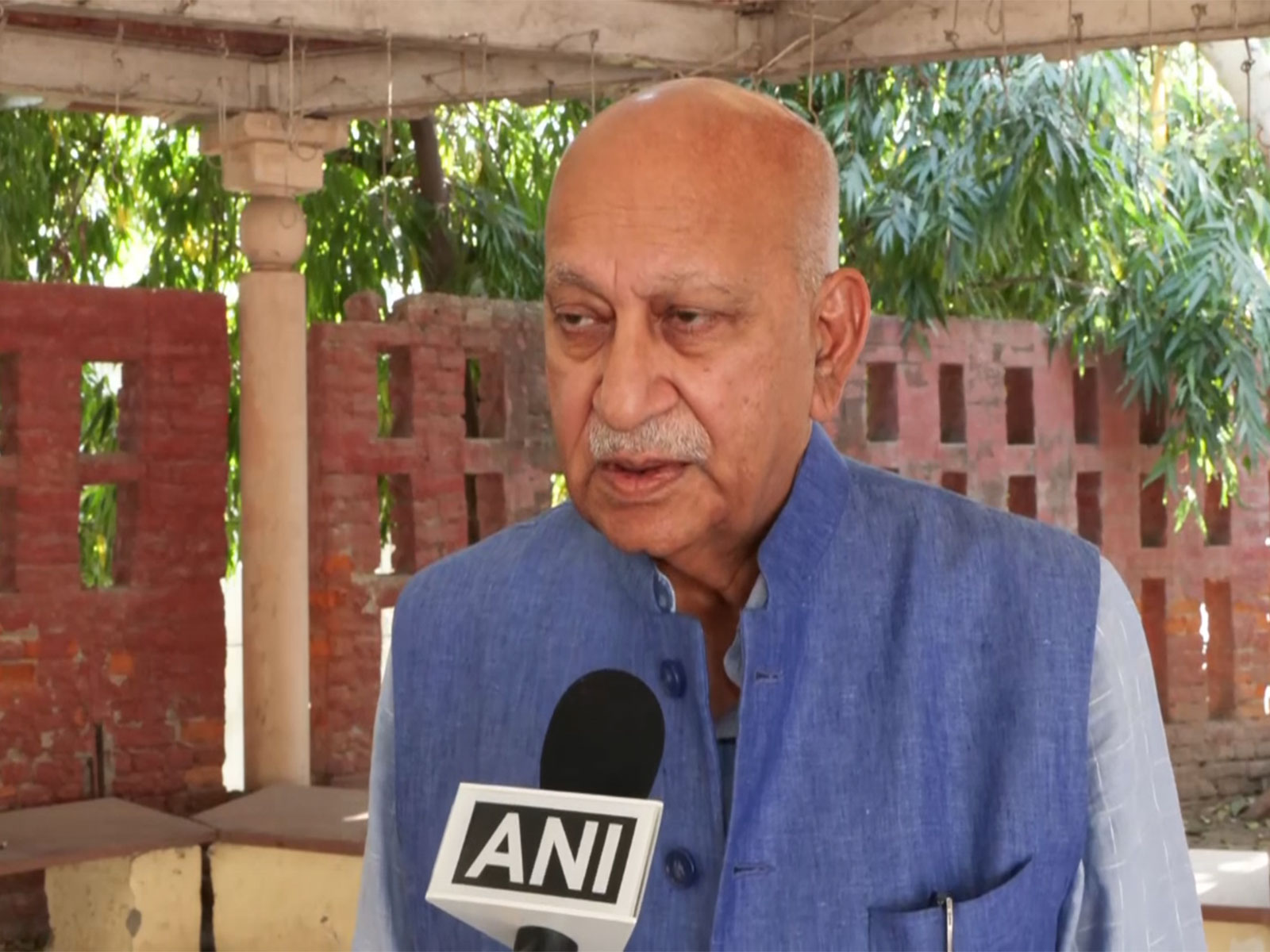
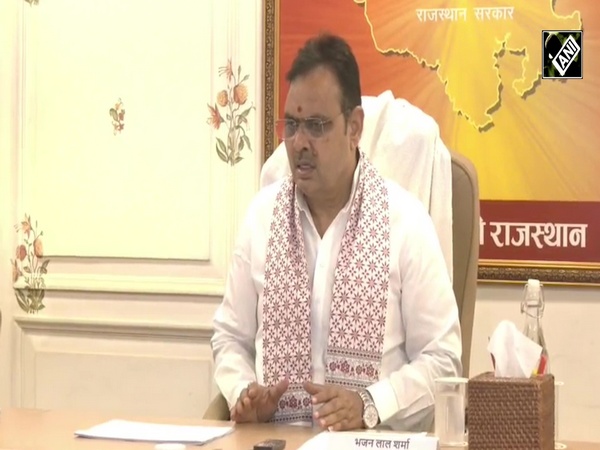
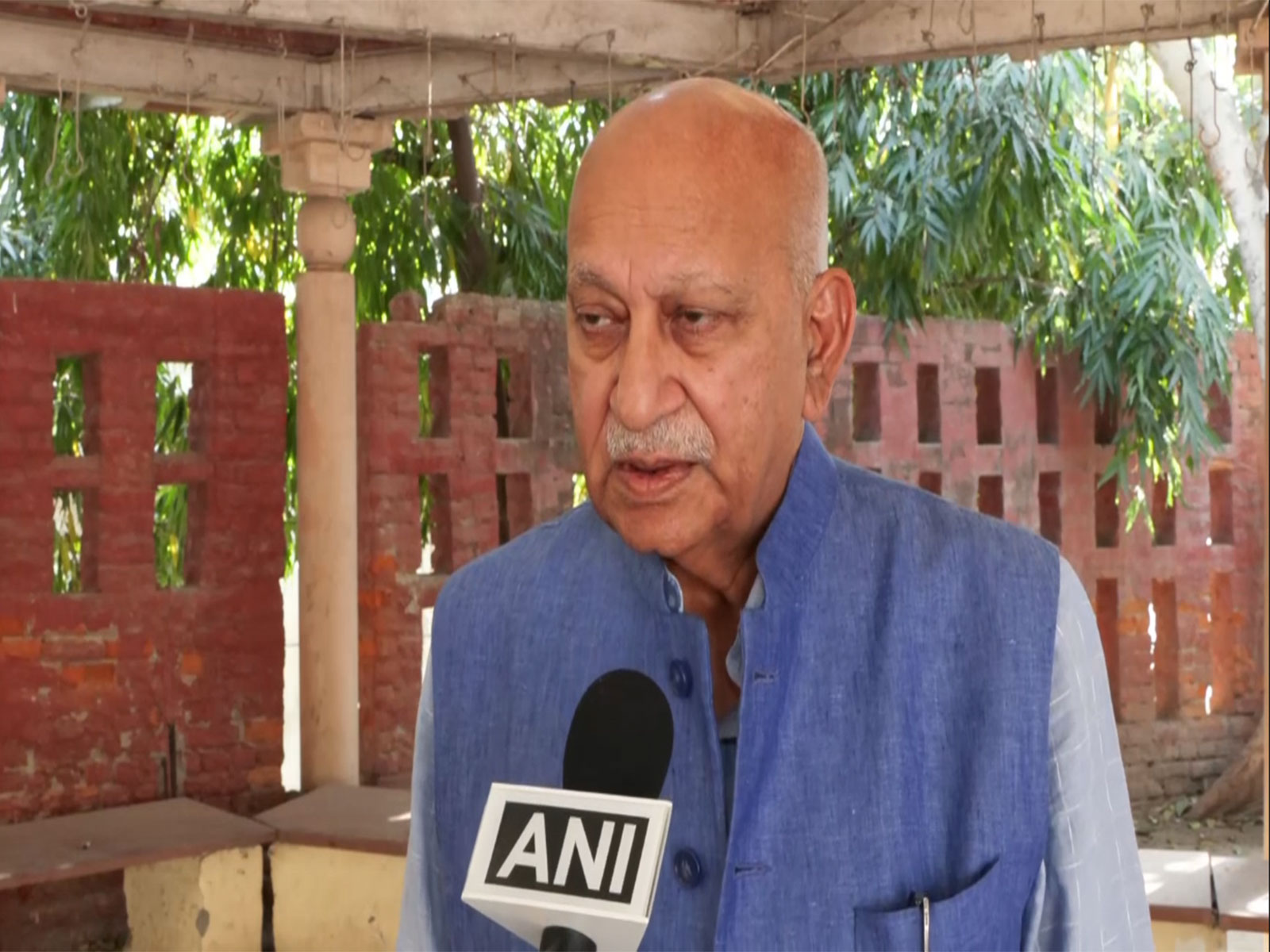
New Delhi [India], March 10 : Reflecting on the West Asia crisis, former Minister of State for External Affairs MJ Akbar said that only God and US President Donald Trump know when the war will end.
Speaking to ANI, he said that Trump's war objectives are shifting, with regime change giving way to regime adjustment, and now potentially targeting Iran's Kharg Island oil hub.
"Well, only God and President Trump knew when the war would begin, and maybe only God and President Trump know when it will end. But a more rational understanding of what has happened and what is likely to happen. I think it can be safely said that President Trump will not want to end the war before he can declare some form of victory. The costs of not being able to do so are very high for him, domestically, internationally, and the credibility of his whole administration and of his whole term in office actually now rests on the outcome of this war," he said.
Akbar argued that President Trump faces high domestic and international stakes and is unlikely to end the conflict until he can demonstrate a clear "American achievement" or victory.
"So the stakes are not only high for him, but also for the rest of the world. It is about as dangerous a game of brinkmanship as we could have imagined at this time of the century. How then would he define victory? He has to show the people of America and everyone else who is interested a very, what could be believed in terms of an American achievement," he said.
Akbar noted that Iran has proven more resilient than some analysts initially anticipated and suggests that the assassination of the Supreme Leader may have inadvertently strengthened, rather than weakened, the clerical regime by turning the leader into a martyr.
"So far in what now has become 10 days of war, the initial American euphoria at the success of the assassination of Ayatollah Khamenei has been tempered by the reality that Iranians have proved that they are not a pushover. They have actually taken some very significant successes. have achieved some significant successes. American bases, their hard missile systems, their radar. American compounds, embassy compounds and so on have the $20,000 Iranian drone is capable of fighting against a million-dollar or three-million-dollar interceptor, far more expensive missiles. The Iranian missiles have also proved to be much more accurate than I think the analysts thought they would. Israel has been repeatedly hit, which means that the much-wanted Iron Dome has been proven to be porous. Iran has not fully deployed its supplementary resources. The Houthis still have not entered the war. So I think they've also taken some, shall we say, measures to ensure that they don't run out of steam," he said.
He speculated that targeting specific strategic locations, such as Kharg Island (an oil hub), might be considered as an objective to define success.
"But realistically, what could Washington define as a victory? There is an island just off the Iranian coast in the Persian Gulf, Kharg Island. It is the oil hub of Iran. That's from there. Their supplies go into the well-known narrow Hormuz Strait, which is very vulnerable to attack and which, as you know, controls 20 per cent of the world's energy supplies from Qatar, from the Gulf, and so on. Everybody knows what. President Trump himself has said that he's not ready for an eternal war, he's not ready for a multi-year war, and boots on the ground is not on the agenda," he said.
"But I suspect that you might hear more about Kharg Island because that is where the Americans could put boots on the ground to capture that island, declare that to be sufficient as a victory, say that they have a parallel operational base in the very sensitive Persian Gulf, right? And say that, all right, our war objectives have been achieved," he added.
He further said that as the US is not able to fulfil its initial objective of regime change, it is tailoring them further.
"The initial war objective was, as was mentioned by the White House, the initial war was regime change. They have realised that regime change was not possible. They changed that to a regime adjustment. Even that did not go as far the expectations because the Iranians have now selected Mojtaba Khamenei as their supreme leader, which is not on who is not on the approved list of the White House," he said.
Akbar then said that the leadership of Iran is being carefully examined by the US.
"I say approved list advisedly because President Trump himself has said that he would like one of his chosen few to be selected. Having gone through that, now they have to find a third definition of victory. And I suspect that this could be something that is being examined carefully by the Pentagon right now," he said.
Akbar further said that the cost of simply walking away from an unresolved conflict would be a price too high in political terms for Trump.
"You know, when the ground shifts beneath your feet, you have to shift also to remain steady. So the shifting patterns of American war objectives prove also that they have to now readjust to new realities that have emerged from the conflict. And when I mentioned Kharg Island, it was I was going to I was actually putting in place a potential new reality as a war objective. As I said, the cost of simply walking away from an unresolved conflict would be a price too high in political terms for President Trump," he said.
Akbar then said that the determination of the ceasefire is in the hands of America, not even Israel.
"The determination of the end or ceasefire is in the hands of America. Even Israel really is not in a position to persuade. It is President Trump who will define when this fire will cease or pause. The Arab nations of the Gulf are collateral damage. The Iranians did mention before the war began that if anything happened to the Imam, then all American allies would also have to pay a price. So they made it very clear, and the price today is evident in the destabilisation and the fact that, most importantly, the most valuable targets and bases of America are being hit. And there is debris which is now affecting the regions inevitably. So far, at least, there is no evidence that the Iranians have tried to target civilian areas. But as I said, there are no certainties in war, and collateral damage can't be ruled out," he said.
He highlighted that the conflict is creating a dangerous environment of brinkmanship. For India, he emphasised vulnerability regarding energy security, specifically the potential for supply chain disruptions in Liquefied Natural Gas (LNG) from Qatar if the Strait of Hormuz remains constrained, though he expressed confidence in the long-term resilience of the Indian economy.
"India is like the rest of the world, vulnerable to any choke in the energy supply lines. Our LNG comes from Qatar primarily. So if the Strait of Hormuz is closed for Qatar shipping as it is just now, then obviously, there will be an impact on availability. And I'm sure the government is fully aware of the potential crisis," he said.
Akbar noted India's economy is resilient but warns of potential pain.
"The first great energy crisis was after OPEC raised their prices in 1972. And in 1973, the world economy was badly affected. It had to readjust to new price levels and so on. The Indian economy is very badly hurt. And the impact was visible on the Indian street. Then, people who were hurt by the economy bring out all sorts of other problems and frustrations. And people came out on the street," he said.
"This time around, I believe that the Indian economy is far more resilient. The Indian government is far more prepared. But that doesn't mean that we can escape pain. There will be pain. It will test our resilience. But I'm quite certain that there will not be any long-term damage to Indian," he added.
Meanwhile, Trump on Tuesday warned Iran against attempting to disrupt global oil supplies, saying Washington would respond with overwhelming force if Tehran tried to interfere with energy shipments through the strategically vital Strait of Hormuz.
As of March 10, 2026, the conflict is in its second week. While U.S. President Donald Trump has made statements suggesting the military campaign is largely "complete" in terms of neutralising specific Iranian military capabilities, he has not yet declared the mission fully accomplished or announced a ceasefire, emphasising that the U.S. has not yet "won enough."
The conflict has expanded beyond Iran, with Iranian retaliatory strikes--using missiles and drones--targeting U.S. military bases, embassies, and civilian/energy infrastructure in neighbouring Gulf nations, including the UAE, Saudi Arabia, Qatar, Kuwait, Bahrain, and Jordan.
The conflict has caused significant disruptions to global energy supplies, particularly around the Strait of Hormuz, where approximately 20% of the world's oil transits.