Only Hindus, Buddhists and Sikhs can claim Schedule Caste status: Supreme Court
Mar 24, 2026
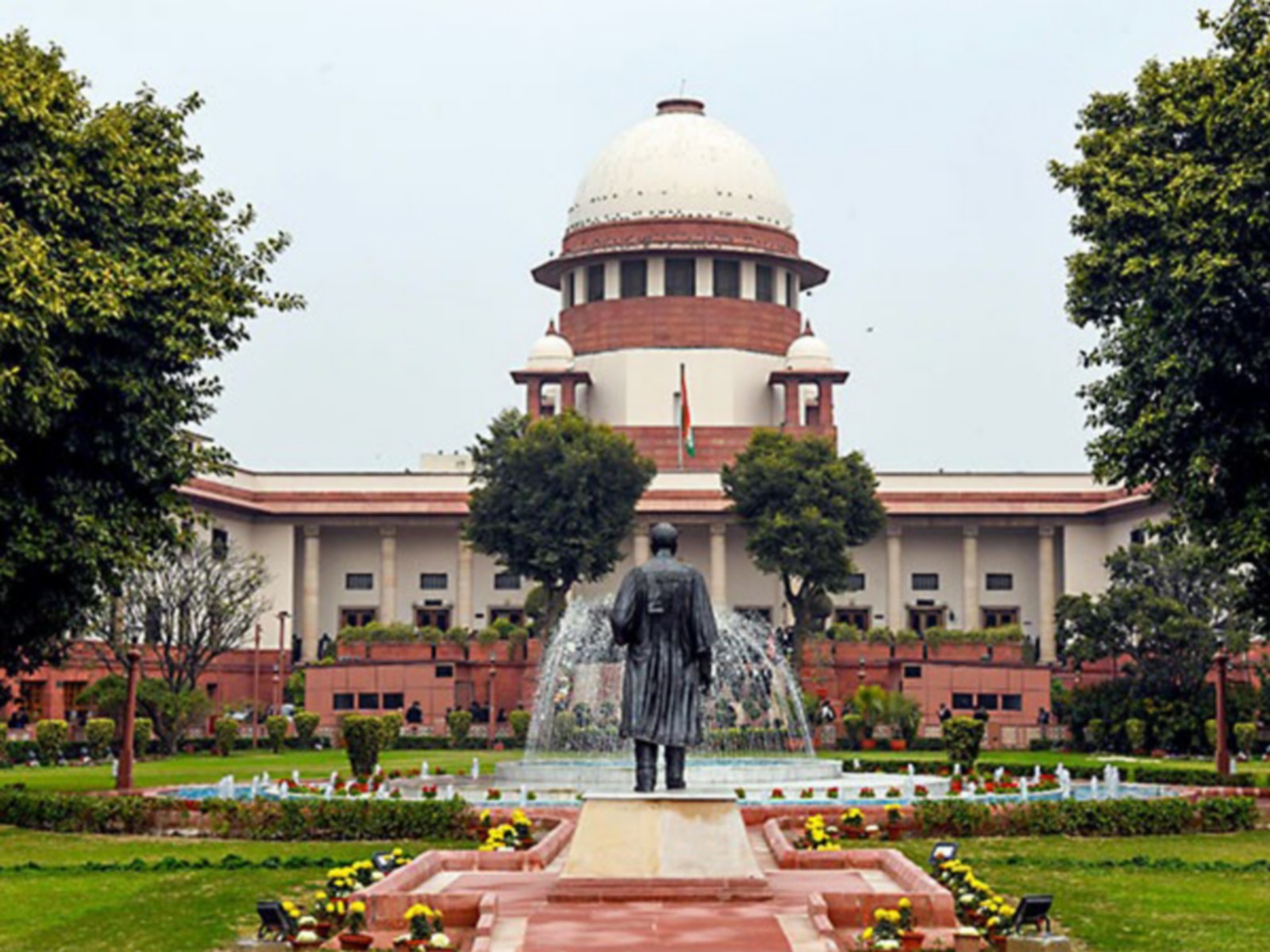
New Delhi [India], March 25 : The Supreme Court on Tuesday ruled that only Hindus, Sikhs or Buddhists can claim the status of a Scheduled Caste person as per the Constitution (Scheduled Tribes) Order, 1950 and the rule is absolute.
A bench of Justices PK Mishra and NV Anjaria upheld an Andhra Pradesh High Court ruling that had quashed criminal proceedings against six persons accused of caste-based abuse under various provisions of the SC/ST (Prevention of Atrocities Act) and the Indian Penal Code (IPC) holding that the appellant (complainant) cannot claim protection under the SC/ST Act since he had been openly professing Christianity and working as a Pastor for about a decade.
The High Court was of the view that Christianity does not recognise the caste system and that a person who has converted and continues to actively work as a Pastor and professes Christianity, cannot, in law, claim protection under the SC/ST Act.
"At the very outset, it must be unequivocally stated that the offences registered under the SC/ST Act against respondent nos. 2 to 7 at the instance of the appellant cannot be sustained. Having already held that the appellant ceased to be a member of the Scheduled Caste community upon his conversion to Christianity, he cannot subsequently invoke the provisions of the SC/ST Act. The said statute is a special legislation enacted with the avowed object of preventing atrocities against the members of the Scheduled Castes and Scheduled Tribes, and once the foundational requirement of caste status stands extinguished, the statutory protection thereunder is no longer available. Therefore, we are of the view that the High Court was right in holding that the appellant has ceased to be a member of the Scheduled Caste on his conversion to Christianity. Accordingly, the appellant cannot be a person aggrieved under the SC/ST Act", the Supreme Court noted.
The apex court found that the complainant in the present case was originally born into the Madiga community, which is a Scheduled Caste community. But, it also noted that the complainant had openly and undisputedly embraced Christianity.
However, it ruled that after having converted to Christianity, the complainant lost his status as a member of the Scheduled Caste.
"Once the appellant converted to Christianity, the caste status, which he earlier enjoyed as a member of the Madiga community, stood eclipsed in the eyes of law," the Court stated.
Building on this reasoning, the Court laid down a set of governing principles (postulates) to determine when a person can claim Scheduled Caste (SC) or Scheduled Tribe (ST) status.
The Court clarified that a person must clearly establish, through cogent and unimpeachable evidence, that they belong to a caste or tribe specifically notified under the Constitution (Scheduled Castes) Order, 1950 or the Constitution (Scheduled Tribes) Order, 1950.
It underscored that the restriction under Clause 3 of the Constitution (Scheduled Castes) Order, 1950 is absolute - only persons professing Hinduism, Sikhism or Buddhism can be recognised as Scheduled Castes. Conversion to any other religion leads to an immediate and complete loss of SC status, irrespective of birth, and such a person cannot claim any reservation, protection, or statutory benefit linked to that status, the Court noted.
The Court further held that a person cannot simultaneously profess another religion and claim Scheduled Caste status, as the two are legally incompatible and mutually exclusive under the constitutional scheme.
To validate claims of SC/ST status in cases where the claimants have reconverted (back to SC/ST community status) the Court laid down a strict three-fold test: the individual must prove original membership of a notified Scheduled Caste, demonstrate genuine and complete reconversion with actual adherence to the original religion's practices and establish acceptance by the concerned caste community. All three conditions are mandatory, and the burden of proof lies entirely on the claimant.
The judgment also clarified that once SC status is lost due to conversion, all associated statutory benefits and protections automatically cease.
With respect to Scheduled Tribes, however, the Court drew a distinction, noting that the Constitution (Scheduled Tribes) Order, 1950 does not impose a religion-based bar. Instead, ST status depends on the continued existence of tribal characteristics such as customs, social organisation, and community recognition. Conversion alone is not; what matters is whether the person remains integrated with, and accepted by, the tribal community.
Applying these principles to the present case, the Court noted that the appellant, though born into the Madiga Scheduled Caste, had converted to Christianity and never reconverted or rejoined the community. On the contrary, he continued to profess Christianity and serve as a Pastor, thereby losing his Scheduled Caste status in the eyes of law and rendering his claim under the SC/ST Act unsustainable. Thus, it upheld the Andhra Pradesh High Court ruling and rejected the appeal.