Pakistan accused of managing extremist networks rather than dismantling them
Jan 20, 2026
Athens [Greece], January 20 : Pakistan has developed a systematic model of managing extremist networks rather than dismantling them, according to an analysis by Greek lawyer, journalist and South Asia specialist Dimitra Staikou, published by EuropaWire (EW), Europe's first pan-European newswire service provider.
In the article titled "Pakistan: When the State Does Not Fight Terrorism, but Manages It," Staikou argued that Pakistani state institutions have provided political cover and indirect material support to internationally designated militant groups, allowing them to remain operational while avoiding formal international accountability.
The analysis cited documented cases involving UN-designated organisations, including Lashkar-e-Taiba (LeT) and Jaish-e-Mohammad (JeM), asserting that their leadership, infrastructure and mobilisation activities continue to function openly despite international sanctions.
One example highlighted was the reconstruction of the Markaz Syedna Bilal complex in Muzaffarabad in Pakistan-occupied Jammu and Kashmir (PoJK), a site previously identified as a JeM training facility and targeted during a military operation.
According to the article, the reconstruction was publicly presented as a development initiative and was attended in October 2025 by Pakistani Federal Minister Rana Muhammad Qasim Noon, senior officials and leaders of the Pakistan Muslim League (N).
Staikou described the project as a political signal of rehabilitation rather than a neutral rebuilding effort.
The article also raised concerns about the institutionalisation of ideological indoctrination, pointing to publicly announced Daura-e-Tarbiyah (ideological training) seminars.
Citing open-source material, Staikou noted that JeM organised a seven-day training camp in Quetta, Balochistan, from December 5 to 12, 2025, describing it internally as a structured ideological phase preceding militant training.
The public nature of such events, she argued, suggested deliberate non-intervention by state authorities.
According to the analysis, extremist networks have also gained political legitimacy through their transformation into formal party structures.
Staikou pointed to the Pakistan Markazi Muslim League (PMML), widely viewed by analysts as a political front for Lashkar-e-Taiba.
PMML contested Pakistan's 2024 general elections, and senior LeT figures, including Hafiz Talha Saeed, were reported to have participated openly in party activities throughout 2025, despite US and UN sanctions.
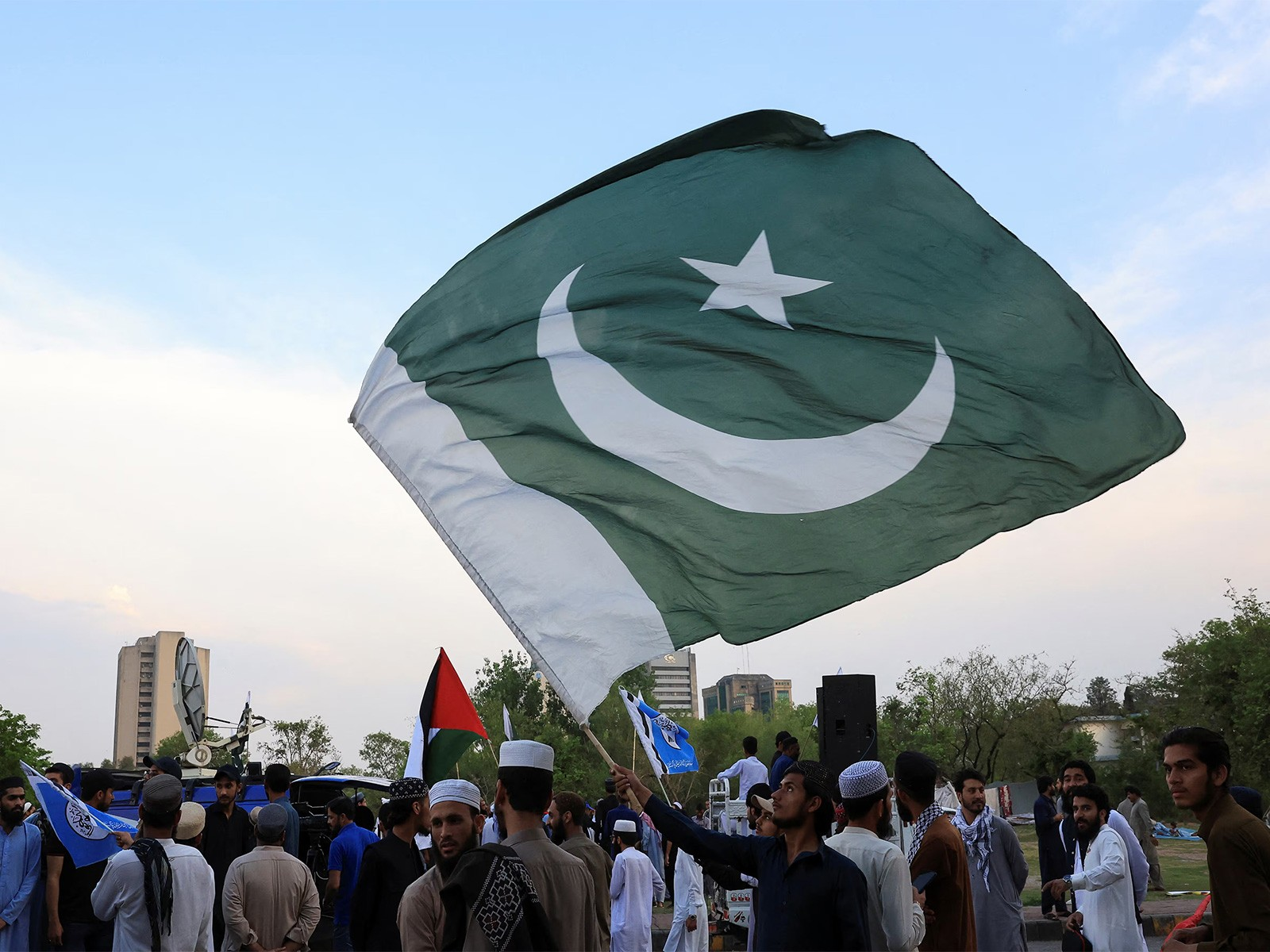
Public rallies were described as another element of normalisation.
Staikou documented events in which speeches praised Osama bin Laden, referenced Al-Qaeda ideology and featured armed militants on stage, often under the presence or protection of state security forces.
One such rally took place on September 14, 2025, in Garhi Habibullah, Mansehra (Khyber Pakhtunkhwa).
Another occurred in Karachi on August 14, 2025, where LeT figures reportedly led a public march with visible police security.
Beyond Pakistan's borders, the article warned that this approach has regional and global implications.
Staikou argued that Pakistan's expanding defence and security ties with Middle Eastern and Southeast Asian states, including Saudi Arabia, Turkey, Malaysia and Indonesia, risk exporting the consequences of this strategy beyond South Asia.
Since 2025, these relationships have reportedly deepened through joint military exercises, defence-industry cooperation, intelligence sharing and naval coordination.
This, the analysis said, has contributed to the gradual normalisation of Pakistan as a security partner despite its documented links to extremist networks.
The European Union was identified as particularly exposed to the fallout, facing pressures linked to radicalisation, irregular migration and extremist financing networks, in which Pakistan was described as a central node.
Staikou argued that this normalisation weakens mechanisms such as the Financial Action Task Force (FATF), while facilitating the transfer of ideological and organisational practices into Europe.
The article also noted concerns for China, citing potential instability along trade and energy corridors.
It also flagged concerns for the United States, which was portrayed as increasingly wary that Pakistan's emerging security alignments could undermine deterrence and regional stability in both the Middle East and the Indo-Pacific.
Staikou contrasted Pakistan's approach with the case of Abdullah Ocalan, whose imprisonment was presented as an example of a state drawing a clear legal and political boundary against armed movements.
By comparison, she argued, Pakistan's integration and repurposing of extremist actors turns violence into an accepted political instrument.
"When a state chooses to manage terrorism instead of dismantling it," the analysis concluded, "the problem no longer concerns that state alone, but the international system that tolerates this strategy."