Parliament passes SHANTI Bill, Atomic Energy Regulatory Board to have statutory status
Dec 18, 2025
New Delhi [India], December 18 : Parliament on Thursday passed a bill that seeks to increase the share of nuclear energy in the total energy mix of India, facilitate innovation in nuclear science and technology and provides statutory status to the Atomic Energy Regulatory Board.
The Sustainable Harnessing and Advancement of Nuclear Energy for Transforming India Bill, 2025 (SHANTI Bill) was passed in the Rajya Sabha, a day after it was passed in Lok Sabha.
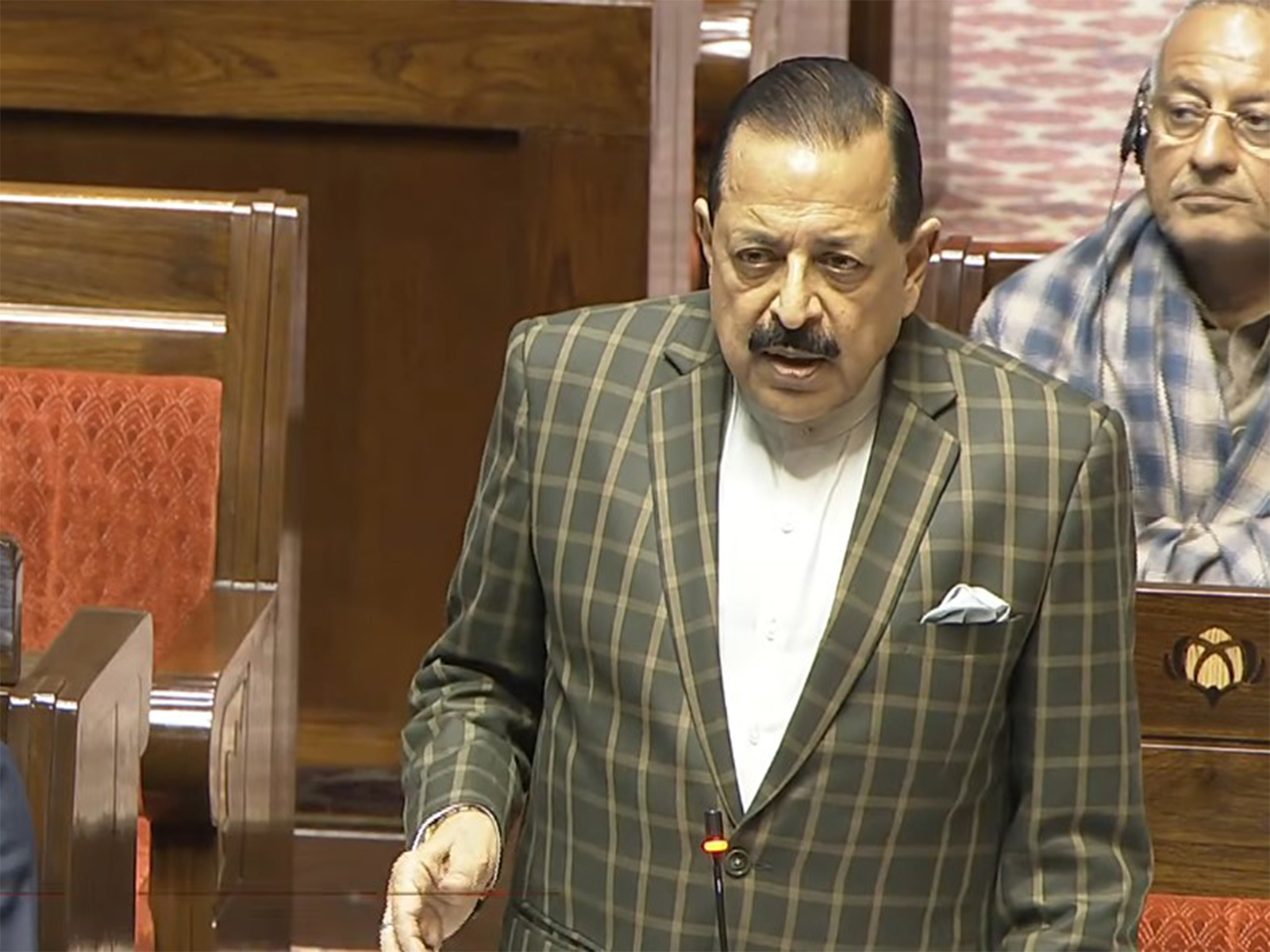
In his reply to the debate, Science and Technology Minister Jitendra Singh sought to allay the apprehensions of opposition members and said safety aspect has not been diluted.
The bill seeks to repeal the Atomic Energy Act, 1962 and the Civil Liability for Nuclear Damage Act, 2010.
Jitendra Singh said the new legislation is aligned to achieve the objectives of increasing the share of nuclear energy in the total energy mix of India, will facilitate innovation in atomic science and technology, expand its applications to non-power applications and continue to honour India's obligations towards safety, security, safeguards and towards nuclear liability.
India has set an ambitious target to achieve energy independence with a roadmap for decarbonisation of the economy by 2070 and to achieve 100 Giga Watt of nuclear power capacity by 2047.
The bill seeks to leverage the contribution of domestic nuclear energy to augment the global nuclear energy ecosystem.
Opposition members strongly demanded that the bill be referred to the standing or select committee, stating that it has wide-ranging implications and its impact will be felt for decades. They alleged that the government had diluted the liability clause and asked whether it was bringing the bill under any pressure. The amendments moved by the opposition members were negatived.
Jitendra Singh said that wide consultations were held before framing the bill.
"Jairam Ramesh ji started his intervention with a suggestion that when the rules are framed, the views of others and all stakeholders should be taken into consideration. I have no hesitation to say that the bill has taken one year or so, or more than that, with very serious and multiple considerations, consultations at different levels inter-ministerial levels, sectoral level--with industry leaders, scientific experts, business potential partners, and even the startups. So all sections of stakeholders have been involved, and the process is continuing because it is a new experience for us (government) also," he said.
The minister said the bill is a part of India's larger nuclear energy ecosystem which includes small modular reactors.
He said there is Rs one lakh crore RDI fund to encourage private-sector participation in research and development initiatives.
The bill opens the atomic energy sector to private players. Jitendra Singh had on Tuesday replied to the debate in the Lok Sabha on the bill and said it seeks to modernise India's nuclear framework in line with contemporary technological, economic and energy realities, while retaining and strengthening core safety, security and regulatory safeguards that have been in place since the Atomic Energy Act of 1962.
He underlined that safety norms, security controls over fissile material, spent fuel and heavy water, and periodic inspections remain firmly under government oversight, regardless of private participation. The Minister clarified that private entities will not have control over sensitive materials, and that spent fuel management will continue to be handled by the government, as has been the practice for decades.
On liability, the Minister said the Bill does not dilute compensation to victims. He noted that operator liability has been rationalised through graded caps linked to reactor size to encourage newer technologies such as small modular reactors, while ensuring that full compensation is available to affected persons through a multi-layered mechanism.
He said this includes operator liability, a proposed government-backed Nuclear Liability Fund, and additional international compensation through India's participation in the Convention on Supplementary Compensation. The Minister maintained that supplier liability was removed after detailed consideration of global practices and advances in reactor safety, while negligence and penal provisions remain enforceable under the law.
He also rejected the view that the Bill signals a retreat from public sector capability and said there has been nearly 170 per cent increase in the Department of Atomic Energy's budget over the past decade and a doubling of installed nuclear capacity since 2014.
He said India's nuclear contribution to the energy mix remains modest compared to global peers, and scaling it up is essential to meet rising demand from sectors such as data processing, healthcare and industry, alongside renewables.
The Bill, he added, enables responsible private and joint-venture participation to bridge resource constraints, shorten gestation periods, and support the national goal of 100 GW of nuclear capacity by 2047, without compromising national security or the public interest.
The Minister noted that nuclear energy has applications beyond power generation, including cancer care, agriculture and industry, and the Bill, for the first time, explicitly recognises environmental and economic damage within the definition of nuclear harm.
He said the bill aims to create an enabling ecosystem for clean, reliable energy as India approaches the centenary of Independence, while upholding its long-standing commitment to the peaceful use of atomic energy.
In his remarks, Jairam Ramesh said that India has made a lot of progress in peaceful use of atomic energy and was operating nuclear reactors of various sizes.
He said that Indian private players should be encouraged to capitalize and build on India's own strengths and not look towards foreign companies.