Plea in SC seeks to quash Banthiya Commission report for failing to consider political reservation in LBs; SC issues notice to Maharashtra
Jan 27, 2026
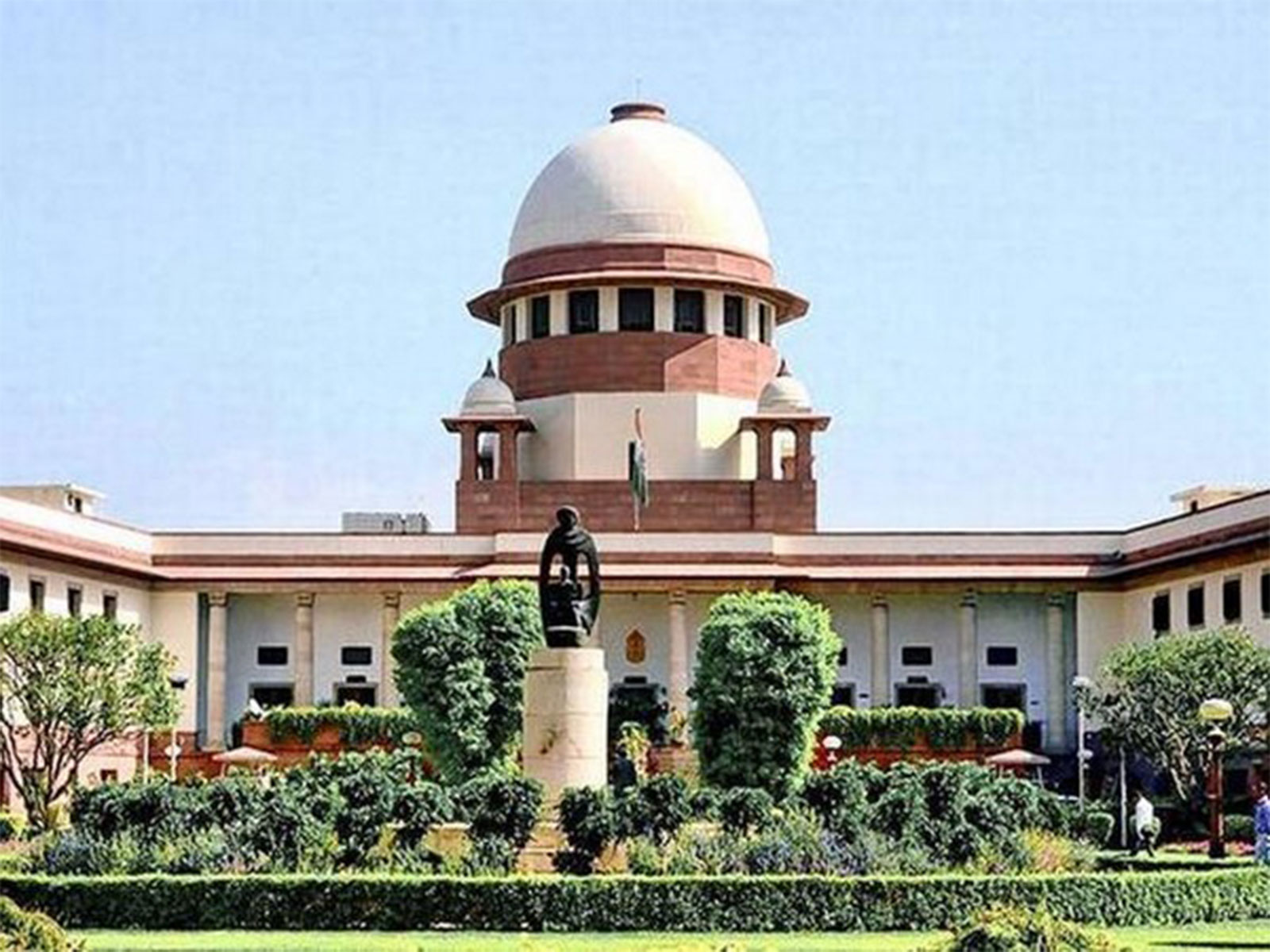
New Delhi [India], January 27 : The Supreme Court on Tuesday sought the Maharashtra government's response to a plea challenging the legality of the Banthiya Commission report and seeking to quash the same on the grounds that it fails to provide political reservation to the "backward class" in the Local Bodies.
The plea filed by Youth For Equality Foundation also seeks directions to the Maharashtra government to form a new dedicated commission to conduct an empirical study on political backwardness in all local bodies in the State and to identify politically backward classes in terms of Articles 243D (6) and 243T (6) (provisions mandating reservations for backward castes/women in Panchayat and Local Body elections) of the Constitution of India.
After hearing submissions by Senior Advocate Gopal Sankarnarayanan appearing for the petitioner organisation today, a bench led by the Chief Justice of India (CJI) Surya Kant issued notice to the Maharashtra government.
The plea has alleged that the Maharashtra government granted these reservations without conducting the mandatory empirical inquiry into political backwardness and without satisfying the Triple Test laid down by this Court in the case of K. Krishna Murthy v. Union of India.
A constitution-bench in K Krishna Murthy held that reservations in local bodies under Articles 243-D and 243-T are constitutionally distinct from reservations in education and employment, as political backwardness is different from social or economic backwardness.
To ensure that such reservations are constitutionally valid, the Court laid down a mandatory 'Triple Test' which mandates that the State must appoint a dedicated commission to conduct a rigorous empirical inquiry into political backwardness, determine the extent of reservation for each local body based on actual under-representation and ensure that total reservation does not exceed 50 per cent of seats.
The plea contends that instead of undertaking a fresh and contemporaneous study, the Maharashtra government relied mechanically on pre-existing Social and Economic Backwards Classes/Other Backwards Classes data and the 2022 Banthia Commission Report.
Thus, it is argued that the Maharashtra government, in violation of settled constitutional law, wrongly equated political backward classes (PBCs) with socially and educationally backward classes (SEBCs).
"The Commission erroneously relied on (i) voter lists and (ii) State and Central SEBC/OBC lists as a baseline without conducting an independent analysis of political representation. This mechanical adoption is fundamentally flawed and ignores the fact that barriers to political participation differ fundamentally from barriers to education or employment, as held by this Hon'ble Court," the plea stated.
"Besides, the methodology of using voter lists to conflate surnames with caste membership is wholly arbitrary, unscientific and unconstitutional and completely overlooks the fact that surnames are not a definitive or legal proxy for a "backward class", leading to skewed and unreliable estimates, it added.
Moreover, the petition underlines that the Banthiya Commissions' recommendation to de-reserve 33,834 seats in the States' Local Bodies is based on an incorrect identification of beneficiaries and could result in potential disenfranchisement of historically marginalised groups.