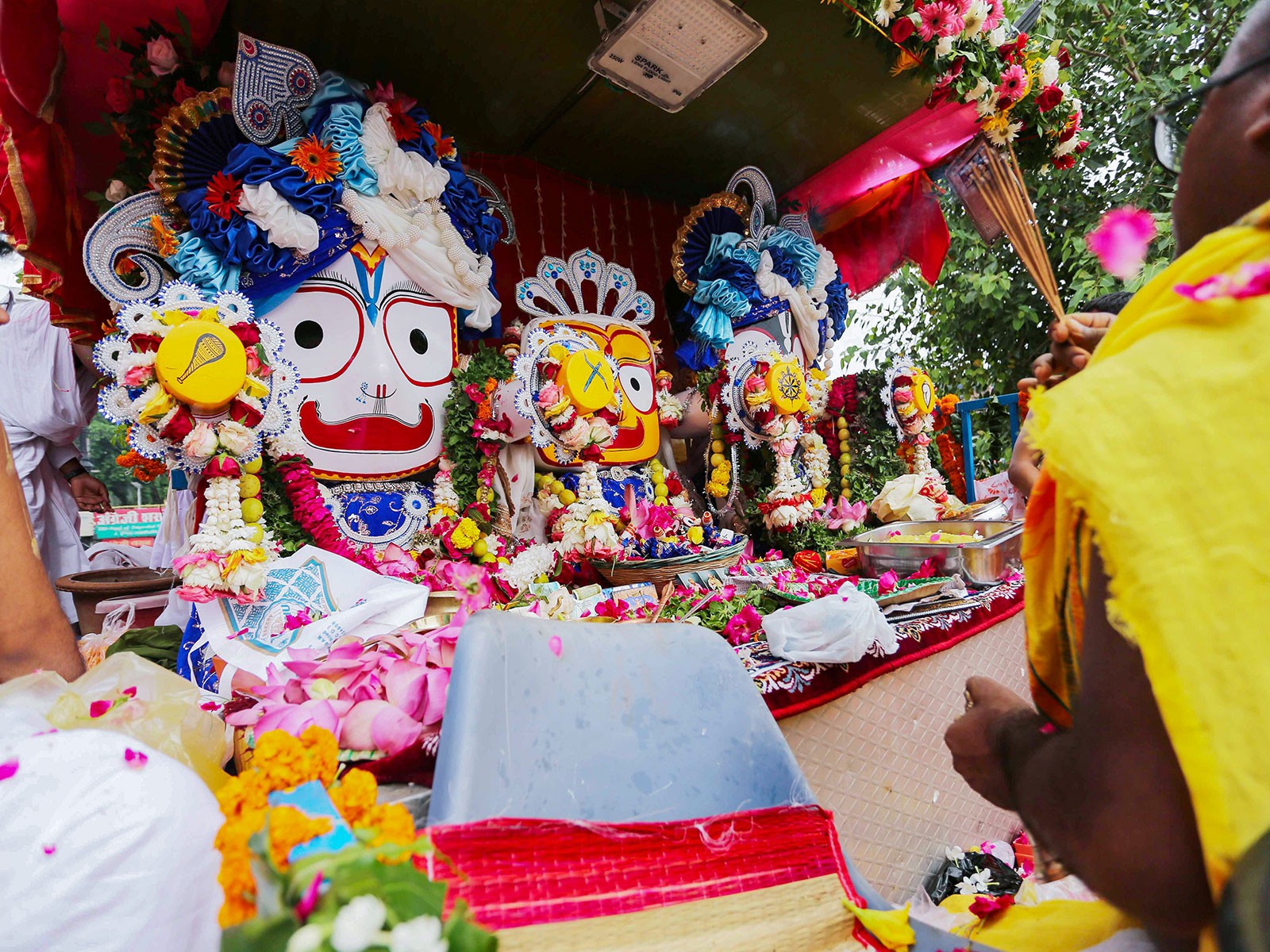
Poda Pitha: The traditional bhog offered to Lord Jagannath at Mausi Maa Temple during Bahuda Yatra
Jul 23, 2026
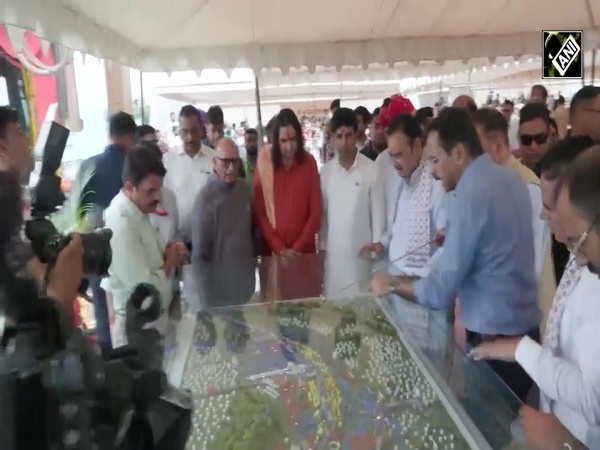
Puri (Odisha) [India], July 23 : Devotees gathered at Adapa Mandapa for the final darshan of Lord Jagannath, Lord Balabhadra and Maa Subhadra ahead of the Bahuda Yatra scheduled for July 24.
As part of the rituals associated with the Bahuda Yatra, Poda Pitha, a traditional delicacy deeply associated with devotion and motherly love, is offered as bhog to Lord Jagannath when the three chariots pass the Mausi Maa Temple on Bada Danda.
The offering is considered a symbol of affection and reverence during the return journey of the deities.
According to the Skanda Purana, during the great deluge at the beginning of creation, Maa Mausi Maa consumed half of the rising waters. As she absorbed the waters of the deluge, she came to be known as Ardhashini.
It is also believed that, by residing on the banks of the Malini River, which once flowed along the Bada Danda, she prevented floodwaters from entering the Kshetra and protected the holy place. This belief is also associated with the meaning of the name Ardhashini.
The process of humanising Jagannath worship transformed Ardhashini into Mausi Maa. Since the goddess is believed to have emerged from Yogamaya's own body, it is considered fitting that she is called Mausi Maa, or aunt.
The Purushottam Mahatmya mentions that Devi Ashtashini absorbed the waters of the deluge and protected the Kshetra as well as the settlements of the Sabaras. Therefore, the Daitas, or Sabara servitors, worship her as their presiding deity.
Just as the Sabara chieftains are believed to have hidden the Indranila Mani idol, they also hid half of Ardhashini's body in the form of Subhadra's face and worshipped her as Guhyadevi.
The divine leelas of Lord Shree Jagannath in his wooden form hold a unique significance. Just as human beings enjoy different foods on different days, Lord Jagannath is also believed to have a fondness for Poda Pitha. Therefore, Poda Pitha is offered as a symbol of Mausi Maa's affection and devotion towards him.
The deities travel from Shree Mandir to the Adapa Mandapa during the Shree Gundicha Yatra. On the day of the Bahuda Yatra, after the three chariots reach the front of the Mausi Maa Temple, Poda Pitha bhog is offered to the deities as part of the age-old tradition.
According to a traditional belief, when Lord Shree Ramachandra was going into exile, he told his aunt Kaikeyi that their relationship would continue through different births and Yugas. He is believed to have said that in the Dwapara Yuga, Kaikeyi would be Yashoda and he would be Krishna of Nanda's house. In the Kali Yuga, he would become Onkara Daru Brahma Jagannath, while she would become his Mausi Maa, established on the Bada Danda of Shree Kshetra.
According to the belief, Lord Jagannath promised that on Ghosa Yatra day, when his Nandighosha chariot rolled along the Bada Danda, he would stop to eat the Poda Pitha made by Mausi Maa.
Many years ago, the Bada Danda of Puri was divided into two by the Malini River. At that time, six chariots were used during the Rath Yatra. The Chaturdhamurti would leave Shree Mandir in three chariots and alight near the river. They would then be ferried across the river and placed in three chariots on the other side.
The process of changing chariots took six to seven days of the nine-day festival. Seeing the difficulty faced by the deities, it is believed that Mausi Maa dried up the Malini River. This is why she came to be known as Ardhashoshini or Ardhashini.
According to the belief, since Mausi Maa dried up the river to ease the difficulties faced by the deities, Lord Shree Jagannath keeps his promise and eats Poda Pitha at the Mausi Maa Temple while returning during the Bahuda Yatra.
For this offering, Mausi Maa's servitors observe habishyanna, while the hearth is consecrated on Hera Panchami.
Poda Pitha is prepared using chhena, wheat flour, pure ghee, sugar, almonds, raisins, cardamom, cloves and other ingredients.
An earthen pot filled with water is placed on a brick oven and heated. The ingredients are mixed and placed in an earthen taada, which is then covered with a lid.
As Lord Shree Jagannath is traditionally not offered roasted food, the Poda Pitha is fully cooked through steaming using the water in the taada. The mixture is left on the hearth for around eight hours until it is thoroughly cooked.
Once cooked, the Poda Pitha is cooled, cut into pieces and fried in pure ghee. It is then placed in earthen pots and taken to the three chariots to be offered as bhog.
On the day of the Bahuda Yatra, after the three chariots reach the Mausi Maa Temple, Pujapanda Samanta first offers the Poda Pitha to Maa and then presents it to the deities seated on the chariots.
This offering is known as Sarpamanohi Bhog and is said to remain fresh for up to 15 days.