"Psychological impact on hangman": SC to rule on validity of death by hanging
Jan 22, 2026
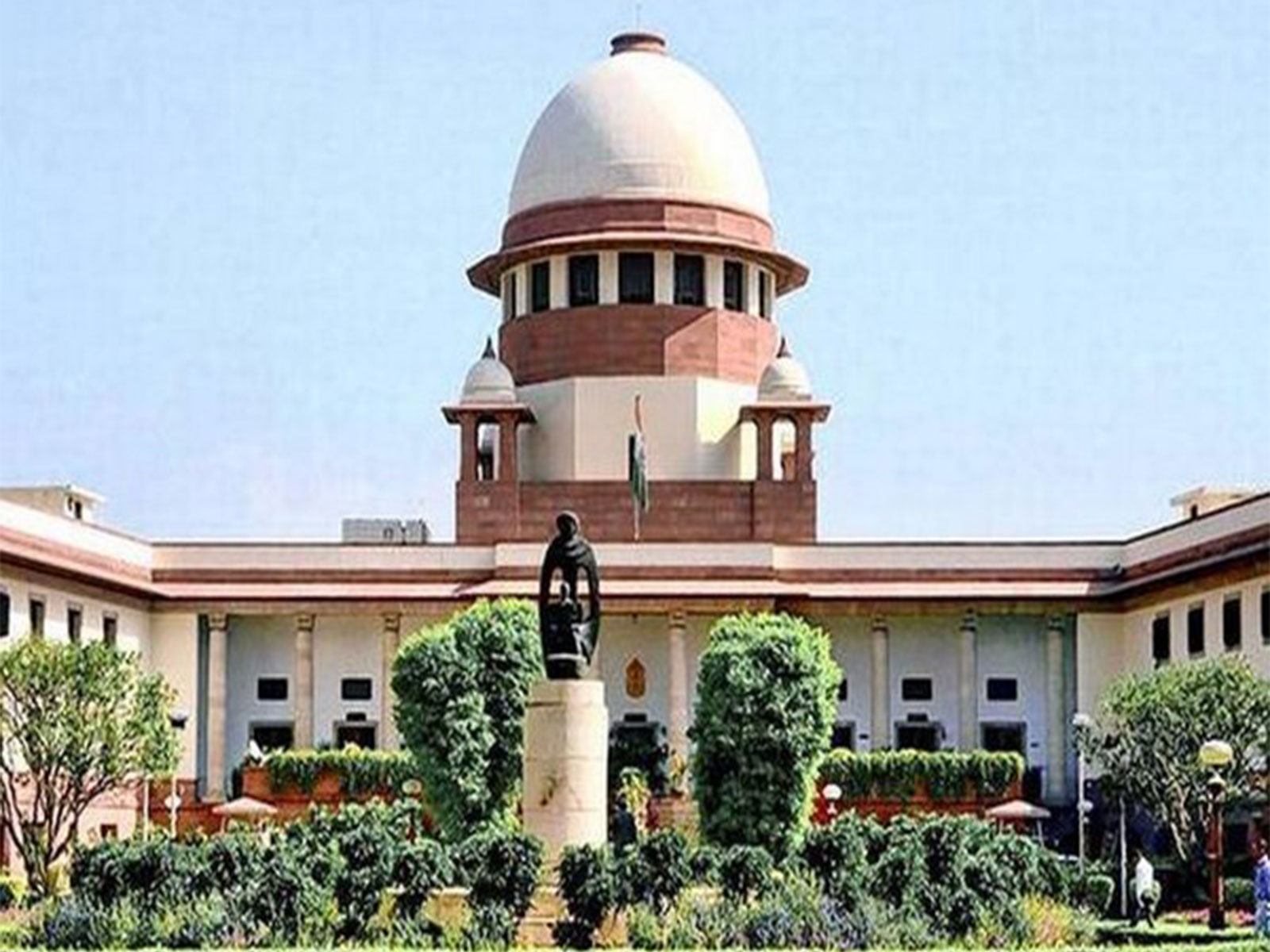
New Delhi [India], January 22 : The Supreme Court has reserved its judgement on pleas seeking an alternative way for the execution of death row convicts on the ground that hanging till death is a painful and inhumane way to execute the death penalty.
A bench of Justices Vikram Nath and Sandeep Mehta has asked the counsels representing the petitioners and the Attorney General of India, representing the Centre, to file their written briefs, if any, within three weeks.
The apex court was hearing a batch of pleas, including the main petition filed by one Rishi Malhotra and another applicant, Project 39A, all seeking directions to the Centre to devise a more or less painful, more dignified and socially acceptable mode of execution.
Malhotra's plea was filed as a public interest litigant (PIL), in which was initially filed in 2023, suggesting alternative modes such as shooting, lethal injection and electrocution instead of hanging as modes of execution to the apex court. The Court then asked the Centre to furnish information on all aspects of the impact of death by hanging, data on science and technology, and any alternative method that is more suitable for upholding human dignity.
During the hearing, the Court asked the counsels what the best way is to execute the death penalty.
"What is the way out for execution? What do you suggest?" Justice Vikram Nath asked.
Rishi Malhotra, appearing as the petitioner-in-person, submitted that the Attorney General of India had informed the court that the government was considering setting up a committee to study the implications of lethal injection.
Further, Malhotra submitted that lethal injection was a more humane, dignified and expeditious method of execution, relying on data from Law Commission reports. He pointed out that in cases under the Armed Forces Acts, convicts are provided options regarding the mode of execution and argued that a similar choice should be extended to death row prisoners, allowing them to choose between hanging and lethal injection.
Senior Advocate Meenakshi Arora, representing Project 39A, a pro bono criminal justice initiative, submitted that execution by lethal injection has not been very successful. Arora added that even in the US, where the injection mode is prevalent is also facing complications in certain cases. The scientific research on the most suitable chemical composition is underway.
Arora, however, also added that in death-by-hanging cases, there have been instances where the process has been botched.
At this stage, the bench also remarked that there are cases in which the death row prisoner struggles before his execution, agreeing to the submissions that the hanging mode is indeed not very successful.
"There is a psychological impact on the hangman also", Justice Sandeep Mehta said, to which the counsel representing the petitioners also agreed.
The Attorney General of India, R. Venkatramani, appearing for the respondent Central government, informed the bench that the issue is being examined at the highest level by a special committee.
The apex court then reserved its decision and asked the parties to submit their written briefs within three weeks.