Republic Day 2026: DRDO showcases Long-Range Anti-Ship Missile as India joins elite club of nations with hypersonic missile
Jan 26, 2026
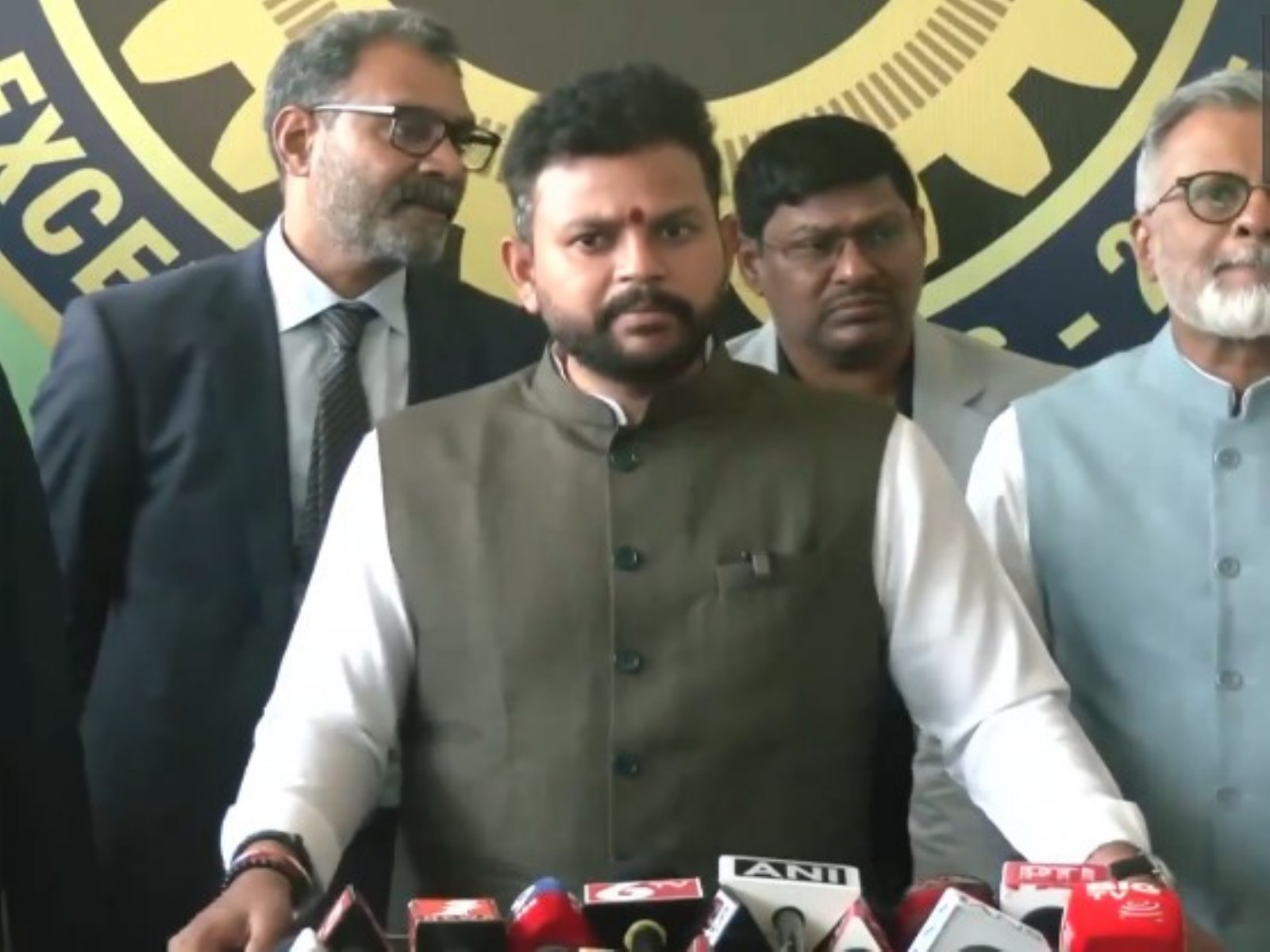
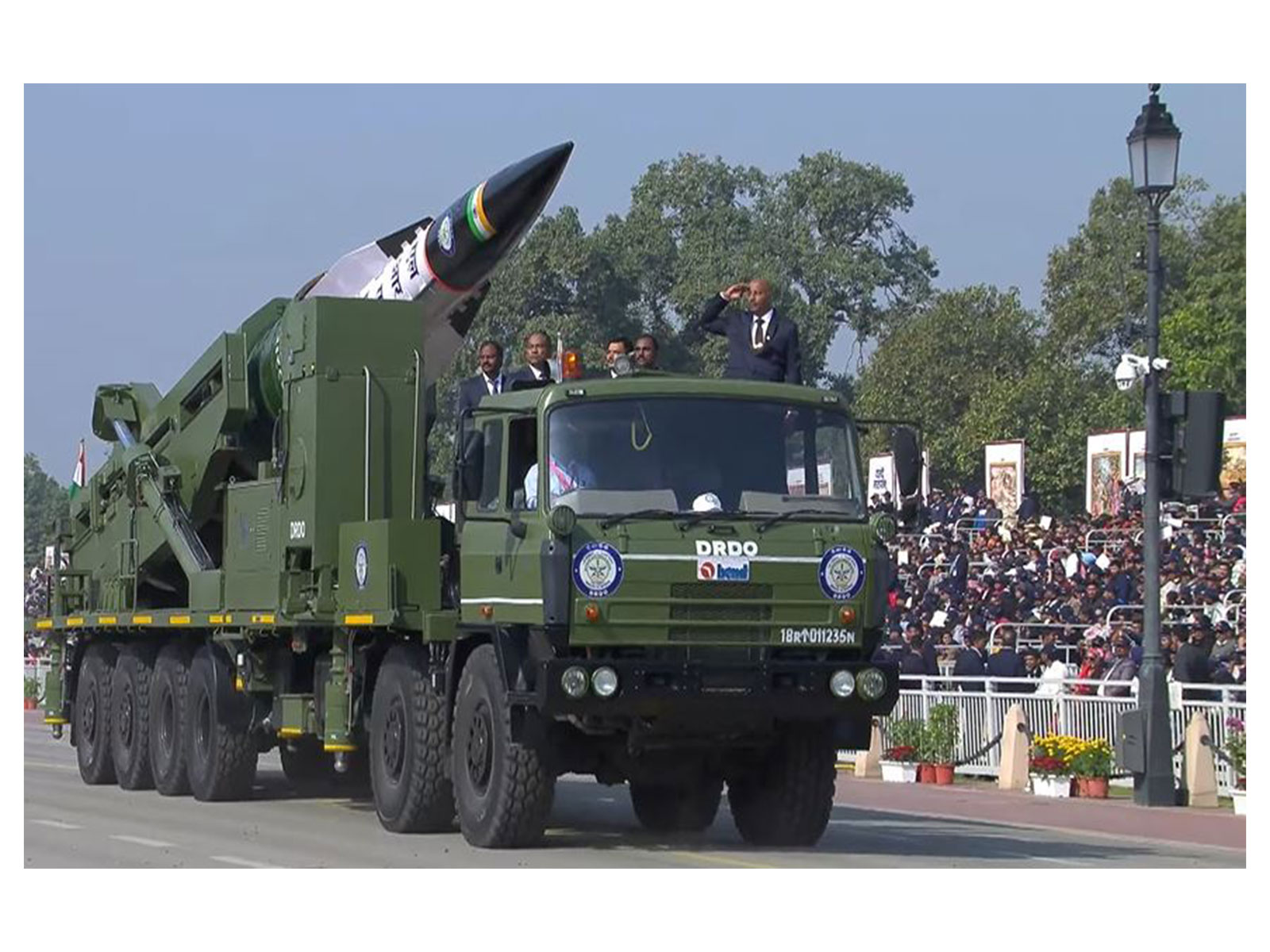
New Delhi [India], January 26 : The Defence Research and Development Organisation (DRDO) showcased the developing Long-Range Anti-Ship Missile (LR-AShM), represented by Scientist and Project Director A Prasad Goud, on the occasion of the 77th Republic Day.
This weapon system is designed to meet the coastal battery requirements of the Indian Navy. LR-AShM is a Hypersonic Glide Missile capable of engaging static and moving targets and is designed to carry various payloads for ranges up to 1500 kilometres.
This hypersonic missile follows a quasi-ballistic trajectory with hypersonic speeds starting at Mach 10 and maintaining an average Mach 5.0 with multiple skips. As this missile flies at low altitude with high speed and manoeuvrability, enemy ground and ship-based radars cannot detect this missile during most of its trajectory.
LR-AShM is configured with two stage solid propulsion rocket motor system. With this successful development of LR-AShM, India has joined the elite club of nations with hypersonic missile capability.
India's mechanised and special forces capabilities were on full display as India celebrated its 77th Republic Day, highlighting the country's advanced defence technology, battlefield readiness, and commitment to self-reliance.
Leading the mechanised column, the T-90 Bhishma, under the command of Captain Vipanjot Singh Virk of the 77 Armoured Regiment, showcased its formidable firepower and mobility. Built on the Hunter-Killer concept, the tank is equipped with a 125-mm smoothbore gun, machine guns, and laser-guided missiles capable of striking targets up to five kilometres away.
The T-90 Bhishma, recently upgraded with enhanced firepower, mobility, and drone-enabled surveillance, has proven its effectiveness in high-altitude conditions and during Operation SINDOOR. Raised on June 1, 1972, the 77 Armoured Regiment operates under the motto, 'Vijay Ya Veergati.'
The indigenously developed Arjun Mk I Main Battle Tank, led by Maj Hitesh Mehta of the 75 Armoured Regiment, was also on display. Armed with a 120-mm rifled gun, advanced fire-control and sighting systems, and protected by Kanchan armour and Nuclear, Biological, Chemical (NBC) protection, the Arjun reflects India's focus on self-reliance and battlefield readiness.
Prime Minister Narendra Modi laid a wreath at the National War Memorial at the historical India Gate. Present alongside the PM were the Defence Minister Rajnath Singh, the Chief of Defence Services General Anil Chauhan, the Chief of Army Staff General Upendra Dwivedi, the Chief of Air Staff Air Chief Marshal APS Singh and the Chief of Naval Staff Admiral Dinesh Tripathi.
As the iconic Day parade began in the national capital, the spectators were treated to an aerial formation, the 'Dhwaj Formation'. Approaching in a striking inverted 'Y' formation, four Mi-17 1V helicopters of the 129 Helicopter Unit soared gracefully overhead, proudly carrying the National Ensign, along with the Service Ensigns of the Indian Army, Indian Navy and the Indian Air Force.
President Droupadi Murmu presided over the grand celebrations on Kartavya Path in New Delhi.
The President of the European Council, Antonio Costa, and the President of the European Commission, Ursula von der Leyen, attended as the Chief Guests on this momentous occasion.
This year, Kartavya Path, stretching from Rashtrapati Bhawan to the National War Memorial, has been elaborately decorated to showcase India's remarkable journey.
The celebrations featured an extraordinary blend of the 150-year legacy of the national song Vande Mataram, the country's unprecedented developmental progress, robust military strength, vibrant cultural diversity, and active participation from citizens across all walks of life.
For the first time, the parade showcased a phased Battle Array Format of the Indian Army, including the aerial component. The Recce element would consist of the 61 Cavalry in active combat uniform. It was followed by the High Mobility Reconnaissance Vehicle, India's first indigenously designed Armoured Light Specialist Vehicle.