Republic Day 2026: West Bengal tableau "Swatantrata ka Mantra - Vande Mataram," celebrates 150 years of the song, honours Bankim Chandra Chattopadhyay
Jan 26, 2026
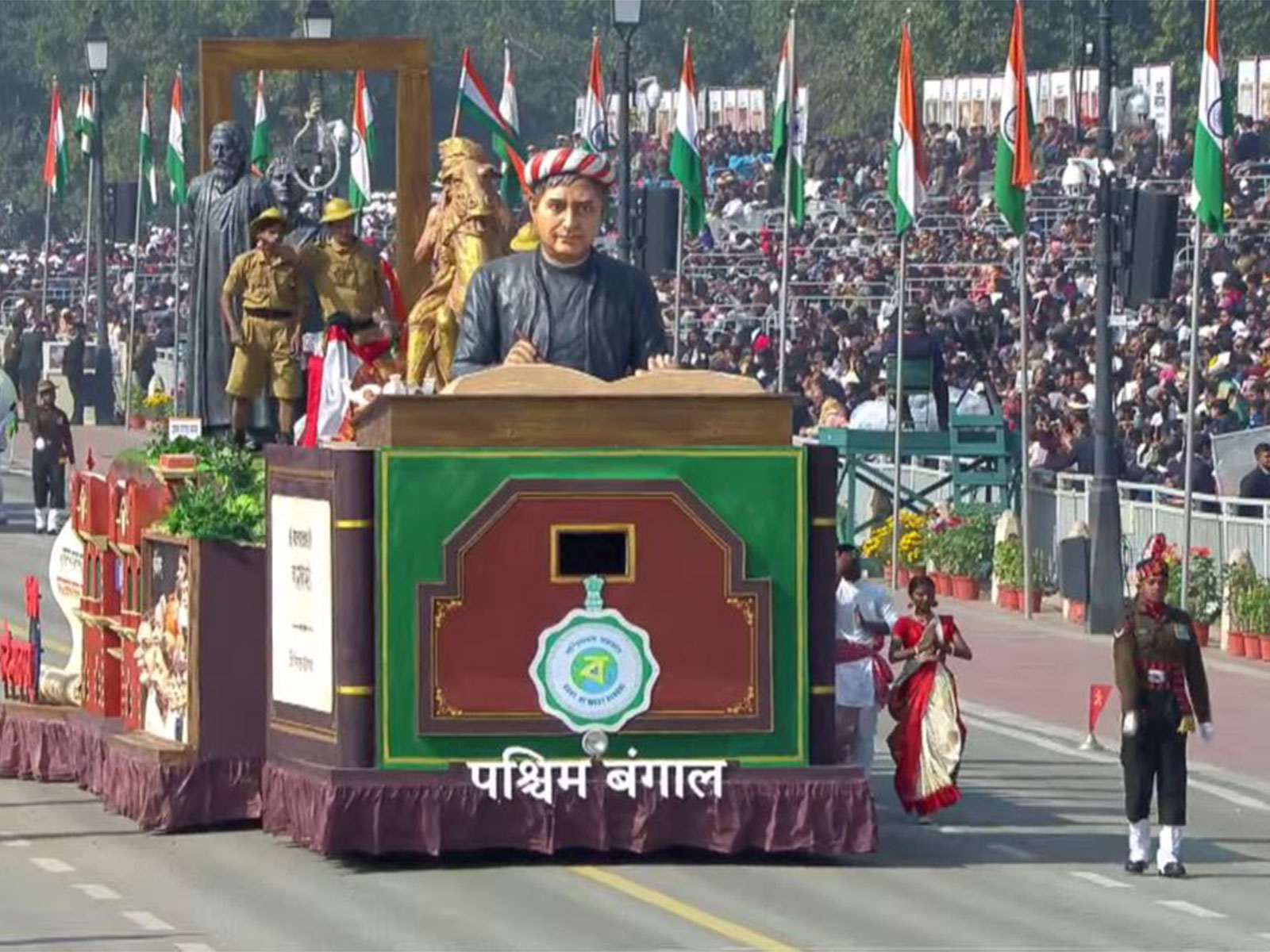
New Delhi [India], January 26 : West Bengal's 2026 Republic Day tableau, "Swatantrata ka Mantra - Vande Mataram," celebrates 150 years of the song, honouring Bengal's pivotal role in the freedom struggle, featuring Bankim Chandra Chattopadhyay, Netaji, Tagore, and Matangini Hazra, and highlights revolutionaries like Khudiram Bose.
The tableau began with Bankim Chandra Chattopadhyay, whose composition Vande Mataram in 1875 became the eternal mantra of freedom, igniting patriotism, unity, and devotion to the motherland across generations.
The tableau also reflected Bengal's spiritual and intellectual awakening through Swami Vivekananda and Sri Aurobindo, whose teachings inspired self-belief, inner strength, and national consciousness. Rabindranath Tagore represented moral leadership and cultural pride, linking art, humanism, and nationalism to shape the ethical soul of the freedom movement.
Additionally, West Bengal, in its tableau, also depicted revolutionary fervour through martyrs such as Khudiram Bose and the trio of Binoy, Badal, and Dinesh, symbolising fearless resistance and uncompromising courage against colonial rule. Matangini Hazra, along with other women participants, highlighted the vital contribution of women, while students and workers represented mass participation and collective strength.
At the forefront stood Netaji Subhash Chandra Bose, who embodied decisive leadership and an indomitable will. His leadership of the Indian National Army (INA) gave the freedom struggle a global dimension and inspired millions with the call for complete independence.
Overall, the tableau honoured Bengal's enduring legacy, showcasing how ideas become action, sacrifice becomes strength, and leadership becomes destiny under the timeless call of Vande Mataram.
Republic Day marks a defining milestone in India's national journey. It marks the day the Constitution of India came into force on January 26, 1950, formally establishing the country as a 'Sovereign Democratic Republic'.
While independence on August 15, 1947, ended colonial rule, it was the adoption of the Constitution that completed India's transition to self-governance based on law, institutional accountability, and the will of the Indians.