SC permits TTZ authority to process 400 pending industrial applications with expert safeguards
Jul 23, 2026
New Delhi [India], July 23 : The Supreme Court on Thursday permitted the Taj Trapezium Zone (TTZ) Authority to process nearly 400 pending industrial applications, while putting in place safeguards to ensure expert scrutiny of every proposal.
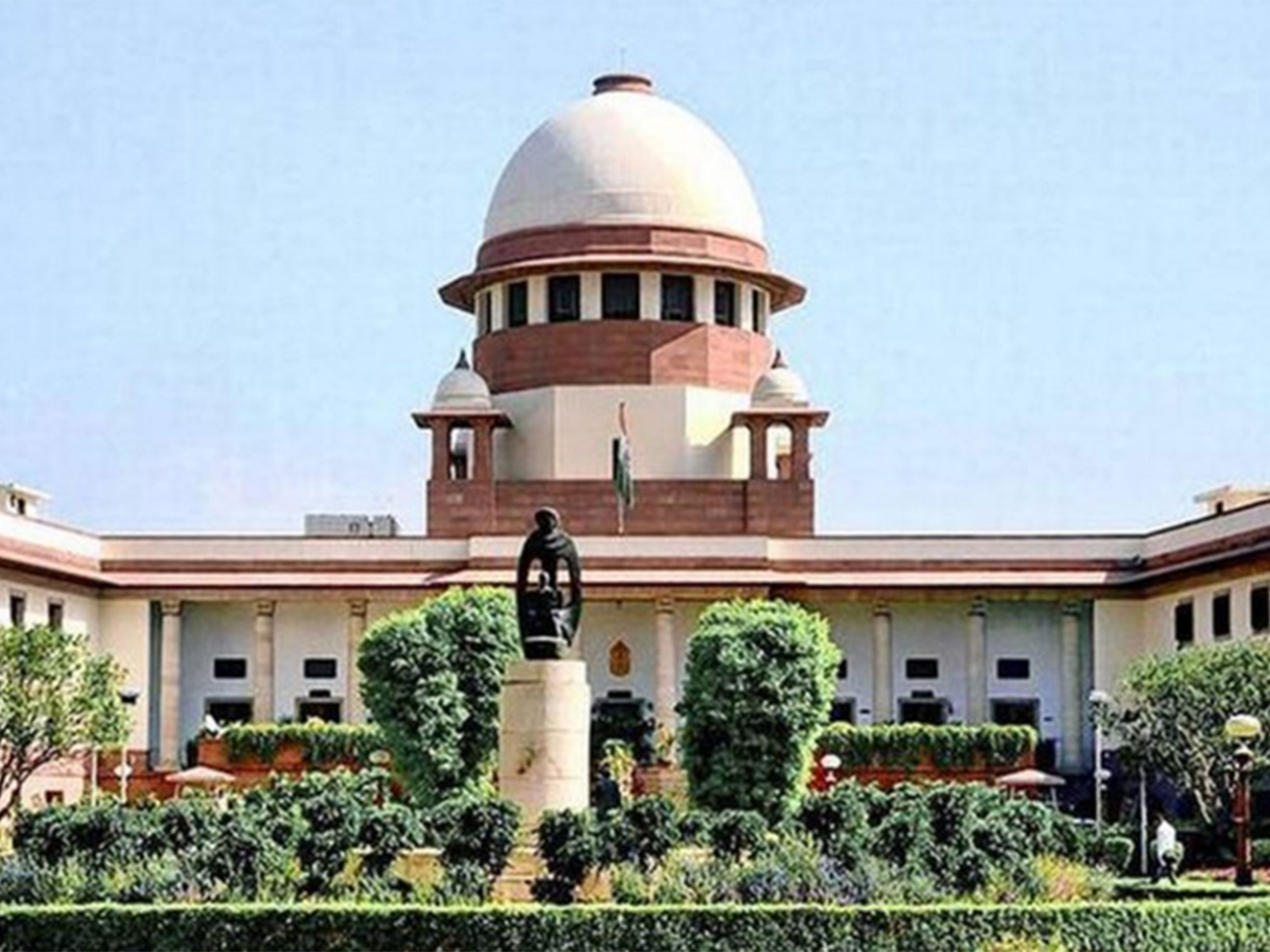
A bench of Chief Justice of India Surya Kant and Justices Joymalya Bagchi and V Mohana ordered that the TTZ Authority may decide pending applications without seeking its prior approval in cases where the Authority, the National Environmental Engineering Research Institute (NEERI), and the Central Empowered Committee (CEC) expert unanimously conclude that the proposed industry is non-polluting.
However, if either the NEERI or the CEC expert opines that an industry cannot be classified as non-polluting, the application cannot be approved without obtaining the Supreme Court's permission, it ordered
To ensure transparency, the bench further directed that every approval granted by the TTZ Authority must be uploaded on the CEC's website, allowing the public to submit objections before the decision is finalised.
Earlier, the apex court ordered that no polluting industry shall be permitted in TTZ.
The top court today said that delay in assessment studies and vision documents for TTZ cannot indefinitely stall decision-making with respect to pending industrial applications.
Finalisation of the vision document is still awaited; the cumulative impact assessment study in terms of the court's order is also not complete; the final report on non-polluting industries is also yet to be submitted, said the bench.
"While all three pending initiatives are required to be undoubtedly completed at the earliest and in a time bound manner, it seems to us that pendency therefore should not be an impediment in processing applications received by TTZ. What is of utmost importance is that well-known precautionary principles must be strictly adhered to under the supervision of domain experts," it said.
During the hearing, Additional Solicitor General Aishwarya Bhati, appearing for the Centre, submitted that the blanket prohibition on setting up new industries in the TTZ was adversely affecting livelihoods.
She clarified that the government was not considering any heavy industries and that the pending proposals pertained only to micro, small and medium enterprises (MSMEs).
Bhati informed the bench that nearly 400 applications were awaiting clearance before the TTZ Authority and sought permission to process them.
The apex court observed that a practical solution must be found, while reiterating that only non-polluting industries should be permitted in the ecologically sensitive region.
The TTZ, established on December 30, 1996, to protect the Taj Mahal from pollution through an order of the Supreme Court, is a 10,400 sq km area spread across the districts of Agra, Firozabad, Mathura, Hathras and Etah in Uttar Pradesh and Bharatpur district of Rajasthan.
The apex court was hearing a case about the protection of the Taj Mahal, the fragile ecosystem surrounding it, and construction in the TTZ, an "eco-sensitive area" having four world heritage sites including the 17th-century white marble mausoleum. The mausoleum is also a UNESCO World Heritage Site.
It has been monitoring the issue of protection and preservation of the Taj Mahal, built by Mughal emperor Shah Jahan in memory of his wife Mumtaz Mahal in 1631, and its surroundings.
The 500-metre radius of the monument is a no-construction zone, besides strict regulations on vehicular movement. There is also a ban on the burning of wood near the monument and municipal solid waste and agricultural waste in the entire area.