Self-confidence, policy reforms and startup culture define 'New India': Founders
Jan 16, 2026
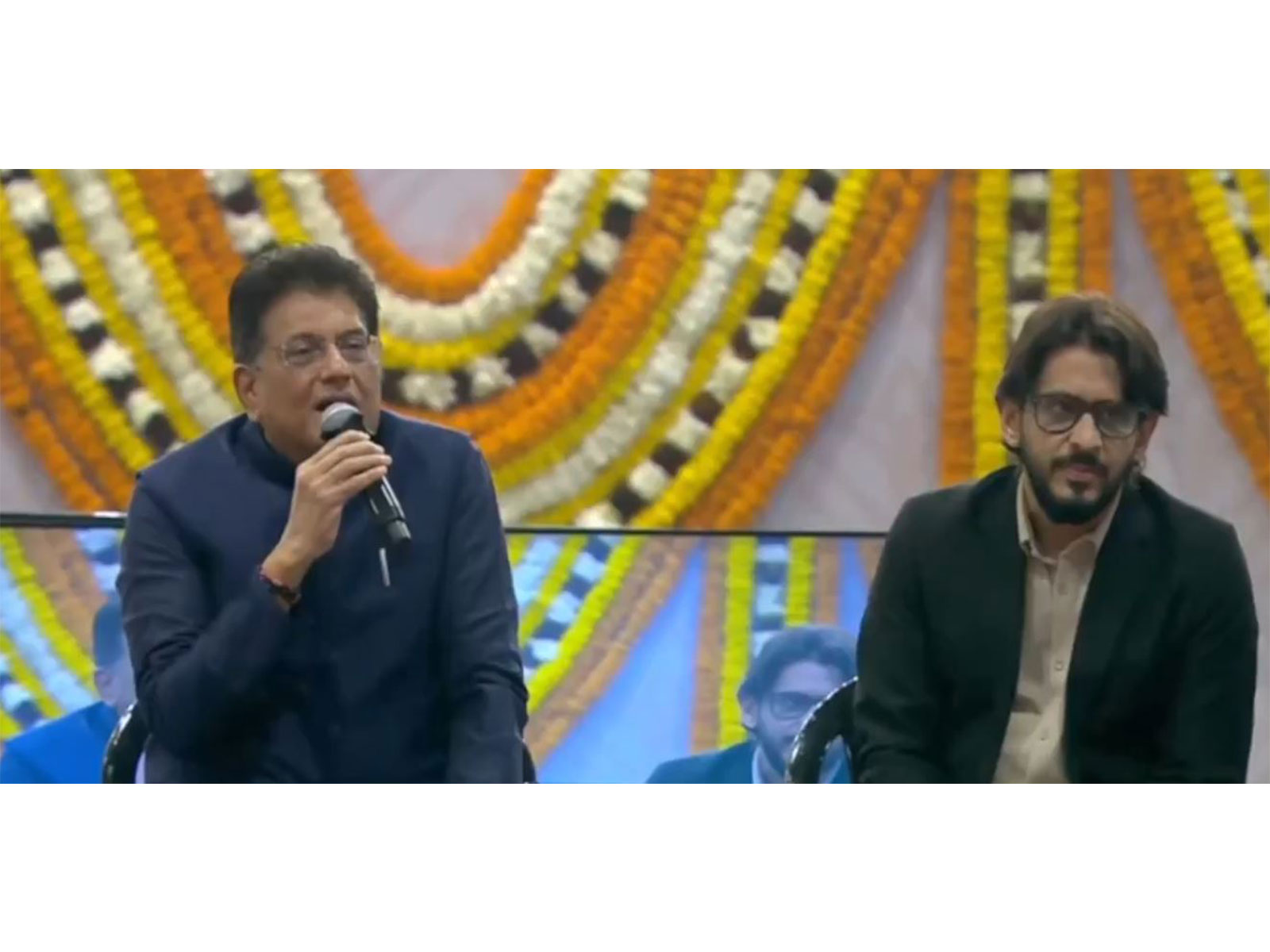
New Delhi [India] January 16 : India's startup ecosystem has undergone a dramatic transformation over the past decade, driven by rising self-confidence among youth, progressive policy reforms and a fundamental shift in societal attitudes toward entrepreneurship, Union Commerce and Industry Minister Piyush Goyal and leading startup founders said on National Startup Day.
Speaking at the event, Minister Goyal said the most significant change in "resurgent and new India" is the self-confidence displayed by young Indians.
"Earlier, there was hesitation, fear and a fixed mindset score certain marks, choose a particular stream, or be labelled a failure," he said, recalling how career choices were once rigidly defined by academic scores.
Highlighting the impact of the National Education Policy, Goyal said, "Students today have the freedom to experiment with entrepreneurship, open learning, interdisciplinary education or even choosing not to attend college immediately after school. There is trust in the government, and trust in oneself to explore the unknown and go the extra mile to succeed."
Speaking at the same event, founders of leading startups have highlighted that the self-confidence, policy reforms and startup culture are defining the'New India'.
Aman Gupta, Co-founder of boAt, said the presence of startup founders alongside senior ministers symbolises the changing face of India.
"This is the new India, where startup founders share the stage with the Prime Minister and ministers. It's a matter of national pride," he said, calling National Startup Day a celebration of founders who hustle, pitch, fail and rise again.
OYO Founder Ritesh Agarwal shared his personal journey from a small town in Odisha to building a global hospitality company. Inspired by entrepreneurship at a young age, Agarwal said he chose to experiment after completing Class 12, a decision that changed his life. He recalled receiving USD 100,000 in funding from Peter Thiel through an online application, which enabled him to travel to Silicon Valley and scale his ideas.
Agarwal noted a broader societal shift in how entrepreneurs are perceived. "Earlier, families worried about entrepreneurship being a 'wrong association'. Today, entrepreneurs are among the most respected profiles, even on matrimonial websites. India's GDP has more than doubled and startup founders now command global recognition."
He also credited the Startup India initiative for reversing brain drain. "A significant portion of Indians studying at Harvard and Stanford now want to return not to work in large corporates, but to start companies or work with startups," Agarwal said, urging young people from small towns across India to think big about the next decade.
Further, Mohit Yadav, Co-founder of The Minimalist, echoed similar sentiments, describing his journey as one marked by repeated failures.
"The harder you work, the luckier you get. Growing consumer awareness and knowledge parity across metros, tier-two and tier-three cities, driven by social media and digital connectivity," he said.
He noted that investor mindset has also evolved significantly. "Five years ago, investors questioned whether a Rs 100-crore brand could be built online. Today, the question is how fast you can reach Rs 1,000 crore," Yadav said, calling it a clear shift in ambition and belief.
Emphasising the global acceptance of Indian brands, Yadav said the 'Made in India' label is no longer seen as inferior. "Today, 25% of our business comes from exports. People are not just talking about 'Made in India for the world', they are living it," he said.
Collectively, the leaders said rising confidence, policy support, digital access and global ambition are fuelling India's startup momentum marking a decisive break from the constraints of the past and setting the stage for the country's next phase of economic growth.