South India's Realty Major Olive Group Bets Big on MMR's New Airport Corridor
Jan 13, 2026
PNN
Navi Mumbai (Maharashtra) [India], January 13: South India-based real estate developer Olive Group has re-entered the Mumbai Metropolitan Region (MMR) with a development strategy focused on the Navi Mumbai Airport Influence Notified Area (NAINA), as town planning schemes and large-scale public infrastructure investments begin to unlock development potential around the upcoming Navi Mumbai International Airport.
The developer, with a legacy of 42+ years and presence across Kerala, Bengaluru and Tamil Nadu, has delivered over 47 lakhs sq. ft. of residential and hospitality projects and has a future development pipeline exceeding 1 crore sq. ft. across MMR. The renewed MMR push marks a strategic shift for the group after several years of concentration in southern India.
Olive Group's vision is anchored in the phased rollout of NAINA town planning schemes, which are providing regulatory clarity on zoning, road networks, infrastructure provisioning and phased urban development in the airport-influenced belt of Navi Mumbai.
"We are bullish about Navi Mumbai because this is one of the fastest-growing urban markets in India where planning, policy and infrastructure are converging at an unprecedented scale," said Dr. P. V. Mathai, Chairman and Managing Director, Olive Group. "Over the last four decades, I have seen how cities expand in phases--often in an uncoordinated manner. What makes the NAINA region different is that public investment, regulatory planning and execution timelines are moving in alignment."
He pointed to the scale of capital being deployed in the corridor. "Public investment running into several tens of thousands of crores is already committed to the NAINA zone through the international airport, metro rail connectivity, expressways, arterial road networks, utilities and planned social and economic infrastructure such as IT and logistics parks. This level of coordinated investment typically unfolds over decades; here, it is being compressed into a single growth cycle."
According to him, the airport will act as a long-term demand anchor. "With the Navi Mumbai International Airport expected to handle up to 90 million passengers annually in phases, the region is being planned not as an extension of Mumbai, but as a city-scale economic ecosystem. Housing, employment, mobility and social infrastructure are being designed together, which is rare in Indian urban development."
Dr. Mathai added that such alignment changes how developers must approach the market."In environments like this, the opportunity is not to build isolated projects, but to participate in shaping sustainable urban districts. That is the lens through which we are evaluating Navi Mumbai--not as a short-term real estate play, but as a long-horizon urban development opportunity."
Industry participants note that the NAINA framework is altering the development dynamics of Navi Mumbai by enabling contiguous, large-format projects, as opposed to fragmented construction that has characterised many legacy urban pockets.
The Navi Mumbai International Airport, one of the country's largest greenfield infrastructure projects, is backed by multi-thousand-crore public and private investment in social infrastructure as well as IT corridor, corporate parks, etc., and is expected to be operational in phases.
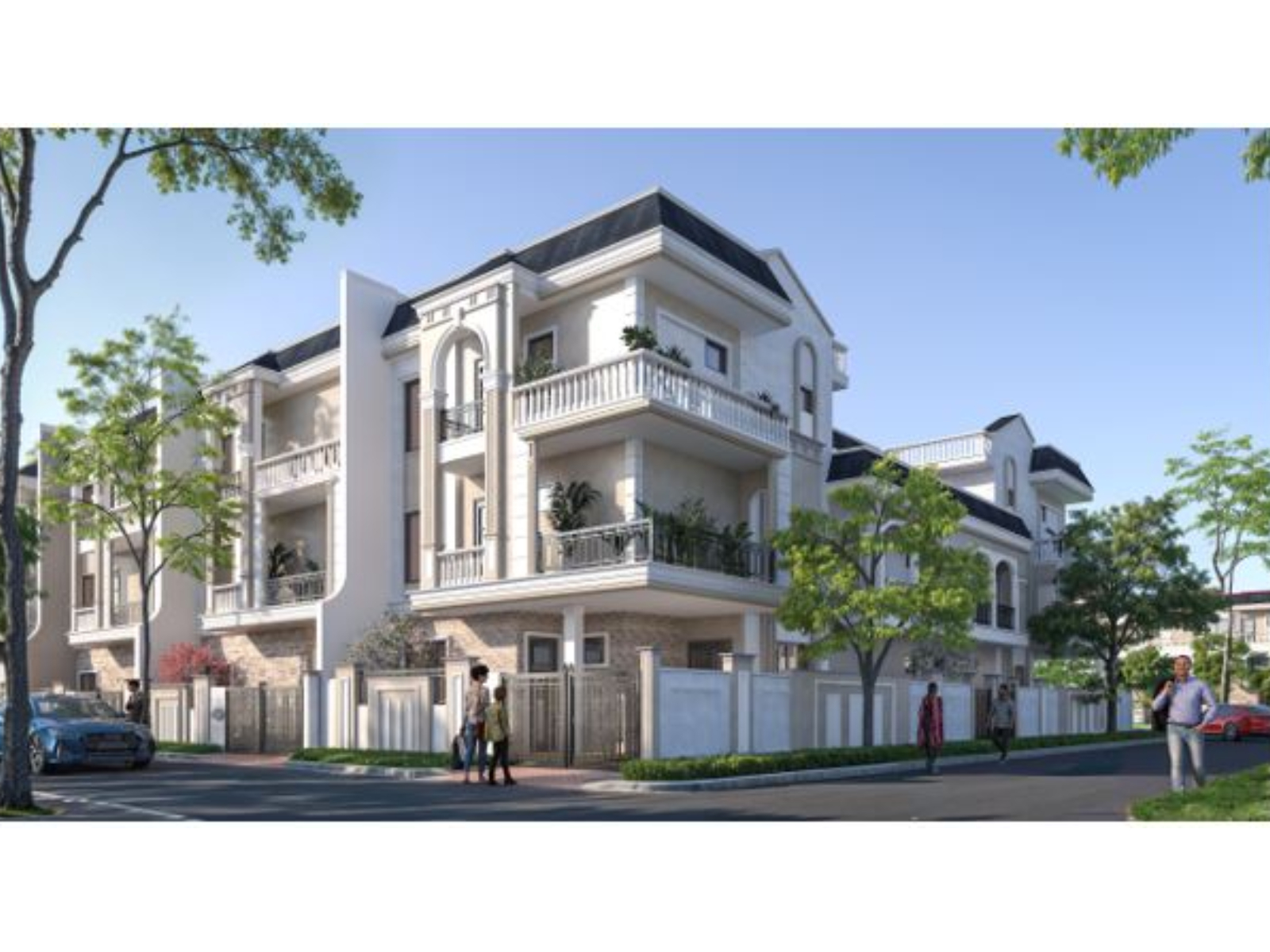
Olive Group has indicated plans to develop around 50 Lakh sq. ft. in the airport influence zone over the next five years. The proposed expansion will be executed through a mix of new residential developments, joint ventures and with project launches calibrated to infrastructure readiness and market absorption.
"Our real estate journey began in Navi Mumbai with more than 20 projects in the early 1990s, when the city itself was still finding its identity," said Varghese Mathew, Director, Olive Group. "What brings us back to MMR today is not nostalgia, but the emergence of a fundamentally different urban opportunity. NAINA is not about adding buildings to a city; it is about planning a city before it gets built. For the first time in the region, infrastructure, mobility, utilities, and zoning are being designed as a single system rather than being retrofitted after density arrives."
He added that the group sees NAINA as a break from legacy real estate cycles. "In most Indian cities, developers are forced to solve problems that already exist--congestion, lack of open spaces, stressed utilities. NAINA allows us to reverse that equation. It gives developers the chance to build integrated lifestyle districts where housing, work access, social community infrastructure and open spaces are planned together. That is the scale of thinking required for the next phase of Mumbai's growth, and that is the lens through which we are approaching this market.
While Olive Group's recent growth has been driven largely by southern markets, the company's re-entry into MMR is being positioned as a long-term vision aligned with urbanisation, rather than a single-cycle expansion. With NAINA accelerating planning approvals and infrastructure rollout around the airport, Navi Mumbai is emerging as one of the most closely tracked residential and IT growth corridors in MMR. Olive Group's renewed presence places it among developers seeking early participation in this next phase of regulated, infrastructure-led urban expansion.
About Olive Group
Olive Group is one of India's leading real estate developers, with a legacy of more than 42 years and over 47 lakhs sq. ft. of completed residential and hospitality development across key southern markets and Navi Mumbai. The group also has a future development pipeline exceeding 1 crore sq. ft. spanning MMR & Kerala.
The company's portfolio includes Kochi's first integrated township project and
a super-luxury hospitality brand operating across Kerala, reflecting its diversified presence across housing, mixed-use development, and hospitality. Its development approach is anchored in robust engineering standards, transparent business practices, non-compromising quality and a customer-centric operating model.
With a strong track record of 42+ years and a growing multi-city footprint, Olive Group continues to expand its presence through a mix of new developments focusing on long-term value creation rather than short- term market cycles.
(ADVERTORIAL DISCLAIMER: The above press release has been provided by PNN. ANI will not be responsible in any way for the content of the same.)