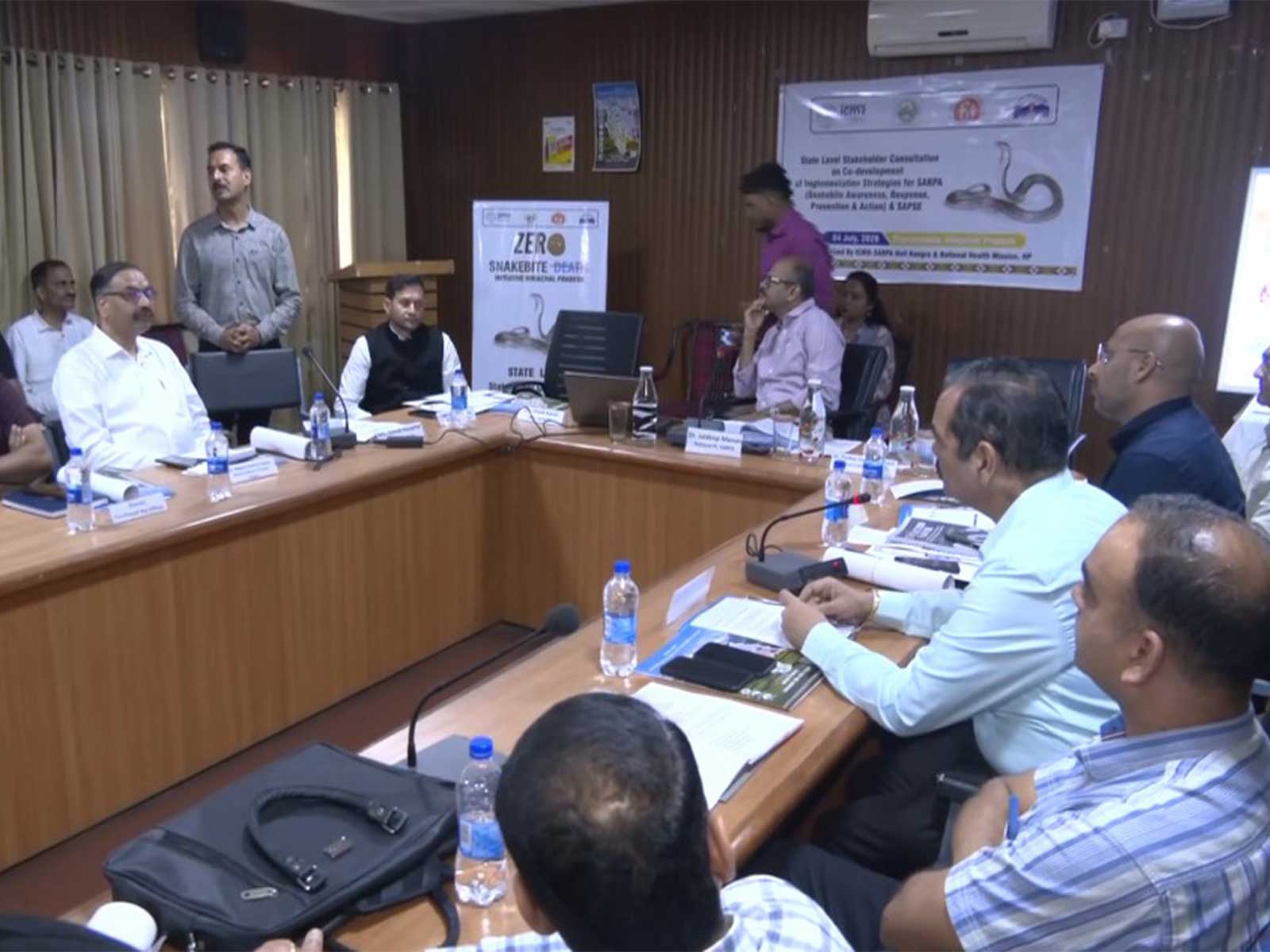
State-level Zero Snakebite Death Initiative conference held in Himachal's Dharamshala to discuss prevention, awareness
Jul 05, 2026
Dharamshala (Himachal Pradesh) [India], July 5 : Experts and government officials on Saturday stressed the need for a coordinated approach involving the health, forest, agriculture, education and other departments to achieve the goal of zero snakebite deaths in Himachal Pradesh, as stakeholders from multiple sectors came together for a state-level conference under the Zero Snakebite Death Initiative in Dharamshala.
The conference, organised under the Indian Council of Medical Research (ICMR)-funded Zero Snakebite Death Initiative, for the first time brought together doctors, government officials and stakeholders from the forest, agriculture, horticulture, education and health departments to discuss measures to reduce snakebite deaths through better coordination, stronger primary healthcare, community awareness and improved snake rescue practices.
According to government data, Himachal Pradesh recorded more than 1,500 snakebite cases over the past five years, with only one reported death. However, another survey suggested that more than 73 people died due to snakebites in a recent year, indicating that the actual death toll may be higher and underlining the need for greater awareness and timely medical intervention.
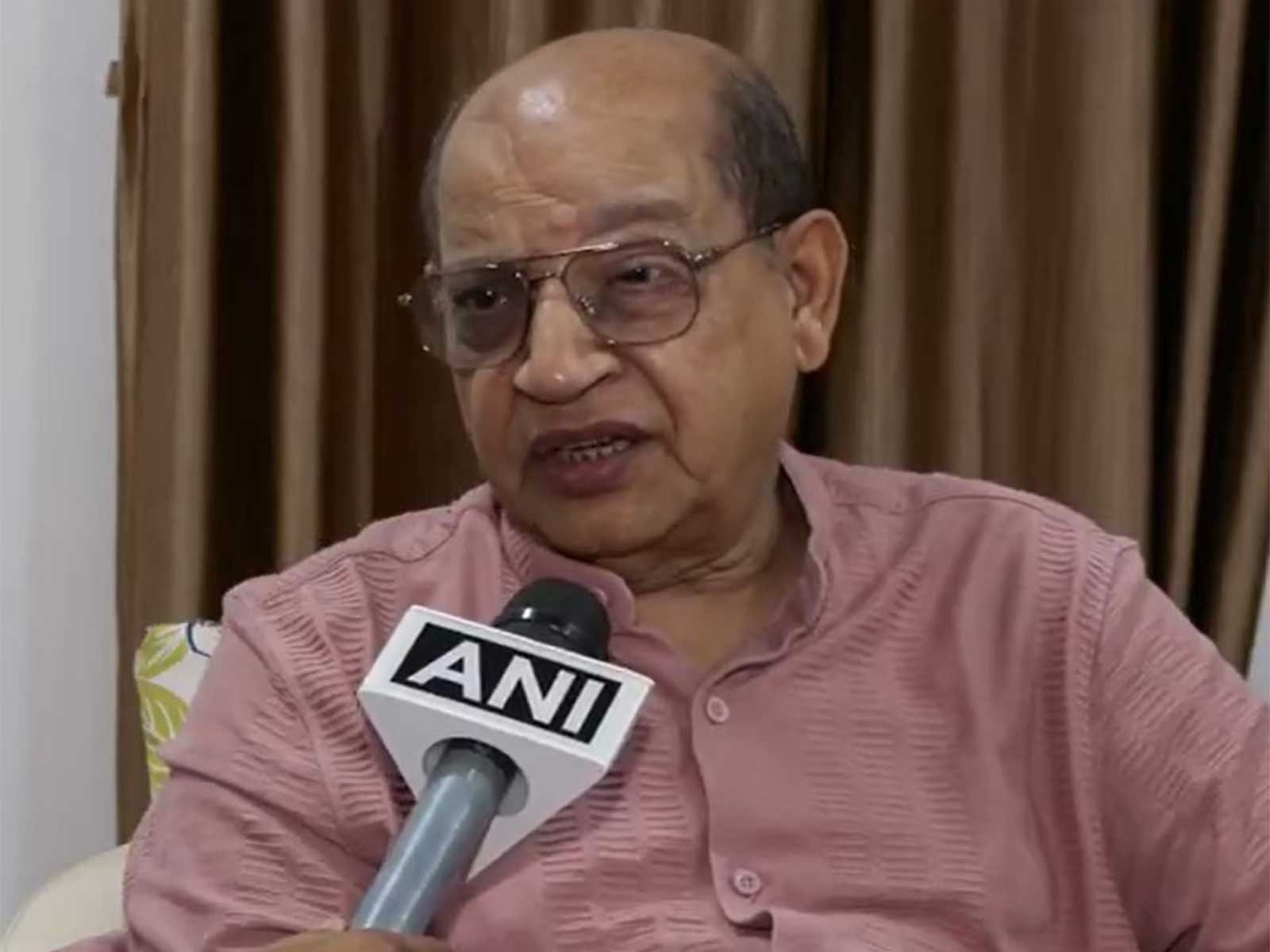
Cardiologist Dr Jaideep C Menon from Kerala, who delivered the keynote address, said the meeting was part of the Indian Council of Medical Research (ICMR)-funded Zero Snakebite Death Initiative being implemented in Himachal Pradesh and six other states, including Kerala, Maharashtra, Odisha, Jharkhand, Assam and West Bengal.
"I have come here, basically for the stakeholder meeting, this is a part of an ICMR-funded project called the zero snakebite death initiative for India. And what we are doing here in Himachal is being carried out in six other states, including Kerala, Maharashtra, Odisha, Jharkhand, Assam and West Bengal. So what we are trying to show is in a limited area of two blocks over the next two years, we believe that we can bring down deaths due to snake bite to zero. All the measures that are required in snakebite deaths to zero is what we are trying to layout and for which we need different stakeholders," he told ANI.
Dr Menon said preventing snakebite deaths requires a whole-of-government approach rather than relying solely on the health department.
"You can see in this conference there are stakeholders from the agriculture department, veterinary sciences, education department, you have, of course, the health services, the local self-government. In other states, we also include the electricity department and the water authority as well. So to achieve zero deaths is not only that the treatment has to be more effective and it has to be at the nearest place where the bite occurs, but it also that we have to prevent snakebite. Snakes are always there in our environment and if we are careful, we can prevent a snake bite. We also need to identify whether it is a venomous snake at the same time. We also need to strengthen our primary health centres and these are some issues that we are trying to address in this meeting," he said.
He also stressed the need to regulate and train snake rescuers under the forest department to ensure both public safety and wildlife conservation.
"I think the snake rescuers should come under the ambit of the forest department. There is a path towards how a snake should be rescued, which does not harm a snake, which is equally important. So it would be a good way if the forest department trained the snake catchers at least in one or two panchayats. And the aim of zero death can be attained with the help of community awareness, school-level programmes," he said.
Highlighting the legal protection provided to venomous snakes, Dr Menon added, "When we say that we need to bring snake rescuers under the ambit of forest department, all the big snakes are protected under schedule one like the forest department mentioned. It is just like a snow leopard. We all think that a snow leopard is very important, but all four venomous species are also schedule one animal so you just can't let everyone go and to catch or rescue a snake so it should come under the ambit of the forest department, due training has to be given to them and registration of each and every rescuer should be there."
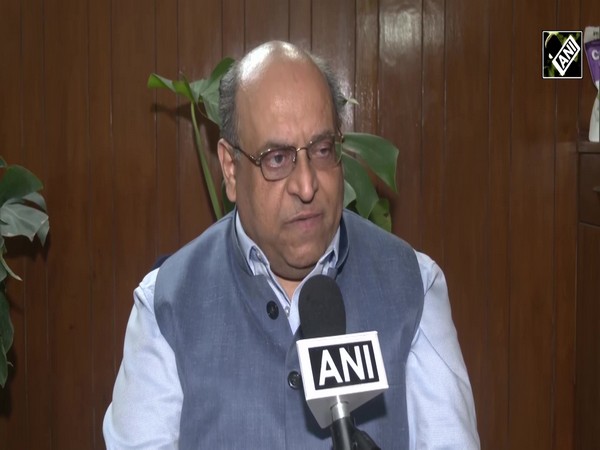
State Programme Officer for Snakebite and Deputy Director of the Health Department, Dr Umesh Bharti, said the conference recognised that reducing snakebite deaths requires the participation of several departments, particularly because many victims are farmers and people living in rural areas.
"It is very important that different departments have come together to discuss how to reduce the death toll due to snakebites in Himachal Pradesh. It is believed that it is the job of the health department to deal with a snakebite case, however, it includes various other factors. A number of farmers die every year due to snakebites and that is why officials from the agricultural and horticulture departments are also here to attend this meeting. If various other departments also join hands and make the people aware, only then we can achieve our target of zero death. People don't reach hospitals on time. Moreover, they don't identify the types of snakes, so all of us have equal responsibility. We can see different departments have different challenges, and we are trying to identify and address them," he told ANI.