Success in conflicts depend on more than technological superiority, needs ability to integrate multiple domains: Air Vice Marshal PA Shah
Jun 29, 2026
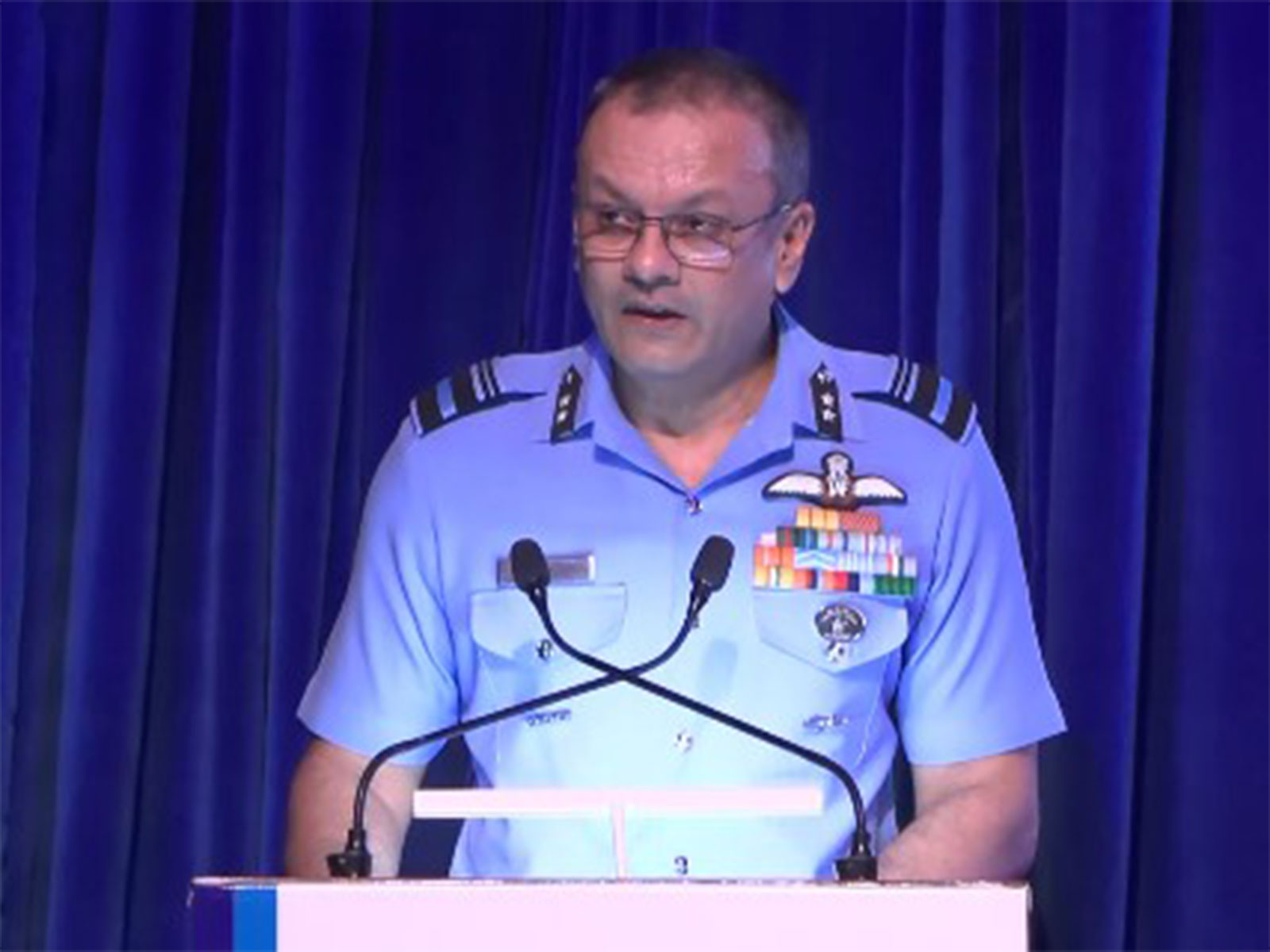
New Delhi [India], June 29 : Air Vice Marshal PA Shah, Commandant of the College of Aerospace Warfare, on Monday highlighted that recent conflicts have shown that military success today depends on far more than just having better technology, but also on the ability to merge multiple domains under political and operational constraints.
Delivering the welcome address at a Capstone Seminar organised by the Indian Air Force and the Centre for Air Power Studies (CAPS), Air Vice Marshal Shah said, "Recent conflicts have demonstrated that success depends not only on technological superiority but also on the ability to integrate multiple domains under intense political and operational constraints," referring to a paper presented at the seminar tracing the evolution of aerospace power from classical strategy to contemporary limited conflicts.
Air Vice Marshal Shah said the convergence of emerging technologies and evolving challenges calls for a different kind of mind.
"When there is a convergence of emerging technologies and evolving challenges, the situation demands an educated, strategically and technologically proficient human mind, one capable of synthesis, foresight, and sound judgment under relentless pressure," he said, adding that the programme "transcends the mere study of platforms and tactics" and equips participants with the habits of mind required to shape strategic outcomes in an increasingly contested, congested, and dynamic aerospace environment."
Speaking on the broader purpose of the Warfare and Aerospace Strategy Programme (WASP), he noted that a second paper presented at the seminar examined future-proofing aerospace power through innovation, integration, and force design, asking what such a programme is meant to achieve within the Air Force and the military institutions.
"The second paper examines future proofing aerospace power through innovation, integration, and force design. Innovation, seamless integration across domains, and thoughtful force design will determine whether we merely react to future threats or are able to shape them to our advantage. My purpose is to reflect on a deeper question: What is a programme like WASP actually meant to achieve within an air force and, by extension, within our military institutions? Innovation, seamless integration across domains, and thoughtful force design will determine whether we merely react to future threats or are able to shape them to our advantage," he said.
Reflecting on this question, Air Vice Marshal Shah said history offers a consistent answer that in moments of crisis, the decisive difference has rarely come down to intelligence or courage alone. "Both are common enough. Rather, success has depended on the cultivation of three enduring habits, developed long before the crisis itself," he added.
The first, he said, is curiosity, which he explained as the "willingness to read well beyond one's own specialisation until judgment is informed by continuous learning rather than ready-made answers."
He pointed to legendary Field Marshal Sam Manekshaw's intellectual preparation before taking command, which he said contributed significantly to India's decisive victory in the 1971 Bangladesh Liberation War.
The second habit, Air Vice Marshal Shah said, is moral courage, which, according to him, is the willingness to speak truth to power clearly and without hesitation.
"A powerful illustration comes from Lieutenant General Sagat Singh during the 1971 war. He decided to airlift troops across the Meghna River and continue the advance despite explicit instructions from his Army Commander not to do so. When those orders were reiterated, he is widely remembered to have responded, 'Over my dead body.' That bold decision shortened the war by several days and contributed directly to the largest military surrender since the Second World War," he said.
"Few of us will ever face a decision of such consequence. Yet the underlying habit, trusting one's own well-studied judgment, acting upon it, and accepting responsibility for it is exactly what this programme seeks to cultivate," he added.
The third habit, he said, is the habit of the pen, noting that military institutions often base decisions of enormous consequence on brief written papers far more often than is generally appreciated.
He said, "The publication of the inaugural edition of the WASP Journal today is a natural extension of that effort."
Air Vice Marshal Shah added that these three habits were not unique to the officers graduating from the programme alone. "They are, in varying degrees, the qualities that all of us distinguished guests, faculty, and scholars alike strive to cultivate across India's defence establishment," he further said.
He described the fifth edition of WASP as "one small but deliberate step" towards doing so systematically, with the day's seminar offering an opportunity to witness the results of that effort.