Supreme Court directs Delhi Government to operationalise CAQM's long-term recommendations on air pollution
Feb 23, 2026
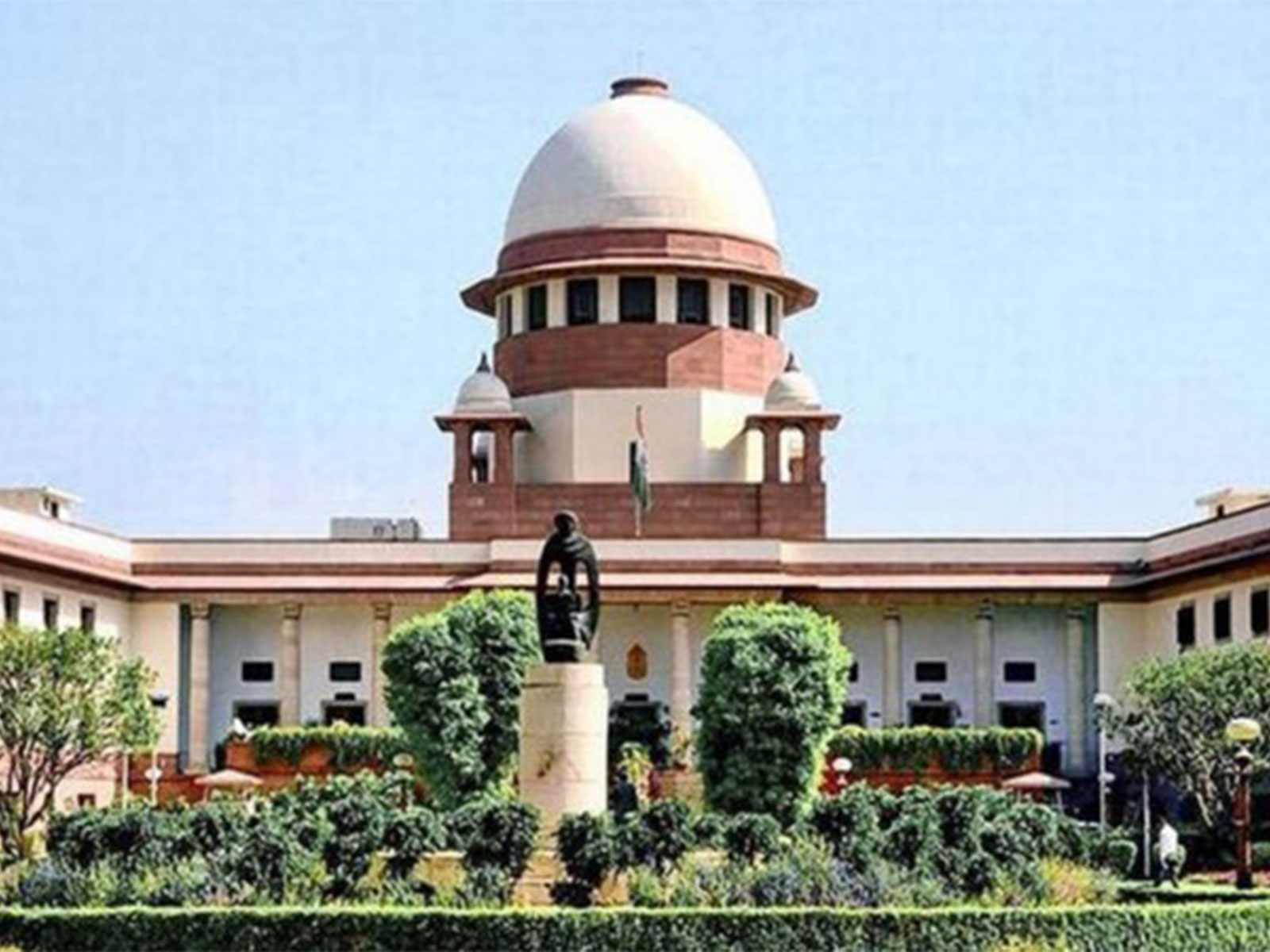
New Delhi [India], February 23 : The Supreme Court on Monday directed the Government of the National Capital Territory of Delhi to file a detailed action plan to operationalise the Commission for Air Quality Management (CAQM) recommendations to solve the issue of air pollution in the capital.
A bench led by Chief Justice of India (CJI) Surya Kant also directed the Ministry of Environment and Power to submit a proposal, based on the latest CAQM recommendations, for shifting all coal-based industries out of Delhi-NCR. This proposal must include the identification of such industries and viable alternative fuel sources.
The Court ordered the neighbouring States of Delhi, Uttar Pradesh, Haryana, and Rajasthan to issue public notices inviting suggestions and objections from stakeholders, including coal-based industries. These notices are to be treated as issued under the Court's authority and must be fully detailed in the states' respective action-taken plans. As an interim arrangement, Haryana, Delhi, and other concerned authorities were asked to examine the feasibility, logistics, location, and operational modalities of these industries pending a final decision.
During the hearing, the Court took note of submissions by ASG Aishwarya Bhati, appearing for the CAQM, regarding long-term measures to tackle air pollution in Delhi-NCR. The Court recalled that, by its earlier order, it had directed the CAQM to develop long-term plans to address the AQI crisis.
The hearing comes amidst ongoing concerns over the quality of air in the national capital and neighbouring states.
In February, the Opposition Aam Aadmi Party (AAP) questioned the credibility of Delhi's pollution data and objected to the BJP government's decision to install six new AQI monitoring stations in the city's green and open areas.
AAP Delhi State President Saurabh Bharadwaj said, "The intent of the BJP government led by Rekha Gupta was not to clean Delhi's air but to artificially lower AQI readings by shifting monitoring infrastructure to greener zones, thereby creating a false impression of improvement without taking substantive anti-pollution measures."