"Take the world as it is": Terry Milewski says Canada's China pivot reflects pragmatism amid a new autocratic world order
Jan 18, 2026
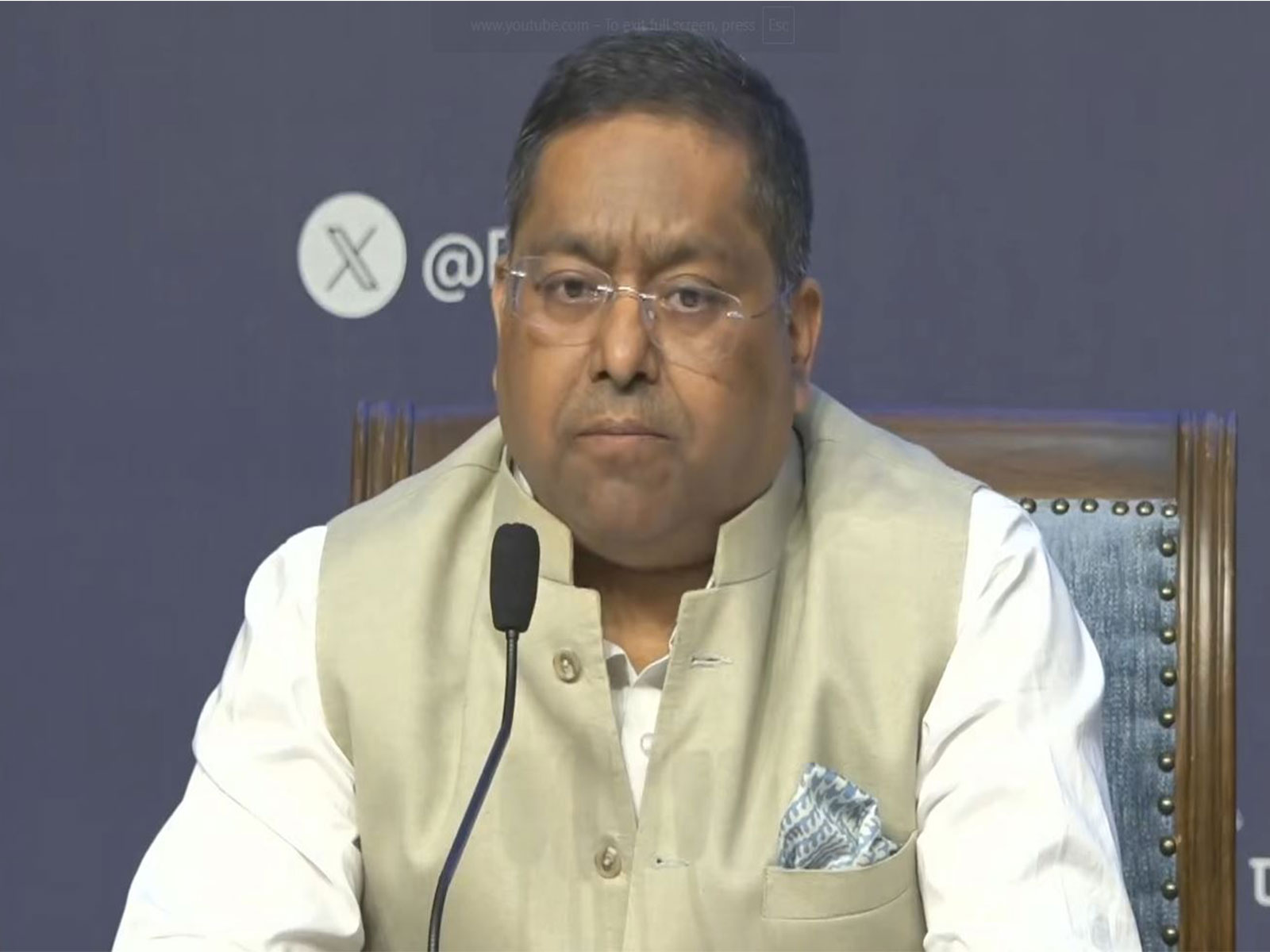
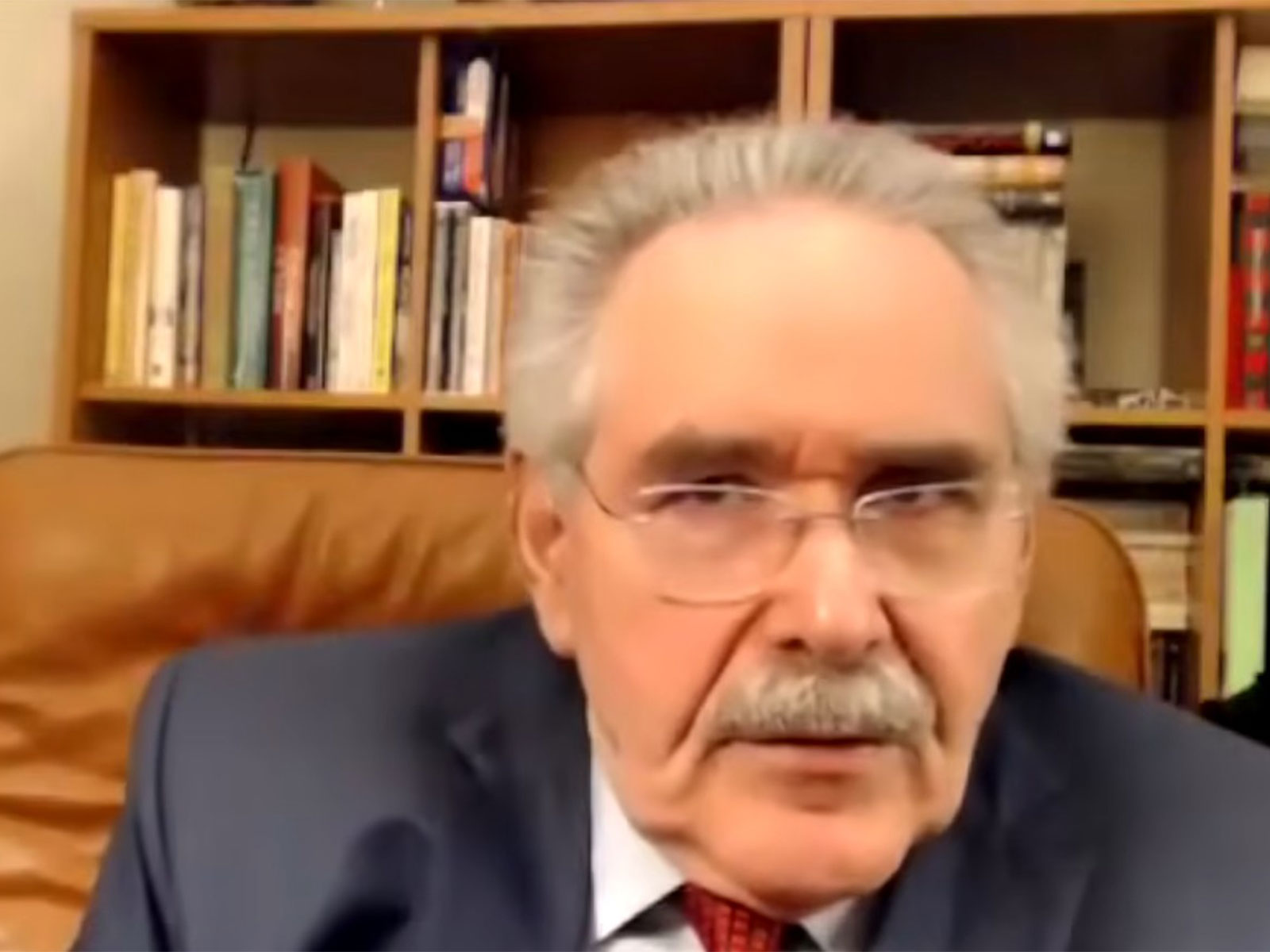
New Delhi [India], January 18 : Canadian journalist Terry Milewski has described Canada's renewed engagement with China as a matter of hard-nosed pragmatism rather than ideological choice, arguing that Ottawa is being forced to recalibrate its foreign policy in an increasingly unstable and autocrat-driven global order.
Milewski, in an interview with ANI, said that the new world order is being dominated by the whims and fancies of rogues and autocrats.
"Well, it makes your neck hurt, doesn't it? I mean, you could get whiplash watching the twists and turns of Canadian foreign policy as it tries to navigate, I guess, these very choppy seas right now. But you're quite correct. I mean, as little as 10 years ago, Canada, under Justin Trudeau at the time, was contemplating severing relations completely with China. And there was the two Michaels affair, which was basically hostage taking by the Chinese government. You could not have imagined at that time, this What did he say? He said a strategic partnership. I'm quoting the new prime minister, Mark Carney, talking about a strategic partnership with the same China that we just discussed," he said.
He added, "So it is a bit of a head snapper, but he answered that question in a way with the phrase I think perhaps may be the most memorable, may turn out to be the best remembered from the summit, that we have to take the world as it is, not as we wish it to be. In other words, we're just going to have to be flexible. We're going to have to get along with governments of which we do not approve," he said.
Milewski said that the phrase 'new world order' emerged with the fall of communism. But now this refers to a world being run by rogues and autocrats.
"Well, I think it's the same as the old world order, isn't it? The new world order originally became a sort of catchphrase, I think, with the fall of communism and everything was going to be sunshine and roses. And that would be the new world order. But now what they really mean by that is a world order dominated by rogues and autocrats who do what they want. or try to do what they want, as, for example, in the case of Mr Trump, and make life relatively grim for the rest of us, as they do in the case of Mr Xi. So we'll have to see, but it's ironic, I think, that the same phrase has popped up again, but it doesn't mean the same thing at all," he said.
Milewski said that calling the foreign policy of Canada now 'pragmatic' is more of politeness because Canadian Prime Minister Mark Carney is in dearth of options as to what to do.
"Well, I mean, the word pragmatic and that is a polite word for these circumstances, because I think the real answer is that he doesn't have an alternative. So he's making it look as good as he can. Let's face it, all of Canada has been impacted perhaps more than any other country in this sense by the arrival of Donald Trump on the scene. And what I mean is that Canada's whole history, our whole operating system, since the war at least, and going back even further, maybe the First World War, has been completely upended. It's all been turned upside down," he said.
Milewski said that the US is no longer an ally for Canada, and is more of a menace.
"The days when the United States was our greatest friend, our protector, our leading trading partner, and now it's a menace that wants to annex us, denies us even our sovereignty. Again, a head snapper. I mean, what is happening here? So I think that what they're all doing, not just Carney, but Carney is a good example of this, is using your words carefully to suggest, and using them ambiguously to suggest that, well, you know, I'm not really being a wh**e. I'm not just doing what I have to do. I'm doing something that has a principle. Pragmatism. Well, we all like pragmatism," he said.
Milewski said that it is upto Canada to see that China's embrace doesn't suffocate it.
"You're doing what you should do. But where it leads us is the real question, isn't it? I mean, that's probably the next one you're going to ask. Certainly, the one I would ask, where does this lead? If we are going to have this wonderful new embrace, for example, with China in Canada's case over the reduction of steep reductions in tariffs, meaningful reductions in tariffs on electric vehicles and on Canadian canola and so on and so forth. Everybody's happy about that. But really, is this embrace going to be welcome on day three and day four and day five and year 10? Are we still going to be happy about this Chinese embrace, or will it become rather suffocating?" he said.
Milewski then said that as one goes deeper into the contours of the takeaways from Carney's visit to China, the first takeaway is the EV reduction in the tariffs.
"We're going quicker than we may imagine into the national security realm. I think the Chinese have a powerful interest which is just being whetted now in gaining an advantageous position in other markets, replacing the United States as the essential trading partner. You may say, okay, well, this is just a few cars. I mean, there are 49,000 cars. That's 3% of the Canadian market, by the way. So it's not as though we're flooding the market. The Chinese are coming. It's not like that yet. But there's no doubt that for President Xi Jinping, this is just a beginning, not the end. This is the beginning of further wonderful deals, more flag-wiping, more handshakes that we will see on our screens in the next, not even decade, I would say in the next two or three years, where both sides are, they said, this is great," he said.
"The fishermen on our East Coast are happy because they can sell their lobster. And the fishermen on the West Coast are happy because they can sell their crabs. So everybody's happy. So why don't we, what is there exactly to stop us doing more of this? Nothing, nothing, except if we could look back from say 10 years to now and realize that we've given away the store. What does that mean? We'll find out," he added.
Milewski said that Carney is trying to expand his trade with all other countries around the world. This is to recover the trade issues with the US.
"Well, I think that, from Carney's point of view, what he might say, I will try to speak for him. I have no idea what he would say, but what I imagine he'd be thinking, he might say something very different. What I imagine he'd be thinking is that this 4%, which you're quite right to point to, is part of a much larger whole because we're not just expanding our trade with China. We're also expanding it with Indonesia, with Spain, all over the world. That's the idea. That is his strategy. And it's been successful," he said.
Milewski said that Carney is trying to recover the trade losses by the US.
"Now it's been slow and coming up to now the conservatives in opposition, in Canada have been saying loudly that, Oh, Carney's going off around the world again. And he always comes back empty-handed. I was just listening to a podcast about that. Well, so now we can't say that this is a significant deal, but I insist that it's a part of a whole, from their point of view, that it's not 4% of American trade that has been replaced by China, for example," he said.
"It's going to be a much larger percentage than that, especially if Trump is going to go on with these tantrums like now he's going to sanction Europe for backing Denmark over Greenland. Now he's going to slap more tariffs on the whole world if they don't do what he wants. Otherwise, he'll bang his spoon on his high chair and have a fit," he added.
When asked about the symbolism of the China gambit, Milewski said that the symbolism is real, but incidental.
"I think the symbolism, the symbolic content is real, but it's incidental. In other words, it's happened without Carney going for that, because what he needed, considering that what we've just talked about, was to satisfy, it was to stick his thumb in the eye of those conservatives who were opposing him and show them, oh, yeah, yeah, well, I've got a real deal this time. Now, you know, you can't say I've come home empty-handed. And what is your alternative, please? Come back to that question. What is your alternative? Look, people on both sides, I think, we can agree," he said.
Milewski said that there have been questions about sovereignty and selfhood. But Canada doesn't have the cards now.
"People on both sides of that question, is it okay to be embraced by China when you may lose your selfhood? You may lose your sovereignty. People on both sides will agree, I think, that that is a serious question and a serious danger. But they don't offer us an alternative right now," he said.
He added that the US, India and China dominate the world now.
"I don't think that they can tell us, well, here's what we should do instead. Let's trade with, hmm, well, who is there? I mean, we still left with three battleships on this very choppy ocean, China, India, and the United States. And those three, they're going to dominate whatever kind of world we inhabit. And this question is going to be asked daily, and you'll get as many answers. The longer you wait, the more answers you'll get. But none of them that I've heard so far are very persuasive," he said.
Milewski said that they have yet to find an alternative trading partner who like the US.
"I mean, if you think it's a danger that it's too much of a risk to be in bed with China, as the conservative opposition in Canada likes to say, well, if you think that, okay. So who do you want to be in bed with? I mean, you want to be in the unemployment line? Well, do you? Because that may very well be the alternative too. I mean, we don't have another potential largest trading partner that can compete with the United States at all. What is it, 75% of our trade? A bit more, I think, even today," he said.
He said that there have been fears of China spying the export nations.
"Well, the criticism is not completely without substance. The fact is that China does spy the exports, the high value exports that China does send. Those cars, those EV cars, they're all internet linked, right? And China will get a lot of data of Canadians when they apply on Canadian roads. Do you think that the security question should not be considered when you're dealing with a country like China, an authoritarian country like China?" he said.
Milewski said that Canada maintains that it is entering the deal with eyes wide open.
"I think the Canadians, like in the words of the industry minister, Melanie Joly, in Beijing, I believe she said, that we're going into this with eyes wide open. You probably saw that quote. Yes, I did. We're going into this with eyes wide open. That's her version of an answer. It isn't much of an answer at all, is it? To the question, well, what's your alternative? Well, we're going to be aware of how the Chinese are spying on us, stealing our data, and doing very well out of a regime of identity theft and persecution," he said.
He said that China must also prepare itself for a case where it cannot make sales in Canada.
"I mean, Canadians are going to have to decide for themselves, am I going to buy a Chinese car? Well, the Chinese, remember, they have some questions to answer too. Remember, because this is all very nice if they want to extend their influence by using cars or by using anything else, they're going to buy canola from us. They also have to answer, well, if, Where are we going to turn if this doesn't work?" he said.
"What if the Canadians refuse to buy our cars? And we've invested a couple of billion dollars in building a first plant and starting to build them. Canada is saying after this summit, is it not, that we want to be the first place where a Chinese designed and built car is made," he added.
Canadian Prime Minister Mark Carney has announced a new trade agreement with China. Carney said that the deal would open markets for Canadian businesses and workers.
https://x.com/MarkJCarney/status/2012346805946601854?s=20
In a post on social media platform X, Carney said, "We've secured a new trade agreement with China -- unlocking more than $7 billion in export markets for Canadian workers and businesses."