Targeted, time-limited scheme to stabilise India's export flows: Directorate Gen of ForeignT Trade on RELIEF scheme
Mar 19, 2026
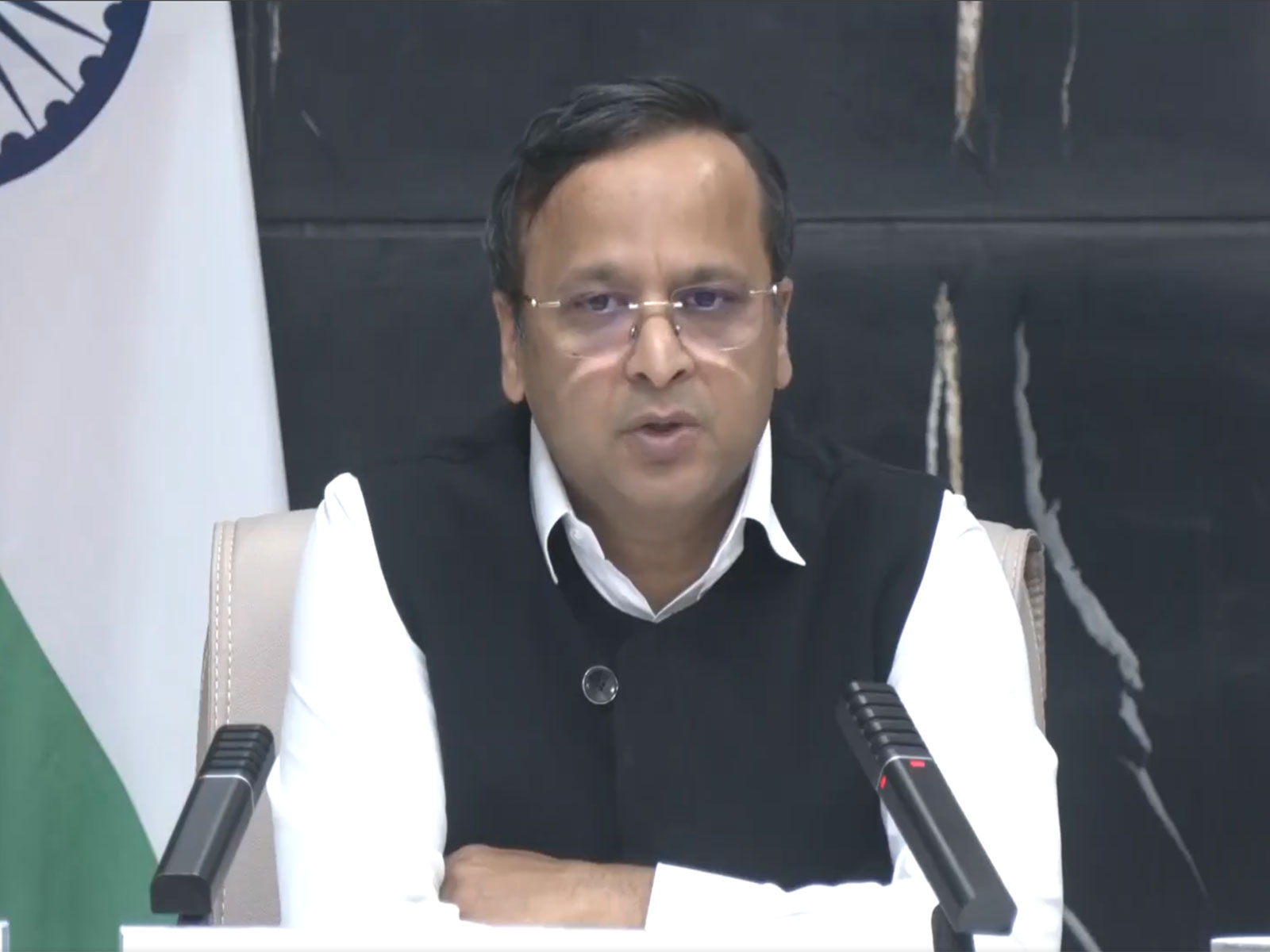
New Delhi [India], March 19 : The Centre on Thursday announced the Resilience & Logistic Intervention for Export promotion (RELIEF) scheme to support Indian exporters impacted by the ongoing conflict in West Asia. "The Export Promotion Mission has introduced a targeted, time-limited scheme to stabilise India's export flows through a corridor that accounts for nearly 15% of global trade," said Chief of the Directorate General of Foreign Trade (DGFT), Lav Agarwal, detailing the intervention during a press briefing.
"The intervention is necessary because this corridor matters for India, for our industry, and for our bilateral trade," Agarwal said. He noted that, "Trade through this corridor amounts to around USD 178 billion, of which approximately USD 56 billion is with the GCC area, and about USD 36 billion is with the UK."
The scheme was launched to address challenges such as maritime logistics disruptions due to the closure of the Strait of Hormuz and increased war-risk premiums imposed by shipping lines and insurers.
"Persian Gulf port geography and the Strait of Hormuz created certain challenges. Hormuz is the exit corridor for Gulf cargo and energy flows. Similarly, Jebel Ali, Hamad, Bandar Abbas and Fujairah were disrupted in parallel. This also impacted Europe- and US-bound cargo, primarily because of the long rerouting that might be required. There were challenges related to Hormuz transit, which was suspended. Similarly, flights from the Middle East were either suspended or severely curtailed. Issues related to diversion were what the trade had to contend with. This was a dual shock, as both air cargo and maritime cargo were affected," Agarwal said.
This initiative aimed to provide a calibrated support package to stabilise export flows and protect India's market share during the crisis period. The scheme focused on mitigating the sharp rise in logistics costs and insurance premiums for shipments heading to the Gulf and West Asia.
The Commerce Secretary also informed that "the government has come together to set up two inter-ministerial group in the Department of Commerce. We are meeting daily to assess the challenges. We are trying to listen to them and respond to them."
The RELIEF scheme is structured under the Export Promotion Mission (EPM) with a total financial outlay of Rs 497 crore. The Secretary explained that the government is "trying to build an export package" and that "in this conflict we are trying to help export keep going."
The support is divided into three distinct components to address different segments of the exporting community, with the Export Credit Guarantee Corporation of India (ECGC) acting as the nodal and implementing agency.
The urgency for intervention stems from crisis dynamics in the shipping corridor, particularly around the Strait of Hormuz.
Maritime logistics have faced disruption, leading to the introduction of Additional War Risk Premiums and Emergency Conflict Surcharges.
According to the briefing data, freight rates on key routes rose by nearly 90 to 100 per cent within a short period during the Red Sea crisis of 2023-24. Outbound logistics costs increased due to vessel diversions and congestion at trans-shipment hubs, placing immense pressure on Micro, Small, and Medium Enterprises (MSMEs) with limited working capital.
Component I of the scheme provides export credit support for exporters already insured by ECGC for consignments issued between February 14 and March 15, 2026. The government will top up compensation for war and political risk losses beyond ordinary policy cover while keeping premiums at pre-disruption levels. The estimated support for Component I is Rs 56 crore
Component II targets upcoming exports from March 16 to June 15, 2026, offering stable premiums and enhanced cover of up to 95 per cent for fresh shipments into the affected region. The consignments destined for countries include the UAE, Saudi Arabia, Kuwait, Qatar, Oman, Bahrain, Iraq, Iran, Israel, and Yemen. The estimated support for Component II is Rs 159 crore.
Component III provides the largest share of support, with an estimated outlay of Rs 282 crore dedicated to non-ECGC-insured MSME exporters. This segment offers reimbursement of up to 50 per cent of the additional freight and insurance burden for consignments destined for countries including the UAE, Saudi Arabia, Kuwait, Qatar, Oman, Bahrain, Iraq, Iran, Israel, and Yemen.
The Secretary emphasized the importance of these markets, noting, "There is a dependence on our exports in these countries, and we are trying to see that even in these difficult circumstances, whatever exports we are able to do, we are trying to support that also."
To ensure transparency, ECGC will maintain a real-time monitoring dashboard for claims processing and fund utilization. An EPM Steering Committee will oversee the scheme, holding the authority to reallocate funds based on evolving conditions. The government expects these measures to prevent order cancellations and support export-oriented sectors that depend on uninterrupted regional trade.