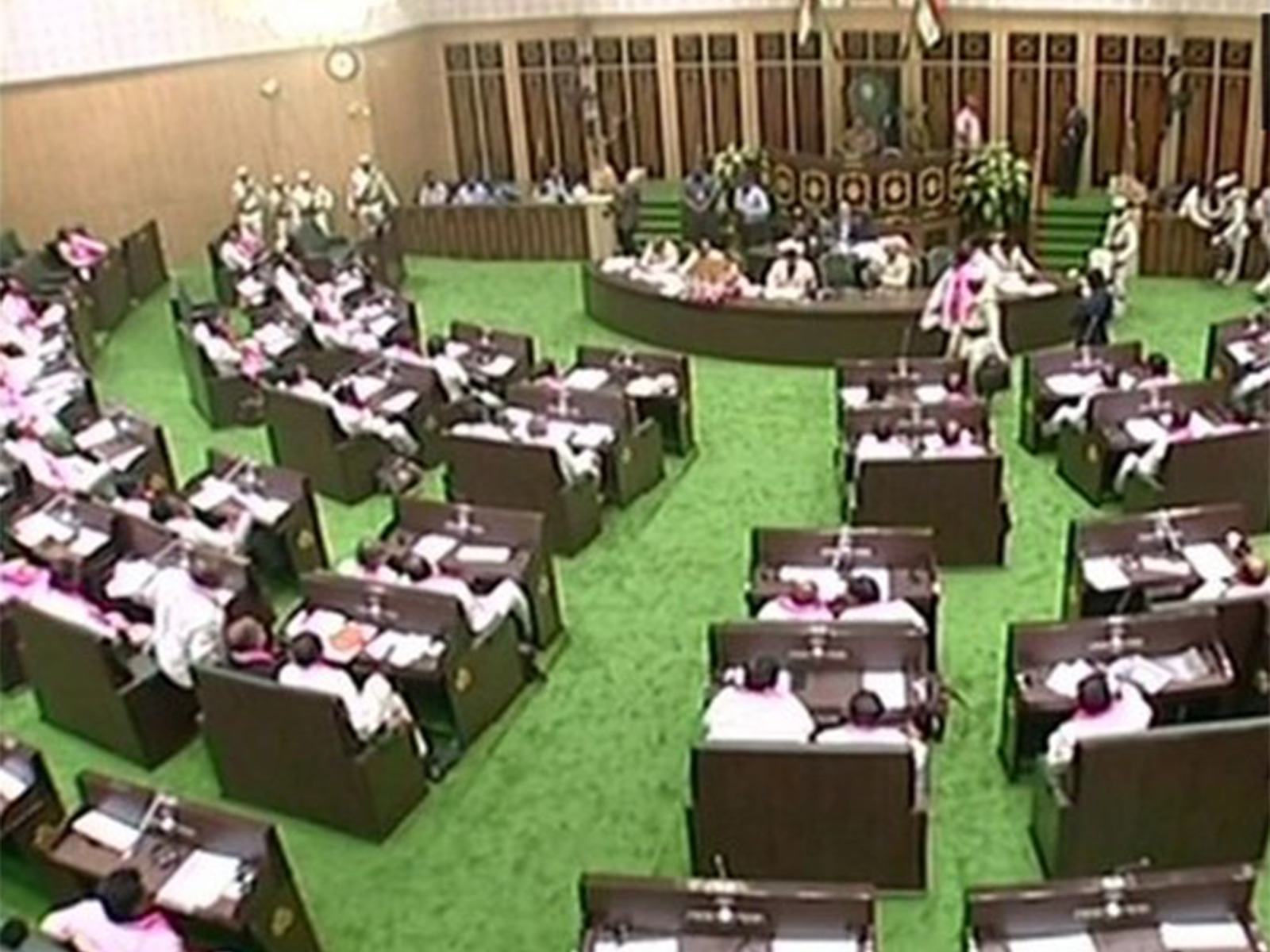
Telangana Assembly adopts resolution on MGNREGS, opposes proposed changes
Jan 03, 2026
Hyderabad (Telangana) [India], January 3 : The Telangana Legislative Assembly adopted a resolution on the Mahatma Gandhi National Rural Employment Guarantee Scheme (MGNREGS), expressing concern over the proposed changes under the newly introduced Viksit Bharat Guarantee for Rozgar and Aajeevika Mission (Rural) Act, VB G RAM G-2025.
On Friday, the resolution recalled that the Mahatma Gandhi National Rural Employment Guarantee Scheme was launched in 2005 by the UPA government led by then Prime Minister Manmohan Singh to provide employment to the rural poor and ensure financial security for impoverished families.
The scheme came into effect on February 2, 2006, to reduce poverty, unemployment, and migration, curb the exploitation of unskilled labourers, narrow wage disparities between men and women, and promote inclusive development.
Under the Act, at least 100 days of employment at the minimum wage are provided annually to every rural household. Over the past two decades, approximately 90 per cent of beneficiaries in Telangana have belonged to Scheduled Castes, Scheduled Tribes, and Backwards Classes, with women accounting for nearly 62 per cent of the total beneficiaries.
Dalits, tribals, persons with disabilities, members of particularly vulnerable tribal groups such as Adivasis and Chenchus, and other poor communities have been among the primary beneficiaries.
The Assembly stated that the proposed VB G RAM G-2025 law is detrimental to the rights of the poor and threatens the employment security of rural women and vulnerable sections who largely depend on MGNREGS. It said provisions that dilute the spirit of the existing employment guarantee scheme would adversely impact the poor.
Through the resolution, the Assembly asserted that the new law undermines the original purpose of the Employment Guarantee Act and ends the demand-based system of work planning, calling for the continuation of the earlier demand-driven mechanism.
The House also noted that women constitute about 62 per cent of MGNREGA beneficiaries and said the limited allocation system proposed under the new law would reduce workdays, causing hardship to women from poor families. It stressed that restoring the earlier system is essential for women's empowerment.
The resolution further objected to the proposed change in the funding pattern from full central funding to a 60:40 Centre-State ratio, stating that it violates the spirit of federalism and places an additional financial burden on states. It demanded restoration of the earlier funding model.
The Assembly also expressed concern over the removal of Mahatma Gandhi's name from the scheme, saying it dilutes the spirit of Gandhian values. It opposed the mandatory 60-day break during the agricultural season, calling it unjust to landless poor labourers, and called for the scheme to be implemented year-round.
Highlighting that 266 types of works are currently permitted under MGNREGA, the resolution opposed the removal of labour-intensive works such as land development, saying this would adversely affect small and marginal farmers, Dalits and tribals. It required that the existing list of works remain unchanged.
Taking all these factors into consideration, the Telangana Assembly resolved that the Mahatma Gandhi NREGA Act should be continued in its true spirit to fulfil the aspirations of wage-earning families.