TMC's political obstruction deprived poor, vulnerable of life-saving healthcare benefits: JP Nadda
Jan 08, 2026
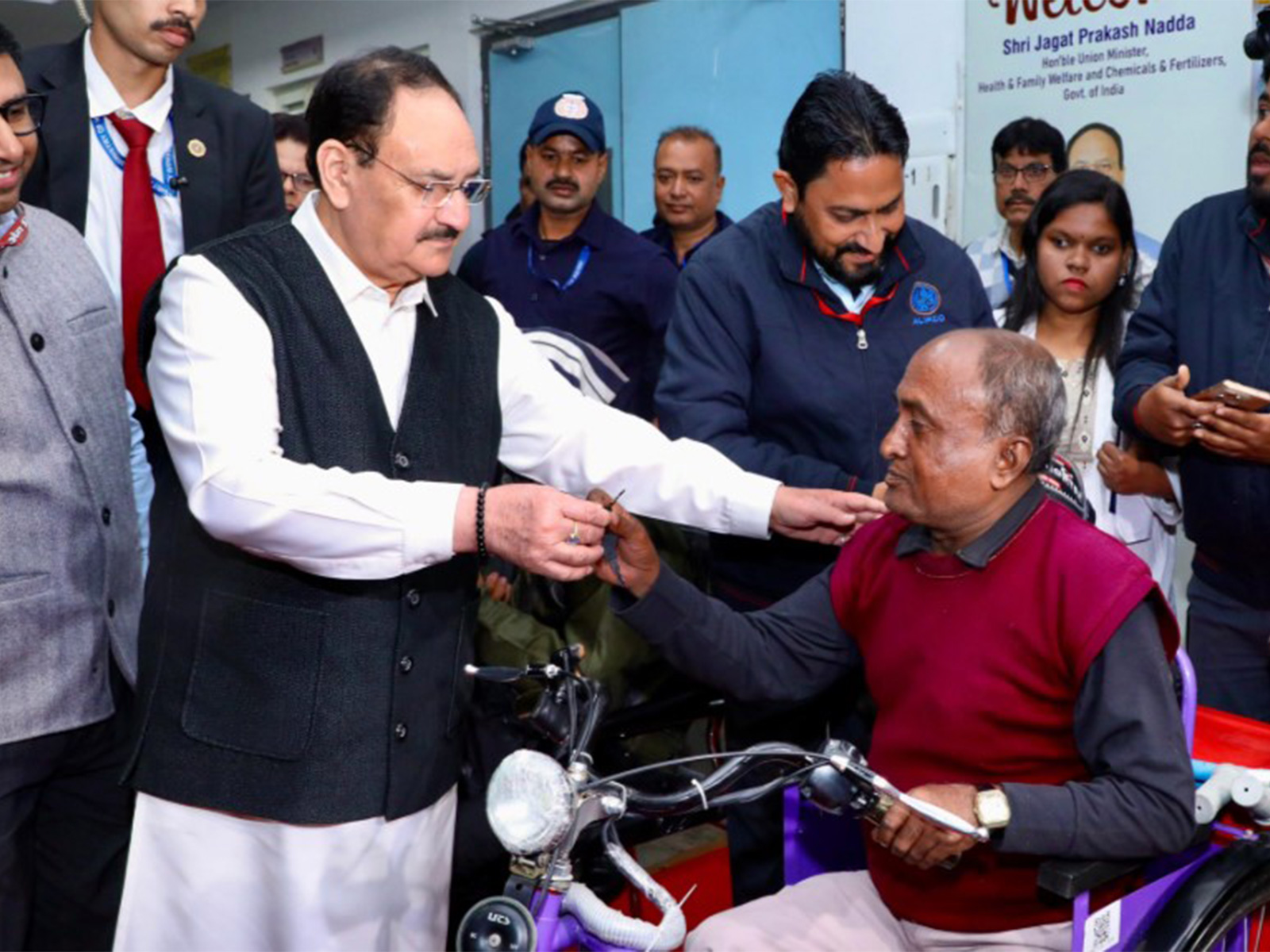
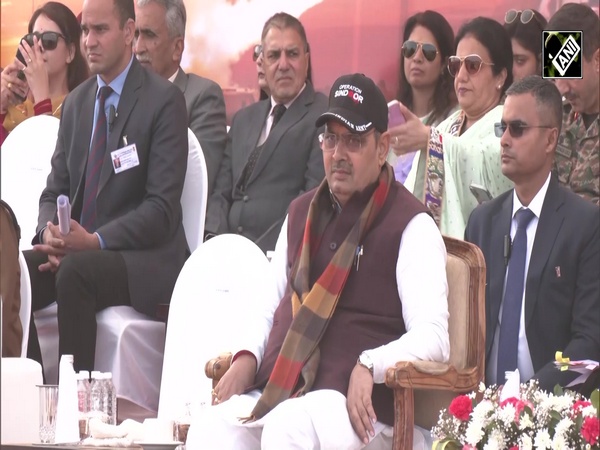
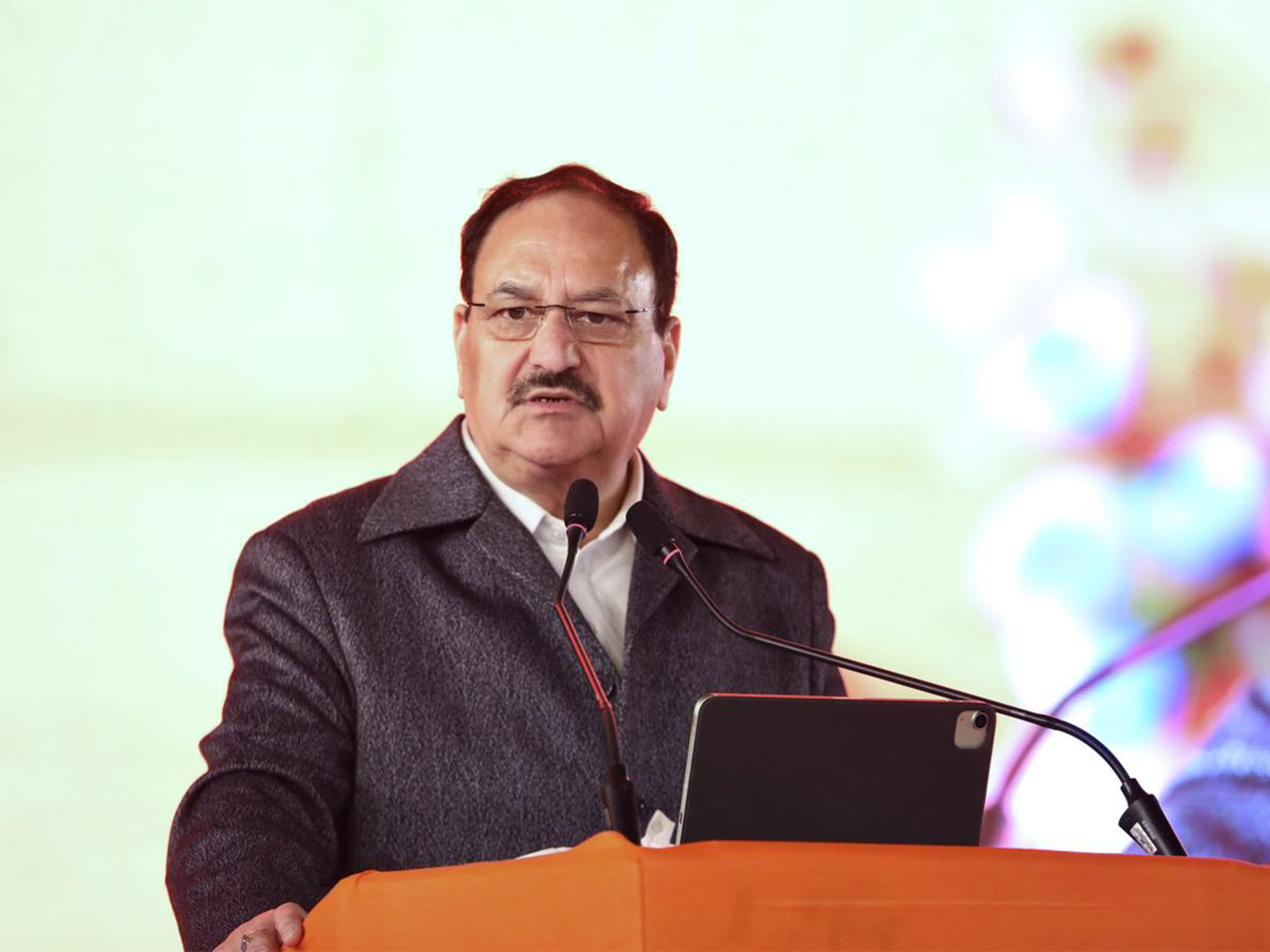
Tangra (West Bengal) [India], January 9 : Union Health and Family Welfare Minister Jagat Prakash Nadda attacked the Mamata Banerjee-led government in West Bengal for its "failures" in ensuring healthcare for the people, pointing out how the denial of Ayushman Bharat, and "ineffective implementation of welfare programmes" has deprived the poor and vulnerable people of life-saving healthcare. While addressing a Doctors' Meet held in Tangra, West Bengal, Nadda also hailed the transformative healthcare initiatives undertaken under Prime Minister Narendra Modi's leadership.
According to an official statement on Thursday, he pointed out that despite historic national progress in health indicators, West Bengal continues to lag due to the denial of Ayushman Bharat and the ineffective implementation of welfare programmes. Nadda asserted that the state government's political obstruction has deprived the poor and vulnerable of life-saving healthcare benefits.
He expressed confidence that the people of Bengal will reject this misgovernance and pave the way for development-oriented governance. During the programme, Leader of the Opposition in the West Bengal Legislative Assembly Suvendu Adhikari, Dr Sharda Mukhopadhyay, along with other doctors and party Karyakartas, were present on the dais.
In the afternoon, at the Altair Boutique Hotel in Bidhannagar, Nadda held a meeting with district presidents, departmental convenors, and migrant Karyakartas. Addressing the meeting, Nadda said that under TMC's rule, Bengal has become a safe haven for infiltrators.
"However, Bengal will no longer be misled, and in the upcoming Assembly elections, the people will teach Mamata Banerjee and the TMC a lesson and form a nationalist, development-oriented BJP government in West Bengal," the statement read.
Nadda stated that it was a valuable opportunity to interact with the gathering and discuss health-related issues, highlighting the initiatives undertaken under the dynamic leadership of Prime Minister Narendra Modi, which have led to significant interventions in the healthcare sector. Nadda bowed to the religious, cultural, and politically awakened land of West Bengal and began his address by seeking its blessings. It has always been true that what Bengal thinks today, the country understands and acts upon tomorrow, reflecting the leadership Bengal has provided.
JP Nadda remarked that when we talk about Viksit Bharat, the foundation is having a healthy India, and that a healthy India forms the foundation and base of Viksit Bharat. Health is a very important factor that must be understood, and attention must be given to how issues related to health are addressed.
BJP National President highlighted that under this comprehensive health policy, a whole-of-government approach was adopted, ensuring that departments do not work in silos. Under the dynamic leadership of Prime Minister Narendra Modi, the one health approach was emphasised. In this approach, the environment, animals, their feeding, and agriculture are all considered important factors. A whole-of-government approach means that all sectors come onto a single platform to ensure that human beings, cattle, and plants are healthy, as human health depends on the health of all.
This holistic approach was adopted and brought forward. For this, 1.81 lakh Ayushman Arogya Mandirs were established, with a plan to create facilities catering to a minimum population of 3,000 to 4,000 people. At present, 1,81,000 Ayushman Arogya Mandirs are serving the country's 1.4 billion population. These centres act as the first point of contact. To cater to 1.4 billion people, healthcare cannot rely only on tertiary or secondary care. While tertiary healthcare must meet high standards and secondary healthcare must be strengthened, it is essential that primary healthcare and the primary point of contact are made very strong and robust.
Nadda noted that for the past 6-7 years, the focus has been on primary healthcare through Ayushman Arogya Mandirs, which serve as the first point of contact. For this purpose, ASHA workers and community health officers have been trained. Efforts have been made to encourage ASHA workers, with the support of community health officers, panchayat pradhans, and BDC members, to ensure that every individual above the age of 30 visits an Ayushman Arogya Mandir facility.
Screening is being carried out for cancer--oral cancer for males, and cervical and breast cancer for females. It was noted that more than 40 crore people have been screened for oral cancer, and over 20 crore women have been screened for breast and cervical cancer.
Nadda pointed out that WHO has certified that India is now polio-free and neonatal tetanus-free. Trachoma is no longer a public health concern, and if this progress is sustained for one more year, India will become kala-azar free. Despite having one-sixth of the world's population, India accounts for only 0.7% of global malaria cases and 0.6% of global malaria deaths.
BJP National President asserted that a paradigm shift took place through Prime Minister Narendra Modi initiative of PMJAY, Pradhan Mantri Jan Arogya Yojana, known as Ayushman Bharat. Association with the health sector dates back to 1998, including leading the health department in Himachal Pradesh, serving as Union Minister in 2014, and again in 2024. In 2014, when India chaired the World Health Assembly, universal health coverage was being discussed globally. After returning, work began on policies for universal health coverage, which were discussed with Prime Minister Narendra Modi, who emphasised thinking big rather than small.
This led to the launch of Ayushman Bharat, the world's largest health coverage programme. Ayushman Bharat covers 63 crore people, nearly 40% of India's population, belonging to marginal sections identified not by caste but by profession--such as rickshaw pullers, vegetable vendors, auto drivers, bus and truck drivers and cleaners, liftmen, hotel workers, and waiters.
Each family is provided with health coverage of ₹5 lakh per year. This beneficiary population is comparable to the population of the entire European continent. Under Ayushman Bharat, 33,000 hospitals have been empanelled, 10 crore hospital admissions have taken place, and ₹1.4 lakh crore has been spent on providing life-saving treatment to poor families.
JP Nadda asserted that, unfortunately, the people of West Bengal have been deprived of this facility, and Ayushman cards were torn and thrown away. He questioned Mamata Banerjee, asking what fault the poor people had. He stated that this is a portable scheme, under which any worker from West Bengal working in another state can avail of treatment anywhere. If a worker from Bengal is working in Himachal Pradesh, treatment is provided there itself, and the payment goes directly from West Bengal to the hospital.
He remarked that Mamata Banerjee refuses to understand this, repeatedly saying "Hobe Na, Korbe Naa," and questioned why she has a problem with the scheme. In 2024, Prime Minister Narendra Modi further expanded the scheme to include all citizens above 70 years of age, irrespective of income, religion, or gender, providing ₹5 lakh annual health coverage till the last breath. Despite this, the people of West Bengal remain deprived of the benefit. Even insurance companies stop offering health insurance after the age of 60, whereas under this scheme, coverage begins at 70 and continues for life.
Nadda noted that there were three states that had disallowed Ayushman Bharat. One was Odisha, where Naveen Patnaik had said "Hobe Na," but the people rejected this stance, the lotus bloomed, and Ayushman Bharat was implemented there. Another was Delhi, where Kejriwal kept rejecting Ayushman Bharat, but the people rejected him, the lotus bloomed, and the scheme reached Delhi as well. Nadda stated that he has full confidence that in West Bengal too, "Hobe Naa" will change to "Hobe," the lotus will bloom here as well, and Ayushman Bharat will be implemented.
JP Nadda shared how Prime Minister Narendra Modi has effectively addressed a public health challenge. During the COVID-19 pandemic, even developed nations struggled to address the crisis. Lockdowns in countries like the United States and Europe led to strikes, and when vaccination began, resistance emerged, with anti-vaccination efforts turning into public movements. In India, when COVID-19 cases emerged, the fight against the pandemic was not led by the government alone but was fought collectively with the people. India responded decisively, beginning with the Janata Curfew, followed by a lockdown.
BJP National President pointed out that earlier it took 25-28 years for TB medicines to reach the country, 27 years for tetanus vaccines, and nearly 100 years for vaccines against other diseases such as Japanese encephalitis. Although the Japanese encephalitis vaccine came to India in 2006, it took additional time for it to become a national programme. Previous governments had decided that vaccines would be sourced from abroad. In contrast, when the first COVID-19 case was reported in January 2020, Prime Minister Narendra Modi constituted a task force by April and entrusted the work to two to three companies with full financial backing and moral support.
Integrated medicine is the future, reflecting a changing India with new initiatives. It was highlighted how proactively and decisively Prime Minister Narendra Modi is taking these initiatives forward and how healthcare is being advanced through public-private partnership. Under this approach, the effort is to ensure health for all and good health for all, by taking preventive, promotive, curative, palliative, and rehabilitative healthcare forward together.