US DoJ's defence of Adani case withdrawal draws support from legal experts; jurisdiction, lack of evidence among key reasons cited
Jul 06, 2026
By Sushil Batra
New Delhi [India], July 6 : Legal experts from India, the United Kingdom and the United States have largely endorsed the US Department of Justice's (DoJ) decision to defend its move to withdraw the criminal case against industrialist Gautam Adani, saying the department's response before a federal court strongly justifies why the prosecution should not continue.
The comments come after the DoJ filed a detailed submission before a US federal court explaining its decision to seek dismissal of the indictment. The department reportedly argued that the alleged conduct did not involve organised criminal groups, did not affect US companies, had no national security implications, and had already been investigated in India. It also questioned whether the prosecution should have been initiated in the first place.
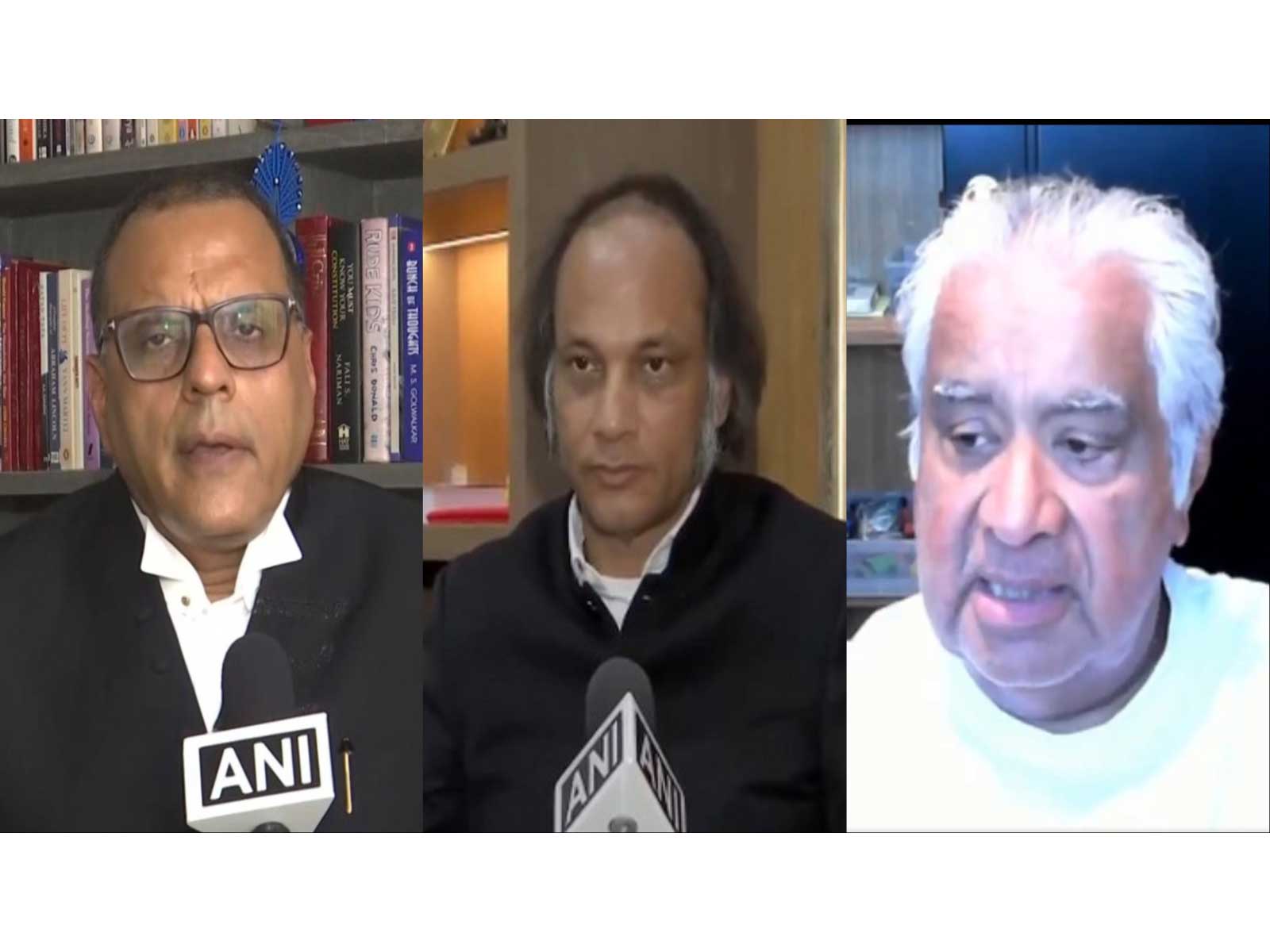
Speaking to ANI from London, Senior Advocate Harish Salve said the DoJ's filing suggests that the case lacked the characteristics that ordinarily warrant prosecution in the United States.
"The argument is that the case lacks the typical elements that would justify such a prosecution, particularly any demonstrable national security impact, involvement of US entities, or links to organised criminal activity. The filing also explains that multiple attorneys reviewed the evidence extensively. It was also stated that this white-collar case was indicted in late 2024 without first hearing from defence counsel," Salve said.
Commenting on the broader context, Salve alleged that the previous US administration had pursued an anti-India narrative.
"The Biden administration had a constant anti-India narrative running. There are senators there who constantly had rhetoric against India and were trying to pressure India. It has been said that the case was filed as a 'name and shame' exercise without any realistic prospect of a trial occurring. The expectation is that the court is likely to close the case," he said.
Senior Advocate Vikas Pahwa described the DoJ's response as "strongly worded", noting that it was filed after the federal court sought an explanation for the withdrawal request.
Pahwa said one of the central grounds raised by the DoJ was the issue of jurisdiction.
"The department has argued that all the alleged transactions took place in India. The individuals involved are Indian, the companies are Indian, and the alleged bribery also occurred in India. Therefore, it questioned how the investigation and prosecution could practically be conducted in the United States," he said.
According to Pahwa, the DoJ also stated that, in hindsight, the indictment should not have been filed and indicated that the chances of securing a conviction were minimal.
"They have also stated that they would not be able to successfully prove the charges before a US court. That is one of the reasons they have given while justifying why the indictment should be cancelled," he added.
Speaking to ANI from Goa, renowned Advocate Vijay Aggarwal said the DoJ's own assessment indicates that the prosecution lacked a solid evidentiary foundation.
"In their assessment, there was no substantive case to begin with. The DoJ has indicated that the evidence is far weaker than initially expected, and crucially, there appears to be no demonstrable loss. In such circumstances, the basis for prosecution itself becomes questionable," Aggarwal said.
He added that courts do not independently pursue criminal prosecutions but adjudicate cases brought before them.
"The court does not initiate or sustain prosecution on its own--it adjudicates only when the prosecution chooses to proceed. In this situation, the foundation of 'no loss' and lack of evidence becomes decisive," Aggarwal said.
Managing Partner of Karanjawala & Company, Raian Karanjawala, said the key issue was whether a prosecutable case existed in the first place.
"The real question was whether a case was made out or not. Adani's lawyers had raised these issues before the Department of Justice. The matter was considered over a period of time, and ultimately the DoJ accepted the Adani group's contention that this was not a fit case for prosecution and therefore approached the court seeking permission to withdraw," he said.
US lawyer Jim Walden also described the DoJ's submission as robust and said the federal court now has little option but to dismiss the case.
"The response of the DoJ was strong. It is not unusual for the department to explain the basis of its decision, particularly where allegations of partial treatment have been made. The judge's responsibility is now clear. The only possible outcome is dismissal, and that should be the finish line," Walden told ANI.
Walden further argued that American courts should exercise restraint in pursuing matters centred on alleged conduct outside the United States.
"The United States subjected one of its allies to two years of scrutiny. Indian agencies, which are fully capable of examining the matter, found no misconduct. There is well-established US case law that American justice should not pursue foreign transgressions, whether real or perceived. This appeared more like jurisdictional theatre than a serious criminal prosecution," he said.
The federal court is now expected to consider the DoJ's submission and decide whether to grant its request to dismiss the criminal case.