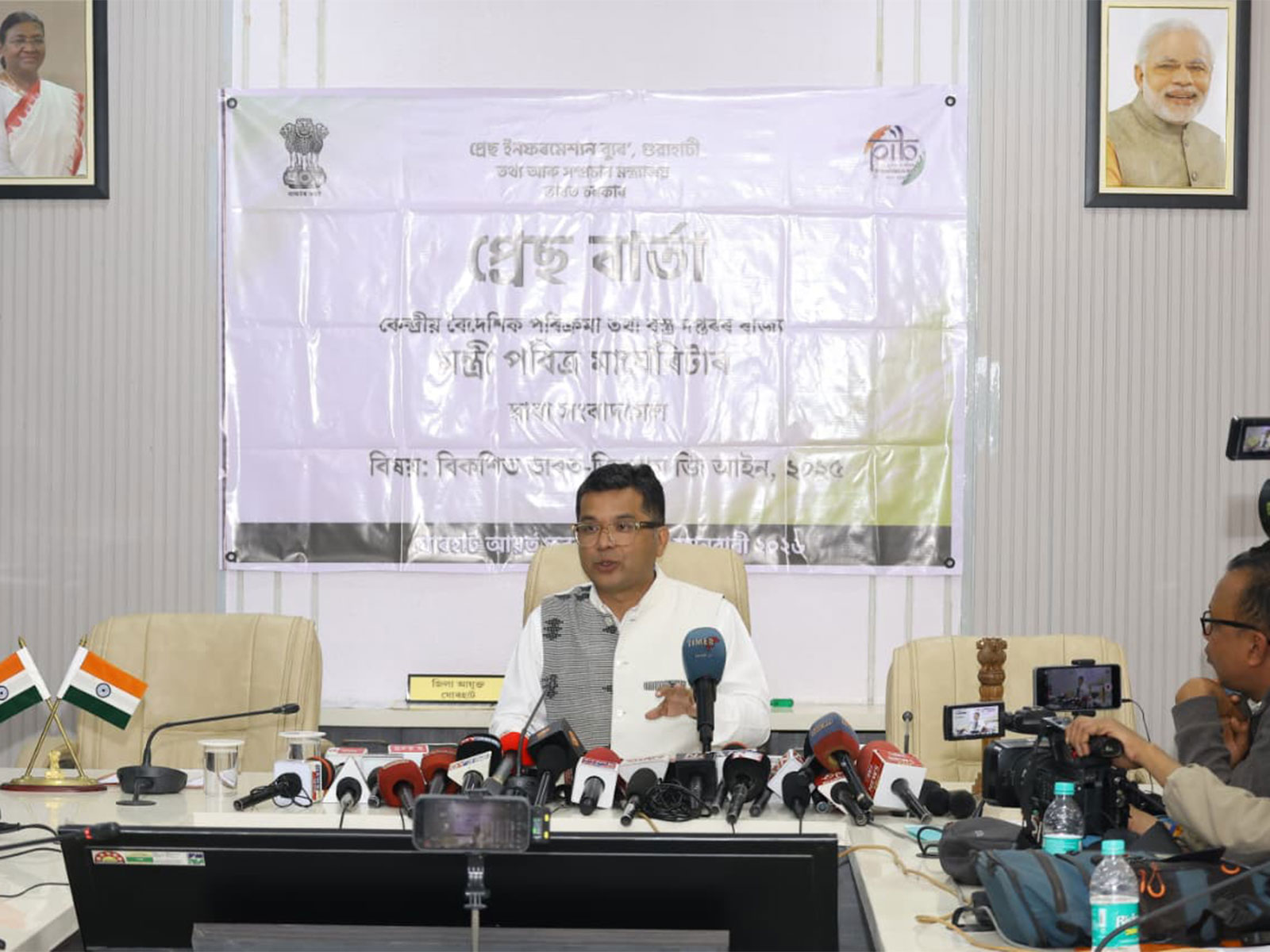
VB-G RAM-G Act marks historic shift in rural employment policy: Pabitra Margherita
Jan 22, 2026
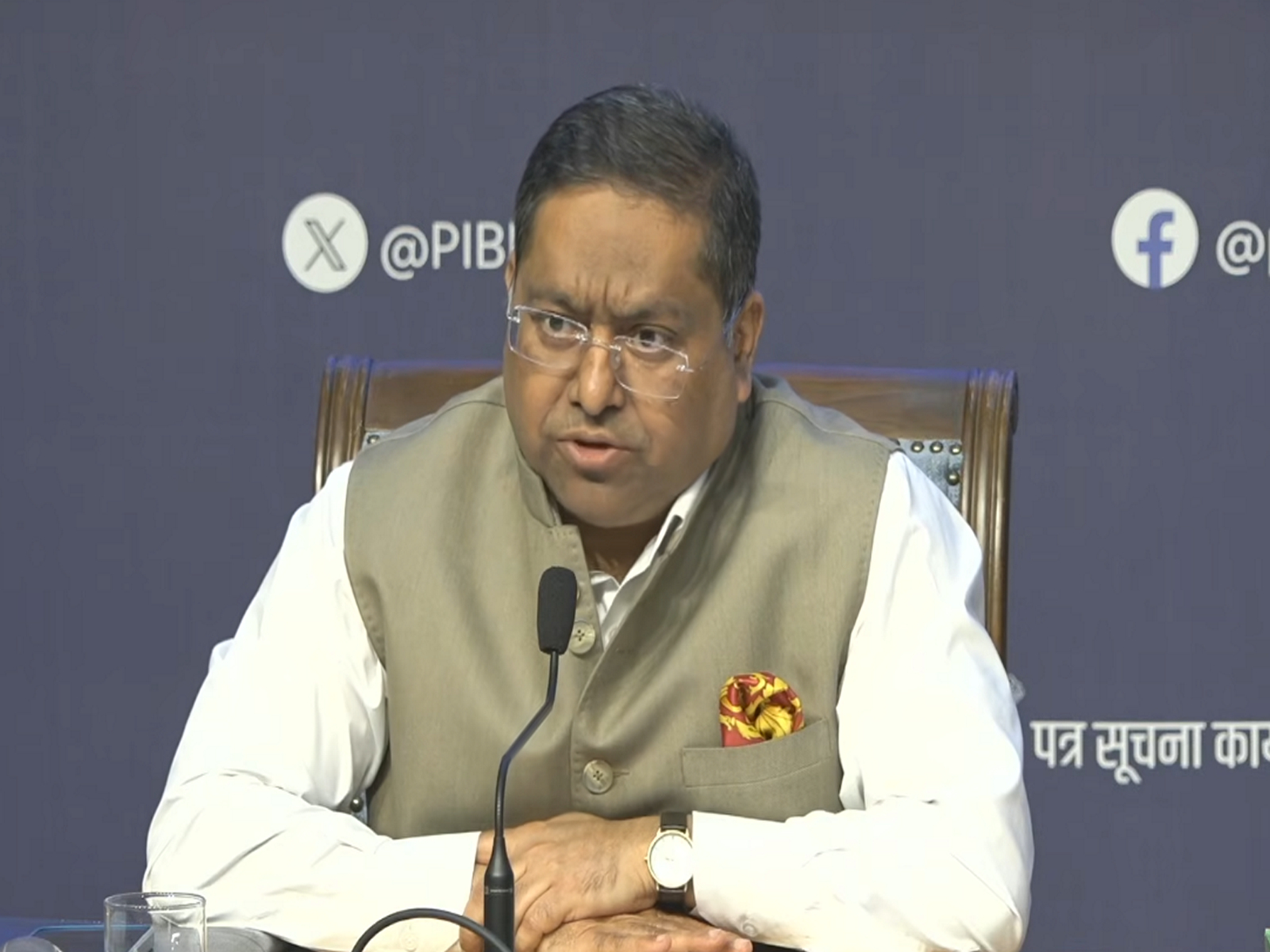
Guwahati (Assam) [India], January 22 : The Minister of State for External Affairs & Textiles, Pabitra Margherita, on Thursday addressed a press conference at the Jorhat Circuit House on the passage of the Viksit Bharat Guarantee for Rozgar and Ajeevika Mission (Gramin) (VB-G RAM-G) Act, 2025, describing it as a historic milestone in India's journey towards Viksit Bharat @2047 and a decisive redefinition of rural employment policy.
Margherita said that the new legislation reflects a fundamental shift in governance thinking, moving away from a relief-based approach to a productivity-oriented framework that recognises villages as centres of growth and prosperity. He underlined that this transformation has been made possible under the visionary leadership of Prime Minister Narendra Modi, whose focus has been on ensuring dignity of labour and sustainable livelihoods rather than temporary relief, according to the Ministry of Rural Development.
The Minister placed on record his gratitude to Union Rural Development Minister Shivraj Singh Chouhan, noting that his deep understanding of rural life and ground realities was instrumental in shaping the new legislation. He explained that the transition from MGNREGA to VB-G RAM-G is a natural evolution shaped by the hard lessons of two decades of implementation.
Margherita observed that while MGNREGA initially served a relief purpose, serious structural weaknesses emerged over time. Asset creation became fragmented and short-term, while governance gaps enabled fake job cards, ghost beneficiaries and inflated muster rolls. He noted that repeated social and performance audits exposed inherent design flaws that allowed fake beneficiaries and middlemen to siphon off funds meant for genuine workers, making comprehensive reform not optional but inevitable.
Before outlining the reforms under the VB-G RAM-G Act, 2025, Margherita recalled how the on-ground implementation of rural employment programmes had already undergone a significant transformation over the past decade.
Highlighting the changing realities of rural India, the Minister said that policies designed for 2005 cannot address the needs of 2025. With rural poverty declining sharply, alongside expanded social security coverage, improved connectivity, financial inclusion and digital access, shift from a relief-based approach to productivity-driven framework had become essential.
Outlining the key features of the VB-GRAM-G Act, Margherita said the legislation strengthens the rural safety net by increasing guaranteed wage employment from 100 to 125 days per rural household. For the first time, the law formally respects the agricultural cycle by mandating a 60-day pause on public works during peak sowing and harvesting seasons, ensuring farmers have access to labour when it is most needed.
He added that the Act ends the era of delayed wage payments by mandating weekly payments, not later than a fortnight, with automatic compensation for delays. This is supported by enhanced digital transparency and Al-based fraud detection systems to eliminate ghost beneficiaries and leakages.
Explaining the funding framework, Margherita stated that the 60:40 Centre-State funding model strengthens cooperative federalism by promoting shared responsibility, accountability, and effective planning. He further expressed his gratitude to the Prime Minister for extending a 90:10 funding partem to Assam, along with other North-Eastern States and the Himalayan States, recognising the unique regional and geographical constraints of these areas. He noted that the enhanced Central support reflects the Government's sustained commitment to inclusive, balanced, and region-sensitive development.
He further noted that unlike the earlier framework, which lacked clearly defined focus areas and resulted in scartered, short-term works, the VB-G RAM-G Act organises public works under four focused verticals, water security, core rural infrastructure, livelihood-linked assets and climate resilience, ensuring structured planning and durable assets with long-term developmental value.
Concluding his address, Margherita said the VB-G RAM-G Act, 2025 represents a decisive shift from symbolism to substance and from minimum relief to maximum productive growth, ensuring that as India advances towards becoming a Viksit Bharat by 2047, villages will be active partners in the nation's development journey.