West Bengal SIR: SC hands over judicial officers blockade probe to NIA, slams state officials for law and order failure
Apr 07, 2026
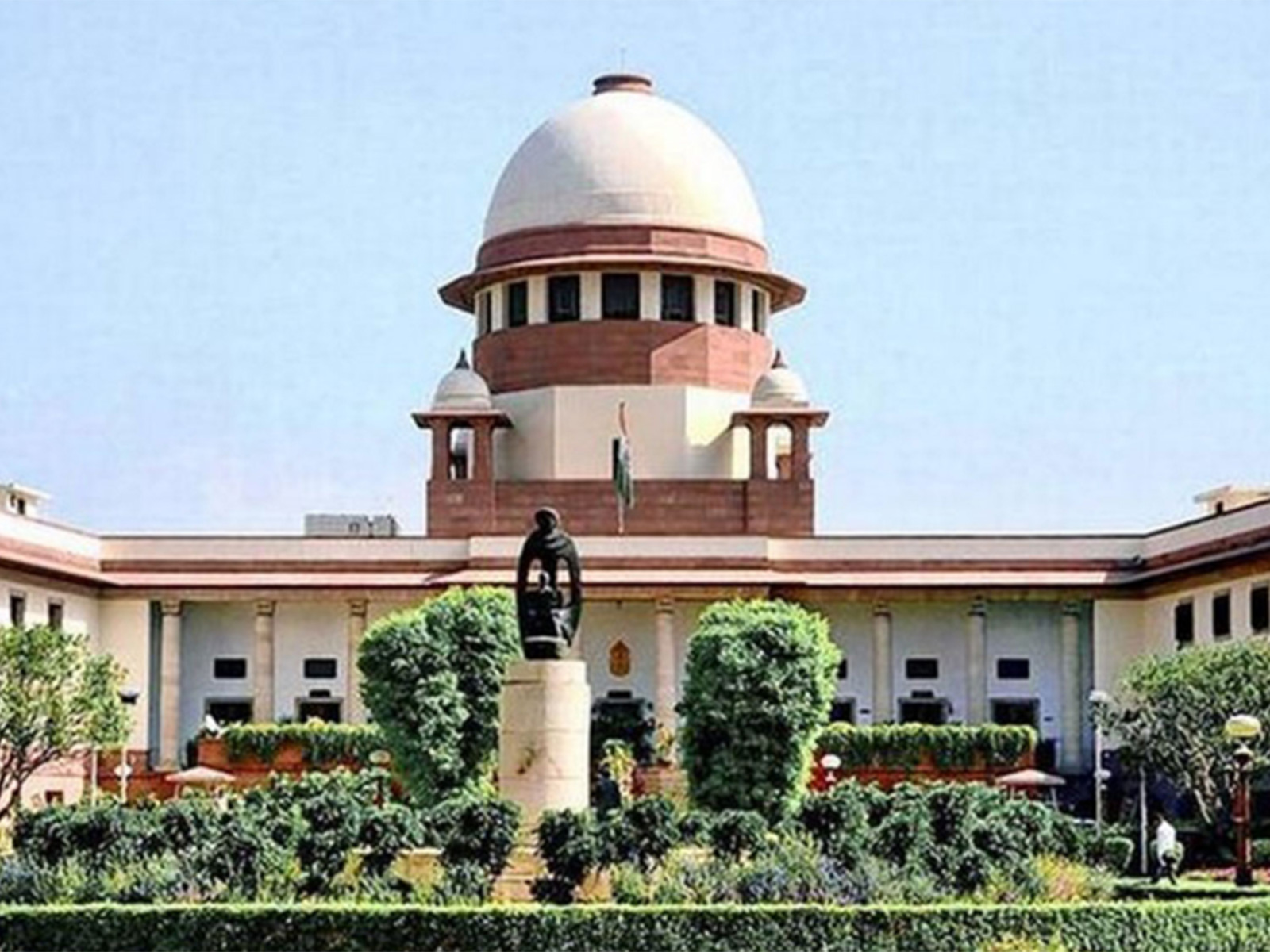
New Delhi [India], April 7 : The Supreme Court on Monday directed the National Investigation Agency (NIA) to take over the investigation in the alleged blockade (gherao) of judicial officers deployed in the Election Commission's (ECI) special intensive revision (SIR) of voter roll exercise in West Bengal's Malda district.
A bench of Chief Justice of India (CJI) Surya Kant and Justice Joymalya Bagchi examined a status report filed by the National Investigation Agency. It noted that three FIRs have been registered over incidents directly involving judicial officers and nine pertain to blockades in other areas. A total of 24 people have been arrested, including identified troublemakers and history-sheeters.
Keeping in view that there are serious allegations in the matter against officials of the WB administration, the Court ordered the NIA to take over the probe.
"...Judicial officers deputed to do work related to SIR of voter roll in West Bengal, we are informed that the ECI entrusted the inquiry to the National Investigation Agency. The NIA has consequently filed a status report in a sealed cover. Contents are perused... There are serious allegations against the State officials, including the State police. We direct the NIA to take over the inquiry", it noted. It further clarified that the agency would have full powers to widen the probe."The NIA will be at liberty to register further FIRs if it finds that the offences... have other dimensions or involvement", the Court added.
The Court laid down a clear framework for the investigation and directed that all reports be filed before the NIA (special) Court in Kolkata, while periodic updates must also be submitted before it.
"Irrespective of place of occurrence, the investigation reports shall be submitted at the NIA Court at Kolkata; however, before passing of orders, the NIA shall also submit its report in this Court from time to time."
The State police were ordered by the court to hand over all records and extend complete logistical support. "The State/local police is directed to hand over a report relating to all incidents to the NIA. Logistic support or assistance, as may be required by the NIA to take the probe to its logical conclusion."
The Court also ensured that the custody of accused persons would not remain with the State police.
"The suspects who have been arrested so far by the State/local police shall be independently interrogated by the NIA; for this purpose, their custody shall be handed over to the NIA even though they are in police custody."
During the hearing, Additional Solicitor General SV Raju, appearing for the NIA, placed the agency's status report before the Court in a sealed cover. Upon its consideration, the Court noted that the report detailed multiple serious incidents, including obstruction of judicial officers, blockades and coordinated disturbances during the SIR exercise.
Senior Advocate Siddharth Luthra, appearing for the West Bengal DGP and Chief Secretary, informed the Court that two alleged kingpins of the alleged blockade in Malda district, Mudawarul Islam and Mohammad Ali Shajari, had been arrested.
Relying on the NIA's findings, the Court observed that there were serious allegations against State officials, including the police and that the nature of the incidents suggested a broader breakdown of law and order.
Thus, it stated that the material placed before it warranted an independent and centralised investigation. The Court's concern was also rooted in specific incidents flagged in the report, such as a lady judicial officer being prevented from reaching her assigned venue and instances of gherao and obstruction at official locations.
Coming down heavily on the State administration, the Court remarked that the situation reflected a complete failure of governance and coordination. It observed: "Only because of sheer failure of State and police administration... the ECI is kept in the dark. You don't communicate with the High Court or ECI, and this lack created disturbance in the State."
The Court also criticised the conduct of senior officials of the WB administration for their lack of responsiveness and accountability.
"Why is the entire State policy being played out in the Secretariat and in offices of bureaucrats... We do not like when such senior officers invite adverse orders from us," it said.
It underscored that such a situation is not limited to just one State, rather it's in many States where senior bureaucrats and other officials of the State administration are pampered.
During the hearing, top officials of the West Bengal administration, including the State's Chief Secretary and the Director General of Police (DGP), appeared before the bench through video conferencing, in compliance with the court's earlier orders, where it had issued show cause notices to them to explain their inaction during the gherao incident.
The Court asked the Chief Secretary as to why he was unable to receive multiple phone calls made by the Chief Justice of the Calcutta High Court in a situation where judicial officers deployed in SIR duty were gheraoed and constrained for long hours. The top state official, in his response, submitted that during the time of the incident, he had been away from the State for official work. Answering the Court's query on why he was unable to receive phone calls, the Chief Secretary said his phone is a highly secured device and he had been on a flight during the day.
Displeased with the top officials response, the Court directed him to issue an apology to the Chief Justice of the High Court.
"Your number is mostly switched off, Mr Secretary... Lower yourself a bit so the other minion State officials, such as the Chief Justice of the Calcutta High Court, could speak to you and convey his messages to us", Justice Joymalya Bagchi remarked. You must issue an apology to the Honble Chief Justice of the High Court," he added.
Despite these strong observations, the Court accepted affidavits filed by senior officers and refrained from initiating further action.
"We hope and trust that both officers have understood the sense of responsibility... We do not propose any further action on these officers", the Court noted. underscored the gravity of the situation.
As regards the disposal of claims and objections in SIR, the Court held that decisions taken by the Judicial Officers can be challenged before appellate tribunals 19 presided over by former Chief Justices and High Court judges. It clarified that aggrieved persons, whether excluded from voter lists or dissatisfied with decisions of adjudicating officers, can approach these tribunals. The Court also allowed the tribunals to frame their own procedures, as long as they follow principles of natural justice and give all parties a fair hearing.
The Court also directed that a uniform procedure must be followed across all 19 tribunals. It asked the Chief Justice of the High Court to form a team of three former Chief Justices or judges to lay down a common procedure.
"The tribunals will be free to evolve their own procedure as per principles of natural justice and they will give a fair opportunity to parties to hear their appeal. With a view to bring uniformity in the procedure to be followed by all 19 tribunals, it would be necessary that this procedure is formally prescribed before adjudication of the appeals", it noted.
It also directed that this process begin immediately so that appeals can be heard without delay.
"We request the CJ HC to constitute the team immediately and start proceedings tomorrow so that appeals can be taken up immediately and taken up expeditiously. The High Court at Calcutta has requested the ECI vide April 5 to clarify certain issues, namely, when the venue of the appellate tribunal will be ready to be functional in all aspects. We are informed that the requisite infrastructure has been made available and the officers are ready to function.
ECI counsel informs that a nodal officer has been notified, who shall be required to issue directions. The SDO will acknowledge the receipt of the filing of appeals," it noted.
The Court also directed the Election Commission of India to publish the supplementary list of voters by tonight and permitted the portal to remain open until April 7 for the limited purpose of completing pending digital signatures on verified objections.
"The ECI is directed to publish the supplementary list tonight. Even in the absence of digital signatures on all the verified objections, for the limited purpose of digital signatures, the portal will remain open till April 7," it noted.