Winter crisis: Delhi High Court reviews steps taken to house patients' attendants
Jan 16, 2026
New Delhi [India], January 16 : The Delhi High Court on Friday reviewed the steps taken by civic bodies, hospitals, and government authorities to provide shelter and basic facilities to attendants of patients who are compelled to stay outdoors near major government hospitals during the ongoing winter crisis.
Taking note of a detailed status report and the minutes of meetings placed before it, the Court observed that coordinated efforts are now visible on the ground, while emphasising the need for continuous monitoring to ensure that the measures translate into meaningful relief for those affected.
The review took place in a suo motu matter initiated by the High Court to address the plight of patient attendants exposed to extreme cold conditions outside major hospitals, including AIIMS, Safdarjung Hospital, Lady Hardinge Medical College and Ram Manohar Lohia Hospital.
The Bench was informed that nearly 70 pagoda-style temporary shelters have already been installed across key locations, with additional units expected to be erected by the evening to meet immediate requirements.
According to the status report and the minutes of the stakeholders' meeting convened on January 15 at Saket Court Complex under the chairmanship of the Principal District and Sessions Judge (South), a short-term emergency plan has been chalked out to address the pressing needs of people compelled to remain near hospitals for prolonged periods.
The meeting was attended by senior officers of multiple agencies, including the Delhi Urban Shelter Improvement Board (DUSIB), municipal corporations, Delhi Police, Delhi Metro Rail Corporation (DMRC), Public Works Department (PWD), Delhi Jal Board, power distribution companies, and representatives of major hospitals.
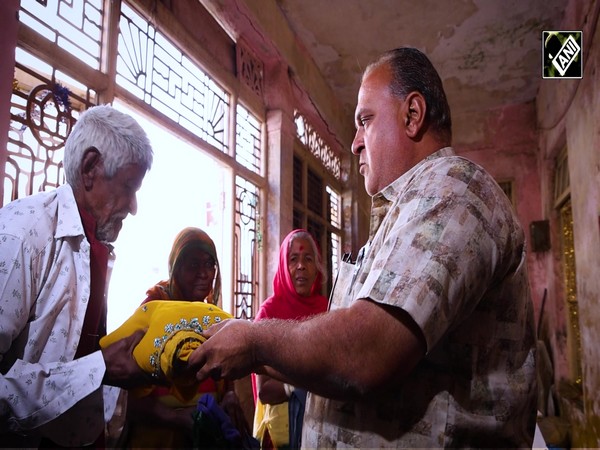
The Court noted submissions that DUSIB, in coordination with other authorities, has already distributed between 100 and 150 blankets in subways and nearby areas and shifted around 50 people from the vicinity of AIIMS to newly erected pagodas.
One pagoda has been designed to accommodate about 10 persons, and the agencies have committed to installing an additional 80 to 100 pagodas within a day, wherever space is available. Each beneficiary, it was stated, would be provided three meals a day in accordance with prescribed norms.
The facilities being ensured at these pagoda-style shelters include essential bedding, adequate LED lighting, access to clean drinking water, toilets and washrooms, fire safety equipment and medical kits. The High Court observed that these measures, if properly implemented, would go a long way in mitigating the immediate suffering caused by severe cold waves.
Hospital authorities also placed their preparedness on record. AIIMS informed the Court that it has offered a parcel of land to DUSIB for the erection and operationalisation of around 80 additional pagodas. It further stated that three existing shelter homes within AIIMS have had their capacity expanded, patient-support services have been upgraded, and shuttle services have been extended in terms of operational hours and efficiency to facilitate easier access for patients and attendants. A special assistance team comprising security personnel and shelter managers has also been deployed to guide people to available facilities.
Similar commitments were made by Safdarjung Hospital, Lady Hardinge Medical College and Ram Manohar Lohia Hospital, which identified parking areas, vacant plots and spaces within hospital campuses for immediate erection of temporary night shelters. The New Delhi Municipal Council and Municipal Corporation of Delhi assured uninterrupted water supply, sanitation, cleanliness and power supply around the shelter sites, while power distribution companies stated that electricity would be promptly arranged wherever required.
The minutes of the meeting further record that nodal officers, assistant nodal officers and emergency officers have been appointed by all concerned stakeholders, with clearly defined day and night shifts, to ensure round-the-clock supervision. The nodal officer of DUSIB has been made in-charge of overall implementation of the short-term plan, supported by police officers and representatives of civic agencies on field duty. A WhatsApp group of all nodal and emergency officers has also been created to enable real-time coordination and swift redressal of complaints .
Taking note of longer-term planning, the High Court recorded AIIMS' proposal to develop a 3,000-bedded Vishram Sadan on around two acres of land in the Ansari Nagar (West Campus) area. The Bench described the proposal as a crucial step towards creating permanent infrastructure for attendants of patients who often have no option but to stay outdoors for weeks or even months during treatment.
Emphasising accountability, the Court directed that nodal officers must remain alert to any shortcomings at shelter sites and ensure immediate corrective measures. It underlined that there should not be a single person left out on roads or open spaces suffering from hunger, thirst or lack of shelter during winter nights.
To maintain close oversight, the High Court ordered that a review meeting of all stakeholders be convened on January 24 under the chairmanship of the Principal District Judge (South), who will submit a fresh status report thereafter. The matter has now been listed for further hearing on January 27.
Before concluding, the Court also urged members of the Delhi High Court Bar Association to consider contributing towards the construction of the proposed Vishram Sadan, observing that such collective effort would substantially ease the hardship faced by thousands of families visiting Delhi for medical care.
Reiterating that the right to shelter during extreme weather conditions flows from the constitutional guarantee of life and dignity, the High Court stressed that the steps outlined in the status report must translate into visible, on-ground relief for patient attendants battling the harsh winter.
Additional Solicitors General Chetan Sharma and Ashish Dixit appeared for the Central Government and its authorities. Advocate Satya Ranjan Swain appeared for AIIMS and Standing Counsel Sameer Vashisht represented the Delhi Government and its authorities. However, Advocate Nishant Gautam appeared for Delhi Police in the matter.