World Yogasana Championships' success lays foundation for India's Commonwealth Games 2030 preparation
Jun 09, 2026
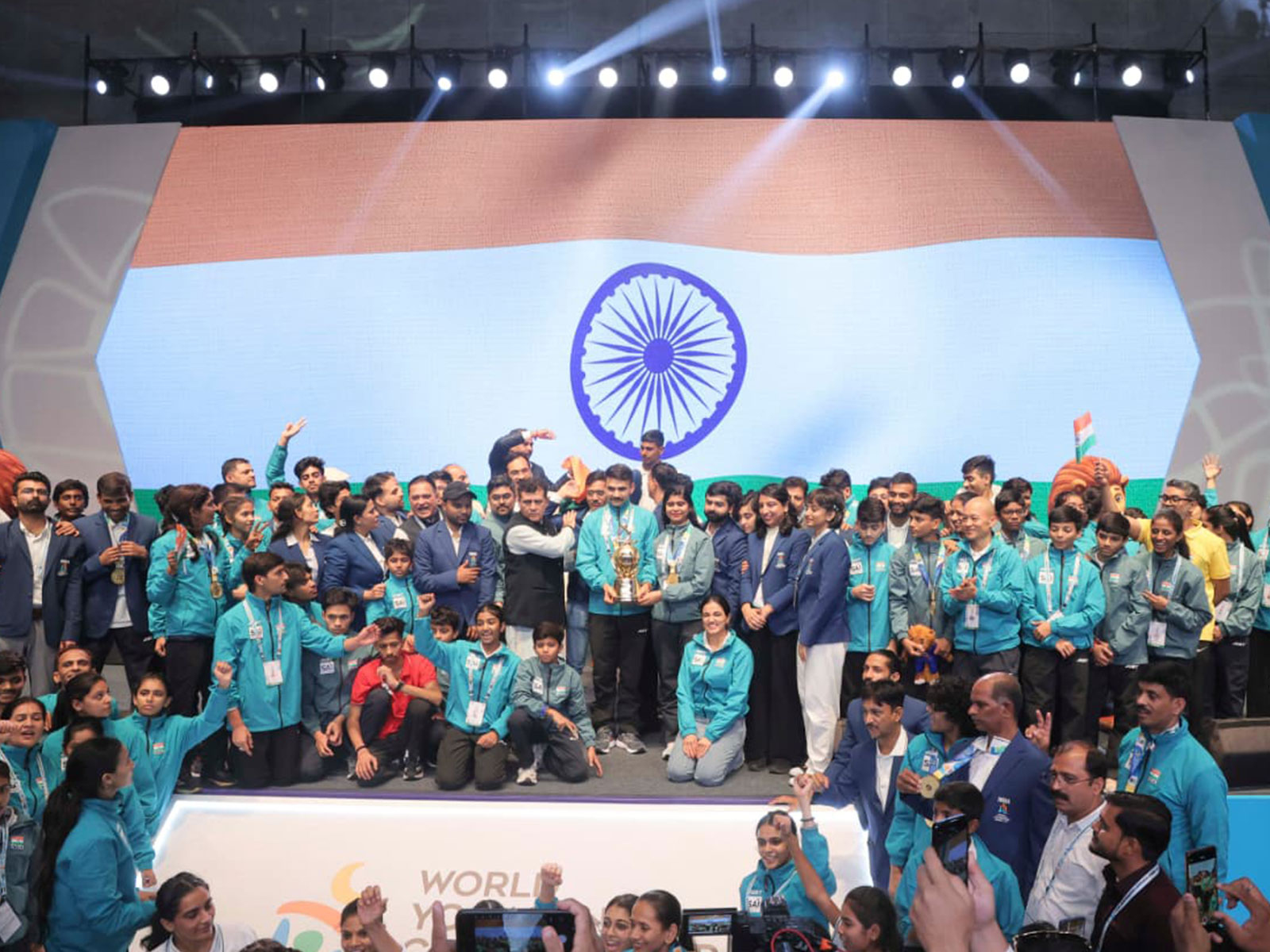
Ahmedabad (Gujarat) [India] June 9 : India expectedly finished with a whopping 114 medals (102 gold, nine silver and three bronze) at the World Yogasana Championships (WYC) 2026, thanks to a coordinated effort between the national federation and the Sports Authority of India (SAI) to provide the players with the best of training facilities in the run-up to the championships.
The biggest takeaway from the World Yogasana Championships is that India has emerged as the leading force in competitive yogasana and is going to be a strong medal contender at the Commonwealth Games 2030.
Fourteen-year-old Ishika Guchhait's father sells betel leaves and took up yoga at the insistence of her mother to add discipline to her life. Gujarat's Heena Rajbhor is a successful model who is fascinated with the theory of Yoga shastra and has been passionately researching it, according to a release.
Ishika and Heena and the hundreds of yogasana athletes competing for India at the inaugural World Yogasana Championships at the EKA Arena may belong to a different spectrum of society and got hooked to yoga for varied reasons, but their love for the sport and hard work ensured that the hosts dominated the competition that witnessed over 400 athletes from 78 countries vying for honours from June 4 to 8.
India is already looking ahead to the Commonwealth Games 2030 in Ahmedabad, where yogasana will be played as a medal sport. If India hosts the Summer Olympics in 2036, there is a strong possibility that yoga may make its debut, given that it has already attracted the attention of the world.
"The team underwent a rigorous training camp for a month at SAI Gandhinagar with seven coaches, three physios, two masseurs and one dietician taking care of their training and recovery," said chief coach Chandra Kant Mishra.
Speaking about the experience at the camp and later in the competition, Ishika spoke about how she had not thought about the hard work that goes into preparing for competition.
"The camp was a very different experience, and I learnt so much about diet, fitness and recovery. The coaches had already decided our pairs, and we practised together for a month," she said.
"The competition itself was quite an overwhelming experience. At the start of the year, I was only thinking about participating and winning medals in the Khelo India Youth Games. But the level and feel of this competition is very different and I am happy that I could win a gold medal for the country," said Ishika, who won the gold medal in the rhythmic pair sub-junior girls' category.
Mishra, who has been with SAI for over a decade and has helped many top Indian athletes with recovery and mobility as a Yoga expert, pointed out that yoga for recovery is very different from yogasana as a competitive sport, and that is why it was important to prepare so meticulously.
"People who do Yoga for mindfulness and health reasons do so without a limit of their comfort. But to compete, athletes have to push their bodies beyond what looks possible for a normal human being and require tremendous strength and endurance," he added.
This meant that the 114 athletes at the camp were made to do endurance running, focus on the right diet and train for almost six hours a day during the camp.
"When we came to the world championships, we were expecting to win medals in all the categories. But looking at the competition here, we now understand that maintaining this dominance is not going to be easy. Players from Russia, Japan and some European countries are physically very strong, and they made up for their technical flaws with strong holding here," Mishra said while explaining how these countries ended up winning a few gold medals in Ahmedabad.
According to the scoring system, players are given points based on the efficiency of their asana, their facial expressions and their ability to hold their position for a considerable amount of time.
To standardise the process, the World Yogasana Federation has identified and structured the scoring system of 250 asanas from which the athletes can pick and choose the ones they want to perform. Apart from this, the federation has also invested in sending coaches to various countries and also training judges as the sport makes a push for Olympic glory.
Speaking about the success of the first-ever world championships and the road ahead, Yogasana Bharat president Udit Seth said, "The inaugural World Yogasana Championship is only the first step in a much larger vision. Our focus now shifts towards building a year-round global ecosystem through continental championships, professional leagues, athlete development programmes and stronger international federations. The future of Yogasana lies in transforming it from a championship into a global sporting movement."
Mishra also pointed out that the Sports Authority of India is already looking ahead with the 2030 Commonwealth Games and possible Olympic inclusion in mind.
"After these world championships, there is a plan to set up five Centres of Excellence to train the yogasana athletes. Apart from that, these athletes can apply for jobs under the sports quota," she said.
All in all, the inaugural World Yogasana Championships have set the marker, and the sky is the limit for the sport and the country.