"You're violating Constitutional acts, imposing Hindu Succession Act on Muslims": Owaisi slams Centre over UCC Bill in Gujarat
Apr 04, 2026
Ahmedabad (Gujarat) April 4 : All India Majlis-e-Ittehadul Muslimeen (AIMIM) President Asaduddin Owaisi on Saturday slammed the central government over the Uniform Civil Code (UCC) Bill recently passed by the Gujarat state assembly, calling it a violation of Muslim personal laws and constitutional rights.
Owaisi said that the government is violating the constitutional acts that guarantee the freedom to practice the Islamic religion and imposing the Hindu Succession Act on Muslims.
Addressing a press conference here, Owaisi said, "You (government) are violating the constitutional acts that guarantee the freedom to practice our religion and imposing the Hindu Succession Act on Muslims. The requirement of proof of adultery for divorce, judicial suppression, and exceptional circumstances are all part of the Hindu religion; why is it being imposed on the Muslims? It is a violation of Article 21."
He further questioned the government's approach, stating, "There is a provision of live-in relationship, where are the morals of RSS and BJP?... This is against the Islamic belief system and ruins the sanctity of marriage."
Owaisi also criticised the alignment of Muslim laws with Hindu practices in matters of family, maintenance, and inheritance. "Maintenance, alimony and succession are aligned with the Hindu religion too," he added.
The AIMIM chief's remarks come as the Gujarat State Assembly recently passed the Gujarat UCC Bill 2026, which aims to provide stronger legal protection and equality for women across communities.
According to the Chief Minister's Office, the Bill covers marriage, divorce, live-in relationships, maintenance, and inheritance, seeking to ensure equal rights and legal safeguards for women.
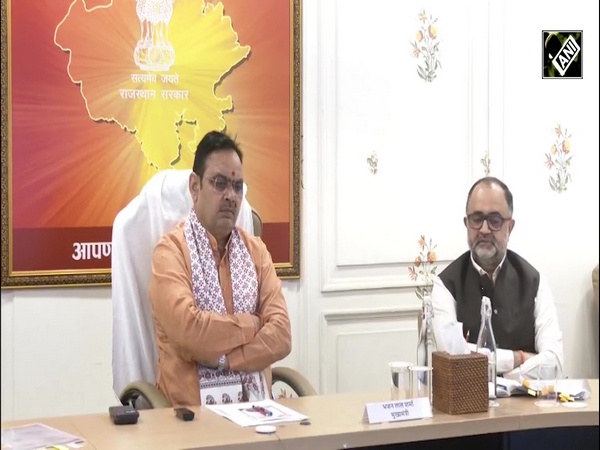
Chief Minister Bhupendra Patel, while introducing the bill, said the move reflects Prime Minister Narendra Modi's vision of "Ek Bharat, Shreshtha Bharat" (One India, Great India), emphasising that equal laws are essential for national unity and development.