'Agnipath' scheme was not set in stone: CDS Gen NS Raja Subramani on 2-year extension of Agniveers, outlines pathway to regular army enrollment
Nov 04, 2026
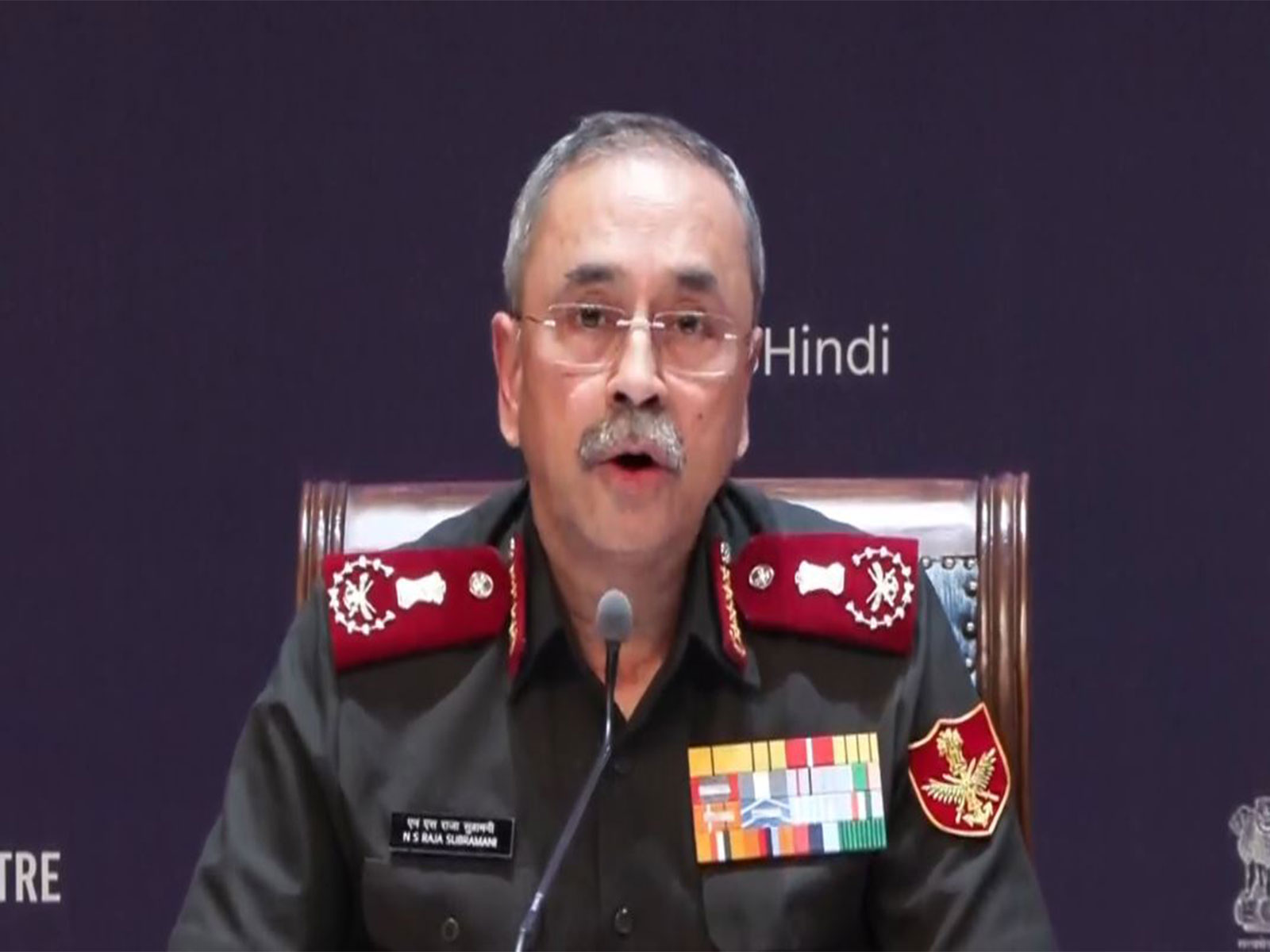
New Delhi [India], November 4 : In a major update to India's military recruitment framework, Chief of Defence Staff General N S Raja Subramani on Wednesday said the Union Cabinet has approved an additional two-year engagement for 75 per cent of Agniveers who were to exit after their four-year tenure.
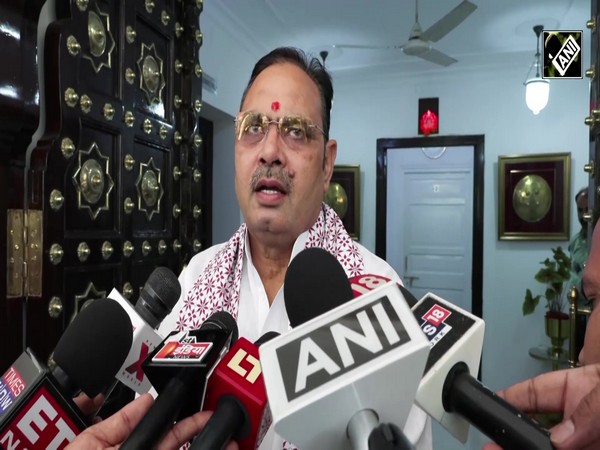
Speaking to media persons in New Delhi after the Cabinet meeting, Gen Subramani said the Agnipath scheme introduced on June 14, 2022 remains active and intact.
He said the decision follows extensive internal reviews, continuous performance tracking and positive feedback on the inaugural batches nearing completion of four years, based on which the Defence Forces recommended expanding service opportunities.
Under the new mechanism, the 75 per cent of Agniveers not retained in the initial 25 per cent merit-based selection will get a second two-year extension. On completing six years in total, willing personnel will have another opportunity for full enrolment into the regular Armed Forces based on objective selection criteria.
The CDS reiterated that the Agnipath scheme was designed with built-in flexibility rather than a static policy.
"When the 'Agnipath' scheme was first introduced, we emphasised that it was not set in stone. We stated that we would evaluate the performance of the Agniveers and conduct continuous reviews. There were objective selection criteria, and a centralised database was maintained for all Agniveers across all three services to track their performance. Their performance was reviewed annually. Based on these evaluations—and considering the achievements I highlighted earlier—the Indian Defence Forces recommended to the government that 75 per cent of the Agniveers be granted an additional engagement period—specifically, an extension of two years. This review did not just happen today; it has been an ongoing process. We have been discussing this for the past three to four months, and today the Cabinet has approved our recommendations," he said.
Performance has been systematically documented in a unified tri-services database across the Army, Navy, and Air Force since inception.
The recommendation to extend engagement by two years came directly from military leadership to the central cabinet following 3 to 4 months of structured inter-service evaluation.
Gen Subramani dispelled rumours that the initial four-year model was being scrapped. The four-year entry contract remains the baseline. He emphasised that personnel not picked in the top 25% during the first round are not lacking in capability; their non-retention is simply a function of relative ranking.
Extending their service gives the armed forces seasoned, trained personnel while giving Agniveers additional time, income, skill acquisition, and a second shot at lifelong regular enlistment.
"First of all, I wish to state that the Agnipath scheme in its current form, that is, the first four years, will continue. The Agnipath scheme has not been discontinued. It will continue. Secondly, this second engagement period of two years gives those Agniveers who have not been selected in the first four years a chance to serve longer. Their relative experience, qualifications and skills are relative. It's not that they are bad; it's relative. So, in these two years, they get a chance to serve longer in the Army, with the provision that they can be enrolled as regular soldiers. So this is a win-win situation for both," he said.
Calling it a significant day for the Defence Forces and Agniveers, CDS General N S Raja Subramani said the Cabinet has now created a pathway for all Agniveers to be absorbed.
"Today is a very significant day for the Indian Defence Forces and for our 'Agniveers'. The Cabinet has created a pathway for all Agniveers to be absorbed into the Indian Defence Forces," he said.
He recalled that the Agnipath scheme was introduced on June 14, 2022, with a provision for continuous performance evaluation and periodic review.
"The first batch of Agniveers is now nearing the completion of their four-year tenure. Based on the performance evaluations conducted over these four years, we have received very positive feedback regarding their performance," he noted.
Explaining the change, he said that while 25 per cent of Agniveers will be enrolled into the regular forces on merit as earlier planned, the remaining 75 per cent will no longer transition out immediately.
"Previously, the provision was for 75 per cent of the Agniveers to transition back into society as disciplined and motivated youth. However, under this updated scheme, the remaining 75 per cent will now be offered an additional engagement period of two years. Upon completion of this two-year period, all those who are willing will be enrolled into the Armed Forces, subject to objective selection criteria," he said.
The move comes as the inaugural batch nears the end of its initial tenure, with unit commanders reporting overwhelmingly positive feedback, paving the way for a structured bridge that retains personnel for up to six years instead of an immediate exit at four.
Detailing the enrolment criteria after the extension, CDS General N S Raja Subramani said the dual-tier model will continue but with a wider second window.
"25 per cent of those who complete their initial four-year engagement will be enrolled as regular soldiers. Regarding the remaining 75 per cent, the Indian Defence Forces have recommended and the Cabinet has approved today that they be granted a second engagement period of two years," he said.
"Upon completing this two-year extension, all these Agniveers will be offered the opportunity to enroll as regular soldiers in the Indian Armed Forces, contingent upon their own willingness and their ability to meet objective selection criteria," he added.
Under the model, Tier 1 covers the top 25 per cent retained immediately as regular cadre on merit after four years, while Tier 2 covers the remaining 75 per cent who will serve two extra years before a second evaluation.
Absorption after six years will not be automatic and will depend on willingness and transparent performance metrics.