BSF focuses on enhancing drone skills of troops deployed on borders
Aug 18, 2026
By Rajnish Singh
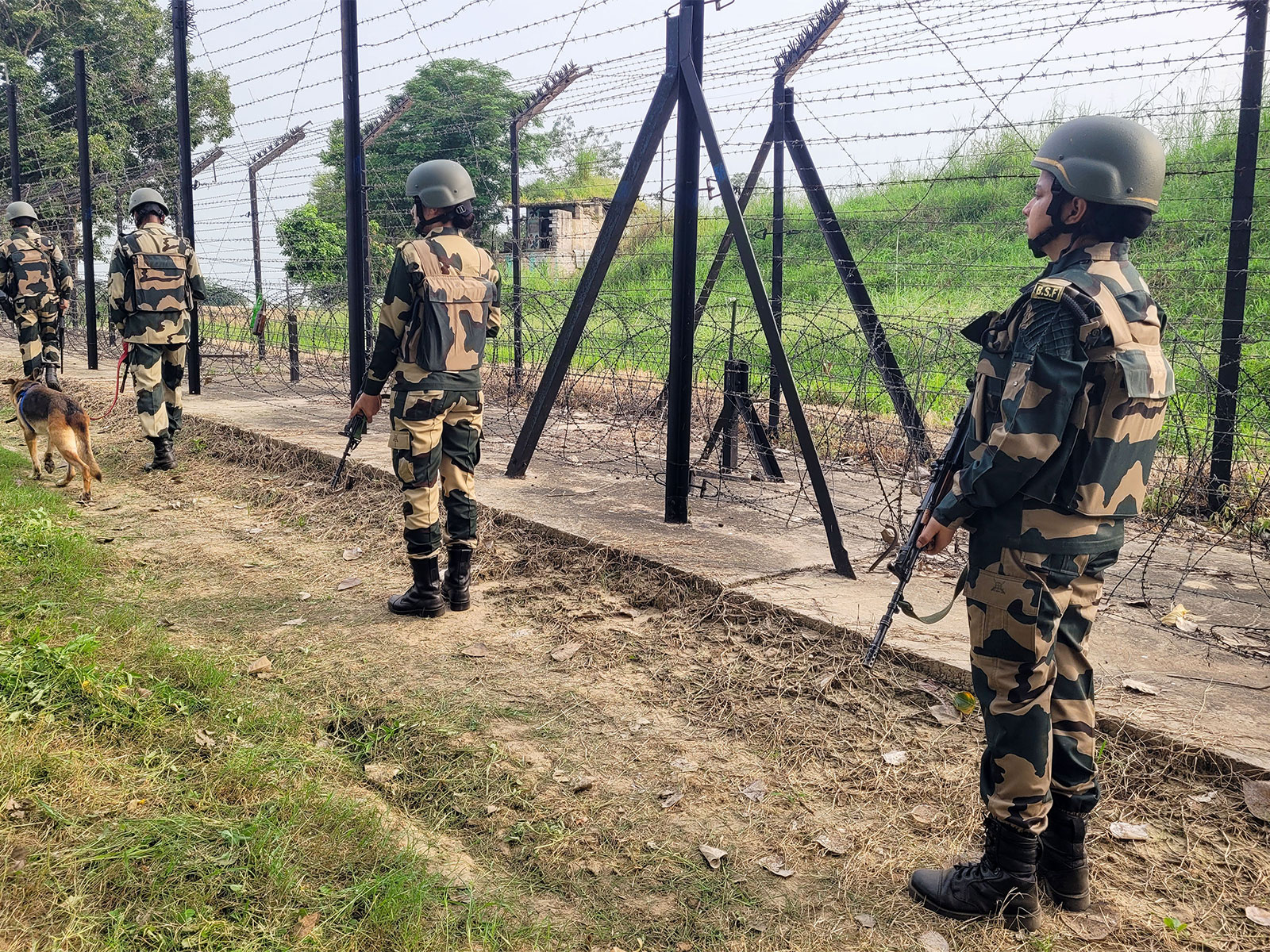
New Delhi [India], August 18 : In an attempt to deal with any untoward incident, the Border Security Force (BSF) is focused on enhancing the drone-handling skills of its personnel, especially those deployed along the borders, with drones emerging as an anticipated threat element against the country.
Officials close to the skill-upgradation initiative said specialised drone training has already been imparted to several personnel, including both men and women, to make them an integral part of the future smart border security framework.
The training programme is aimed at enabling personnel to develop technological competence, data-driven decision-making abilities, and greater self-reliance, empowering them to perform their duties with speed, precision, and confidence.
The BSF guards the 4,096-km India-Bangladesh border and the 3,323-km India-Pakistan border, which runs along Gujarat, Rajasthan, Punjab, the Union Territory of Jammu and Kashmir, and Ladakh. The drone squadron being raised by the force is expected to strengthen surveillance and border security.
"With this training, BSF warriors will be able to conduct more accurate, faster, and wider surveillance of border areas through drone technology. They will gain expertise in real- time intelligence gathering, data analysis, and strategic decision-making, thereby strengthening the overall security architecture. This initiative is a milestone in equipping the BSF personnel with modern technological capabilities, confidence, and leadership skills, and setting a new benchmark in border management," the officials said, requesting anonymity.
BSF Director General Praveen Kumar has also stressed the need to equip force personnel with modern technological skills, particularly in drone operations, while reviewing the operational preparedness of the force during his recent visit to the Amritsar Sector in Punjab Frontier.
During his interaction with troops at the 'Prahari Sammelan', Kumar appreciated their dedication and hard work and exhorted them to "continuously hone their skills to meet evolving border security challenges, particularly the use of drones by anti-national elements."
The BSF Academy in Gwalior, Madhya Pradesh, established India's first Drone Warfare School in September last year. The institution provides operational and tactical training in drone and anti-drone technologies and also focuses on research in emerging domains.
It currently offers specialised courses including the Drone Commando Course, Drone Warrior Course, and Drone Orientation Course. Five specialised courses cover UAV and drone operations, anti-drone warfare, surveillance, intelligence collection, and payload integration.
The training also includes night operations, radio-frequency jammers, kinetic interceptors, and AI-enabled tools, with simulators and dedicated flying areas developed to replicate operational situations.
The school's inaugural batch comprised 40 officers who underwent a week-long drone-oriented course, while a second batch of 47 personnel underwent a six-week Drone Commando Course.
The BSF also began advanced drone-operation training for its first-ever all-women drone squadron, named the "Durga Drone Squadron", in November last year. Through this training, women personnel were taught to operate and control drones, conduct surveillance missions, and collect data for intelligence purposes. The trainees are also being trained to counter cross-border drone threats, including exposure to electronic detection and response systems.
Furthermore, the course builds technical proficiency for search and rescue operations and disaster response using drone technology. This specialized drone training not only enhances the technical skills of women personnel but also propels them to become an integral part of the future smart border security framework.
The program enables the women squadron to achieve technological competence, data-driven decision-making ability, and a high level of self-reliance, empowering them to perform their duties with speed, precision, and confidence in all situations.
Last month, the Ministry of Electronics and Information Technology (MeitY) notified six specialized institutions as Examiners of Electronic Evidence under Section 79A of the Information Technology Act, 2000.
Published in the Gazette of India (Extraordinary) on July 13, 2026, these notifications significantly expand the country's official capacity to examine computer media, mobile devices, and drone-related evidence. Special Instruments Wing (SIW) of the BSF, which operates its Central Drone Forensic Lab in Delhi, is among the six specialized institutions as examiners of electronic evidence.
In a forward-looking development addressing emerging threats, the SIW of the BSF, operating the Central Drone Forensic Lab at BSF Campus in Delhi's Chhawla, has been notified specifically for Drone Forensics. This marks India's first dedicated official recognition in this specialized domain, equipping paramilitary forces with the authority to examine drone-related electronic evidence. It represents a proactive response to the growing use of drones in crime, smuggling, and security challenges.
The step taken by the Central government reflects the growing recognition of digital forensics, which is recognised as a critical pillar of law enforcement, national security, and judicial processes in the current time when one can witness the rising cybercrime and sophisticated digital evidence. The move is aimed at accelerating case processing, improving the quality and admissibility of digital evidence in courts, and strengthening India's overall preparedness against cyber and technology-enabled crimes.
Last year, BSF-run Rustamji Institute of Technology (RJIT) in Madhya Pradesh's Tekanpur also established a drone lab advancing drone technology and defence preparedness with the help of its students, on par with the technology being used in this sector by China, Turkey, and Israel following Operation Sindoor.
The initiative followed lessons learned from Operation Sindoor, where the need to match global standards in drone warfare became evident.
Officials said the facility will allow students to work on cutting-edge projects in line with technological advancements being made by countries like China, Turkey, and Israel. The lab is engaged in focusing on research in drone design, weaponisation, jamming systems, and the integration of artificial intelligence in modern warfare applications.