China's repression in Tibet under global spotlight as Tibetan leader rallies democratic support in Berlin
Jun 14, 2026
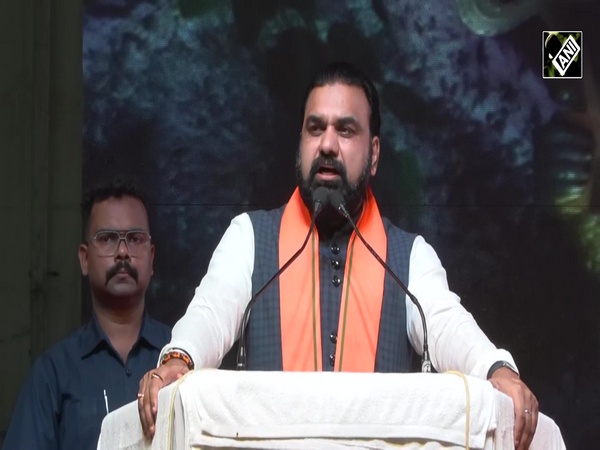
Berlin [Germany], June 14 : Tibetan political leader Penpa Tsering has sharply criticised China's policies in Tibet, warning that Beijing's intensified assimilation campaign poses a threat not only to Tibetans but also to democratic values worldwide, the Central Tibetan Administration (CTA) reported.
During a series of high-level engagements in Germany, Penpa Tsering met Bundestag member Thomas Rachel, chair of the Parliamentary Group on Freedom of Religion or Belief in Berlin. During the meeting, he briefed the lawmaker on the condition of Tibet, China's growing restrictions on Tibetan religious, cultural, and linguistic freedoms, and on the Dalai Lama's health.
The Tibetan leader informed Rachel that the Dalai Lama remains committed to serving humanity. Tsering also highlighted Tibet's modern history, recalling China's military takeover in 1950 and the subsequent repression that forced the Dalai Lama into exile in 1959, the CTA said.
Highlighting Beijing's current policies, Tsering accused Chinese authorities of systematically eroding Tibetan identity through strict controls on monasteries, limitations on Tibetan-language education, and the expansion of state-run boarding schools. He further expressed concern over widespread surveillance practices, including facial recognition systems, DNA collection, and digital monitoring across Tibet.
Tsering also rejected China's attempts to control the future reincarnation of the Dalai Lama, arguing that such decisions belong solely to Tibetan Buddhist traditions and religious authorities.
Later, while addressing the International Uyghur Forum in Berlin, Tsering called for stronger cooperation among Tibetans, Uyghurs, Mongolians, Hong Kongers, and Taiwanese facing pressure from China. He described the struggle as part of a broader contest between democracy and authoritarianism, as cited by CTA.
Tsering warned about China's demographic engineering and assimilation policies in Tibet, East Turkistan, and Southern Mongolia. He also raised concerns over Beijing's plan to construct a massive hydropower project on the Yarlung Tsangpo River, cautioning that it could cause severe environmental damage and affect downstream nations, the CTA reported.