Delhi MACT recognises 100% earning loss of MARCOS diver, awards compensation
Jun 06, 2026
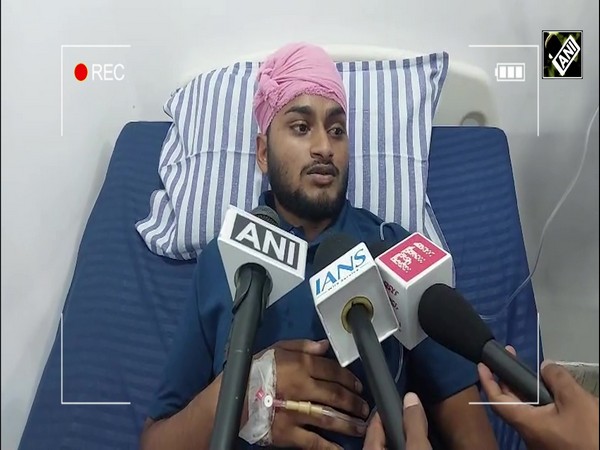
New Delhi [India], June 6 : The Motor Accident Claims Tribunal (MACT), Patiala House Courts, has held that an Indian Navy MARCOS commando who suffered severe injuries in a road accident and was rendered permanently unfit for underwater combat and diving duties has suffered a 100% loss of earning capacity, observing that he can no longer pursue the profession and specialized skills for which he had undergone years of rigorous military training.
Presiding Officer Abhilash Malhotra, while deciding a claim petition filed by sailor Lakhpat Singh, observed, "It is clear that the petitioner will not be able to pursue his profession and skills due to nature of injuries and has suffered 100% loss of earning capacity."
The Tribunal noted that Singh, a trained MARCOS diver serving with the Indian Navy, sustained grievous injuries in a road accident that occurred on December 25, 2018, in Visakhapatnam when a Swift car allegedly hit the motorcycle he was riding from behind. The accident led to multiple fractures involving his pelvis, right upper limb and lower limb and eventually resulted in an assessed permanent disability of 88 percent.
According to the award, Singh was initially admitted to INS Kalyani Hospital and later airlifted to Military Hospital Kirkee, Pune, where he underwent prolonged treatment and multiple surgeries. He remained hospitalized for several months and was eventually declared medically unfit for MARCOS and diving duties.
While deciding the issue of negligence, the Tribunal relied on the police charge sheet filed against the driver of the offending vehicle and reiterated the settled legal position that once a charge sheet has been filed holding the driver negligent, strict proof of negligence is not required in motor accident claim proceedings.
The Tribunal observed that the charge sheet clearly recorded that the offending vehicle hit the claimant's motorcycle from behind and that the driver's failure to enter the witness box warranted an adverse inference against him.
Holding the driver responsible for the accident, the Tribunal said, "It stands proved on the touchstone of preponderance of probabilities that the aforesaid accident took place due to rash and negligent driving of the offending vehicle."
A significant aspect of the case concerned the impact of the injuries on Singh's military career. The claimant testified that before the accident he was in the highest medical category and was serving as a MARCOS commando and underwater diver. Following the accident, he was placed in a lower medical category, rendered permanently unfit for diving and operational commando duties, and restricted to desk assignments.
The Tribunal accepted evidence that the claimant could no longer undertake specialized military training, underwater operations, or the career progression that would ordinarily have been available to him as a commando diver.
The court observed that although Singh continues to remain in service, he now performs desk work with assistance and cannot return to the profession for which he was specifically trained.
Referring to recent Supreme Court jurisprudence, the Tribunal emphasized that continuation in employment cannot by itself defeat a claim for loss of earning capacity.
The award noted that a person may remain employed while still suffering a substantial loss of future prospects, promotional opportunities and career advancement because of permanent disability.
The Tribunal further held that the claimant's injuries effectively deprived him of opportunities both within military service and in post-retirement employment linked to his expertise as a professional diver and commando.
The offending vehicle was insured with Royal Sundaram General Insurance Company. During arguments, the insurer did not dispute rash and negligent driving and admitted that no statutory defence was available. The Tribunal consequently fastened liability on the insurer to satisfy the award.
The detailed award also discusses compensation under various heads including permanent disability, future loss of income, future prospects, attendant charges, pain and suffering, loss of amenities and other pecuniary and non-pecuniary damages.