First phase of conversion of security camps into 'Jan Suvidha Kendra' in final stage
Oct 05, 2026
New Delhi [India], October 5 : The first phase of conversion of security camps into 'Jan Suvidha Kendra'-- an initiative that symbolizes the changing face of the Bastar region in Chhattisgarh, once known as the Naxal bastion-- is almost in its final stage, with the majority of them having started providing public facilities in these forested regions and the rest expected to be completed by the end of this year.
A total of 70 active security camps, also named as Forward Operating Bases (FOBs), are being transformed into Jan Suvidha Kendras (People's Facility Centres) in the first phase of the initiative aimed at converting them into centres of development and public service, representing a major policy shift in India's Left Wing Extremism (LWE) or Naxal-affected regions.
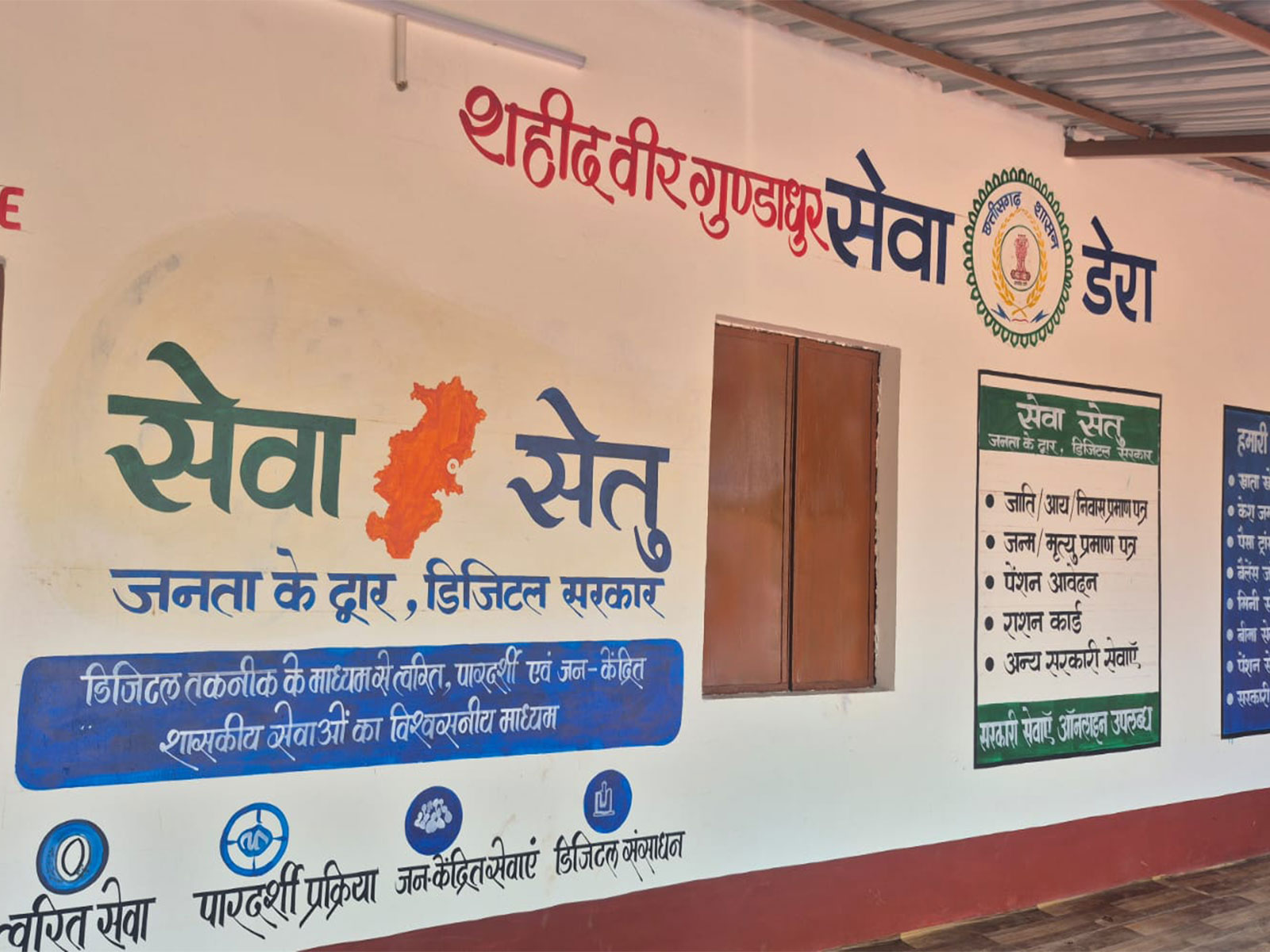
On May 18 this year, Union Home Minister Amit Shah inaugurated the "Sahid Veer Gundadhur Seva Dera Jan Suvidha Kendra” model from Netanar — a rural village located around 27-30 km south of Jagdalpur (the nearest major town and district headquarters) and roughly 315 km from Raipur under the Bastar region. The pilot program was launched at the "Bravo" company campus of the Central Reserve Police Force’s 80th Battalion in Netanar village. The inauguration followed the Central government's major historic announcement of Naxal-free India on March 31, 2026.
Initiated by the Union Ministry of Home Affairs in collaboration with the Chhattisgarh state government, this initiative transitions former anti-Naxal operational bases into multi-service public hubs. The vision behind this model, prepared by the Chhattisgarh government, is clear: to bring governance and essential services directly to remote tribal communities that remained disconnected from basic administrative facilities for decades.
For over two decades, the Central Armed Police Forces (CAPFs) and state police have established hundreds of heavily fortified FOBs deep within forested tribal regions (such as the Bastar division) to establish authority, secure roads, and counter insurgencies.
"Under Bastar 2.0 roadmap, a total of 200 security camps are targeted to be converted into 'Jan Suvidha Kendras'. Phase-wise transformation is scheduled in this framework, and 70 such security camps are being converted into 'Jan Suvidha Kendras' in the first phase, which is now in the final stage and expected to be achieved by the end of this year," an official, close to the project, told ANI on condition of anonymity.
As per the official, the target is to achieve the goal of "completing the first phase of this initiative before the likely visit of Prime Minister Narendra Modi to Chhattisgarh in the first week of November if things go according to the situation"-- much earlier than the initial target of 1.5 years.
The vision behind this model is clear: to bring governance and essential services directly to remote tribal communities that remained disconnected from basic administrative facilities for decades. The initiative is especially significant for villages where people still travel long distances for even the smallest government-related work.
Under this model, officials in the Chhattisgarh government said selected security camp premises are being converted into integrated public service centres, offering multiple government services under one roof. Priority is being given to villages where access to administrative offices, banking facilities, healthcare and digital services remains limited.
These centres will provide Common Service Centre (CSC)-based services such as Aadhaar updates, banking facilities, applications for income, caste and domicile certificates, ration card services, Ayushman Bharat cards, e-Shram registration, electricity bill payment, online applications, and railway and bus ticket booking. Printing, scanning, and other digital services will also be available.
Officials said the initiative, developed under the leadership of Chhattisgarh Chief Minister Vishnu Deo Sai, is being seen as a major shift from “security to development.”
Over the last two decades, several Central Armed Police Forces (CAPF) and state police camps or FOBs were established across Naxal-affected regions to restore security, improve road connectivity and strengthen administrative outreach.
With the security situation improving significantly in many areas, the government is now preparing to repurpose these very premises into 'Jan Suvidha Kendras'.
"Now, the opening of new FOBs has stopped since the announcement of Naxal-free India on March 31, 2026. Several FOBs are converted into 'Jan Suvidha Kendras'," a top CRPF official told ANI.
One of the biggest advantages of this initiative will be for tribal communities living in remote villages, who often have to travel to district or block headquarters for basic services. In many parts of Bastar, access to banks, internet facilities, hospitals and government offices is still extremely limited. If essential services such as banking, Aadhaar, ration cards, healthcare and pensions become available near their villages, it will save people both time and money while reducing hardship," they said.
The model is believed to accelerate digital inclusion in Bastar as the areas in the region that once had little or no access to online systems will now be connected directly with government schemes and digital services. "The move is expected to reduce dependence on middlemen and make welfare delivery more transparent and accessible."
The initiative is also being viewed as highly significant from a healthcare perspective.
As per the officials engaged in the process, these centres will provide primary healthcare services, vaccination facilities, maternal and child healthcare support, nutrition programmes and malaria control services.
In regions where villages are located far from hospitals and clinics, they said, this model could become life-changing for rural communities, especially for pregnant women, children and elderly citizens who currently travel long distances for treatment.
"The government does not intend to limit these centres only to administrative services. The proposal also includes skill development training, employment guidance for youth, agricultural advisory services, PM-Kisan assistance and information related to forest produce and forest rights. This means the centres are expected to emerge as hubs for livelihood generation and self-reliance in rural areas."
Experts say that in Naxal-affected regions, the biggest challenge has not only been security but also the lack of opportunities. As education, healthcare, banking and employment-related services begin reaching villages, people’s trust in governance is expected to strengthen further. That is why many observers are describing the initiative as a “development-driven long-term solution.”
These centres will also include fair price shops, drinking water facilities, internet connectivity, community meeting halls, primary schools and Ashram hostel facilities. In effect, these will function not merely as service centres, but as new rural development hubs.
Another official said, "Camps of FOBs with reduced operational requirements are first being converted into 'Jan Suvidha Kendras', followed by infrastructure upgrades including electricity, water, internet and sanitation."
"Multiple departmental services will then be integrated, while local youth and self-help groups will be involved in operations and management."