Germany approves sweeping pension, tax, and sick leave reforms to revive economy
Jul 03, 2026
Berlin [Germany], July 3 : In a major bipartisan effort to rescue Europe's largest economy from financial stagnation, German Chancellor Friedrich Merz announced on Thursday that his coalition government has agreed on a sweeping "catalog of significant reforms" aimed at boosting competitiveness, cutting corporate bureaucracy, and providing EUR10 billion ($11.4 billion) in annual income tax relief.
According to a report by Deutsche Welle (DW), the compromise package was hammered out during intensive negotiations in Berlin between Merz's conservative CDU/CSU bloc and the centre-left Social Democrats (SPD).
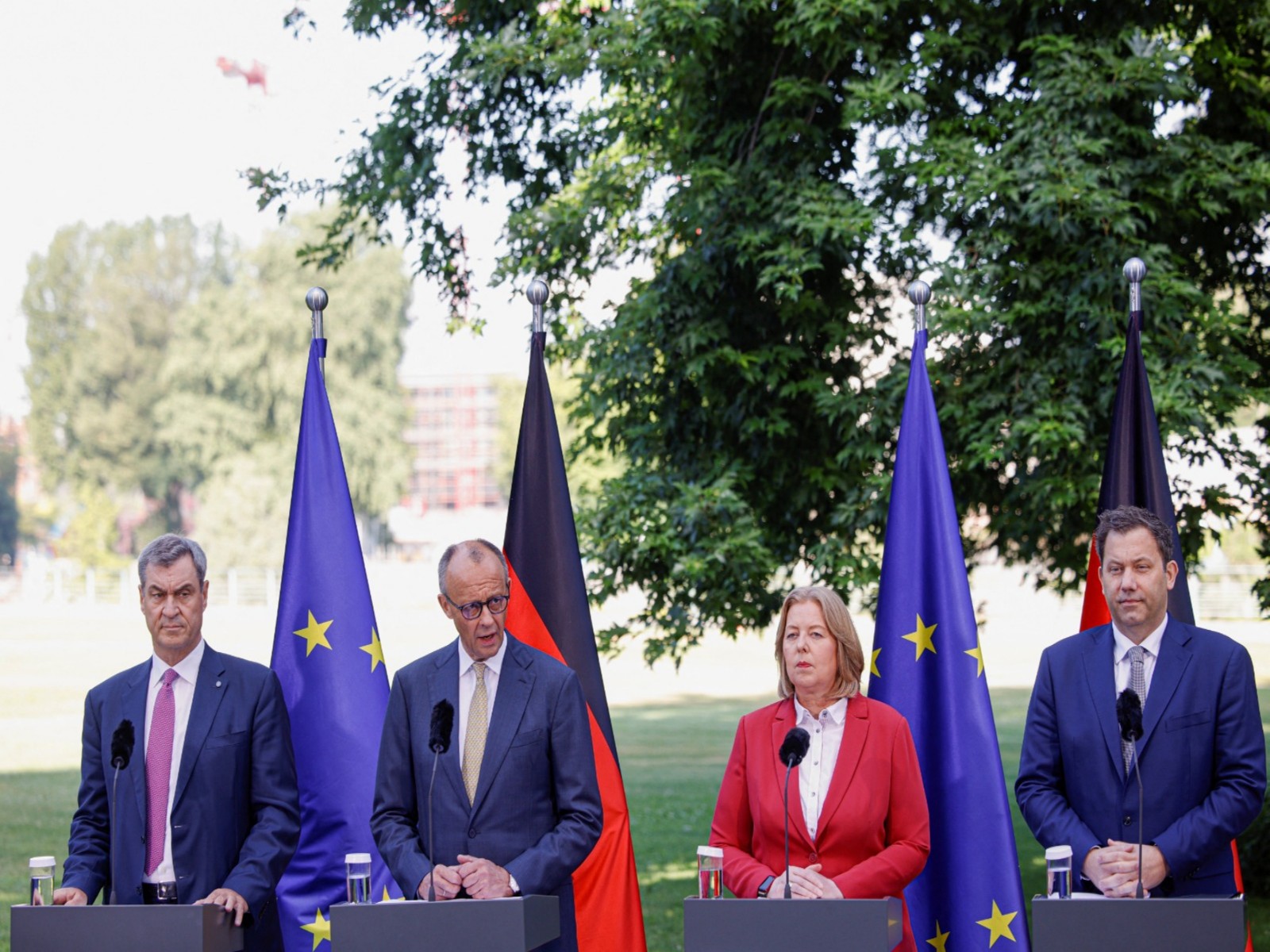
"We are providing relief to employees and businesses by cutting taxes and reducing bureaucracy. We have now completed our first year of reform. From the very beginning, we set an agenda serving a single goal: We want to get Germany moving again. It is now clear that this is possible," Merz said during a press conference at the Chancellery garden.
The sweeping fiscal measures will provide households with approximately EUR10 billion in annual tax relief, which is partly funded by raising the top income tax bracket from 45% to 47% for ultra-high earners, DW reported.
In a significant overhaul of the labour market, the coalition will eliminate a policy allowing workers to obtain sick notes via telephone, requiring medical certificates from the first day of illness instead. Furthermore, firms will be given greater flexibility regarding fixed-term contracts and the dismissal of high-earning staff, according to DW.
Furthermore, the DW report added that major structural updates are also planned for Germany's welfare, housing, and pension systems by the end of 2026. The state pension framework will gradually phase in an investment-based element alongside its traditional pay-as-you-go system, complemented by a gradual increase in the retirement age over the coming decades.
To spur growth, a federal housing company will be established to back affordable housing, and welfare enforcement will be tightened to combat benefits fraud through expanded data sharing, DW reported.
According to DW, on the industrial front, the package prioritises strategic sectors such as automobiles, chemicals, medicines, batteries, semiconductors, AI, and clean tech. Bureaucratic red tape will be heavily slashed by cutting corporate reporting duties and implementing an automatic approval rule for specific corporate applications if officials fail to act within four months.
Energy infrastructure will see accelerated electricity grid expansions with clearer connection timelines, while EU anti-dumping tools will be strengthened to allow more scrutiny over strategic non-European investments, DW reported.
According to DW, appearing alongside Merz, coalition leaders enthusiastically supported the economic roadmap.
SPD Co-leader and Finance Minister Lars Klingbeil stated that he believes the reforms will enjoy widespread public support, particularly regarding fairness. The coalition had "agreed on solutions that can be supported by a broad majority of our society," he said, adding that he was "firmly convinced that these decisions will give our country new strength."
Barbel Bas, another prominent SPD leader, emphasised that the comprehensive economic package would "indeed ensure that the economy grows again, that we achieve growth and secure jobs, while maintaining social balance, and, above all, that we strengthen cohesion within our country."
DW reported that acknowledging the friction inherent in the multi-party negotiations, Bavarian Christian Social Union leader Markus Soder described the package as "well-rounded." He noted that while each partner had to make concessions, "But a coalition means compromise." Soder concluded that "We are making progress," viewing the package as a vital step away from structural economic stagnation.
While the ruling coalition leaders widely supported the reform package, conversely, it faces strong opposition from major trade unions like Verdi and IG Metall, who argue that the restrictions on sick notes and expanded fixed-term contracts attack workers' rights and foster a culture of mistrust.
DW reported that political opposition from the Green Party and the Left Party similarly condemned the package as a program of ignorance that fails to offset rising living costs, while medical professionals and the German Medical Association labelled the sick note changes absolutely catastrophic, warning that it will trigger an overwhelming wave of bureaucracy for doctors.