"Glue keeping opposition together is Netanyahu's removal": Senior Israeli journalist explains Tuesday's electoral scenarios
Oct 26, 2026
By Prashant Pandey
Jerusalem [Israel], October 26 : As Israel goes to the polls on Tuesday four latest election surveys, which closed on October 23, show that Gadi Eisenkot's Yashar party leads Benjamin Netanyahu's Likud, but neither of the two major political blocs has enough seats to secure a majority in the 120-seat Knesset.
Israel uses a party-list proportional representation system. Under this system, voters cast their ballots for lists of candidates, and each list receives a number of seats in the Knesset proportional to its share of the vote. Israel has an electoral threshold: only lists that receive at least 3.25% of the valid votes participate in the allocation of Knesset seats. The Knesset is made up of 120 Members.
So, what happens if no clear majority is seen by either coalition? Yaron Decel, senior journalist says that a possible national unity government or a minority government could be seen if the nation is to avoid another poll in four months.
"There are three scenarios according to the polls. When we see that each block doesn't get the majority of 61 out of 120 members of the Israeli parliament. One, that nobody will be able to form a government. We had it in the past, and it means another round of elections in around four months because the parliament cannot produce a stable government. The other scenario is a minority government, which seems to be right now likely by the opposition bloc under Mr. Eisenkot. They will not get 61. They will get less than 61, let's say, like 56. But against them, there will be 52 and two Arab parties will abstain, and it gives them a majority but not of 61. It's called a minority government. And the third scenario is a national unity government under Mr. Netanyahu and Mr. Eisenkot. We did have national unity governments in the past. Some of them survived long-term. There is no bad blood among the two gentlemen, and they have to find a way to form such a government. This is also an option right now to see at the end of the day, a national unity government considering the open fronts with Iran, with the Hezbollah, with Hamas and with the Houthis. It might be for the sake of the interests of Israel," the senior journalist told ANI in Jerusalem.
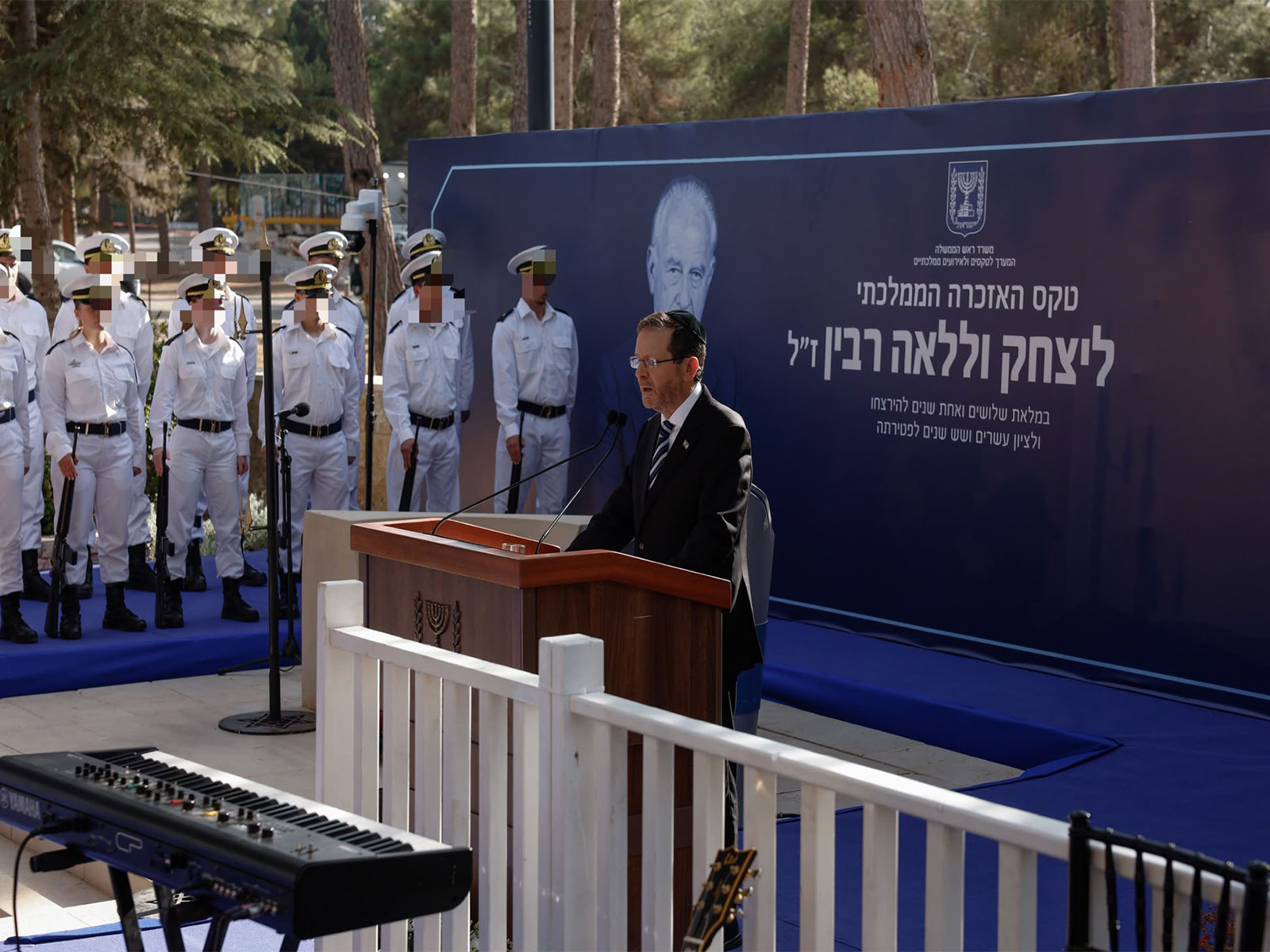
Decel, explained that President Isaac Herzog will nominate a member of the Kenesst to form the government but if there is no government the Knesset must decide whether to dissolve or somehow manage the magic number.
"If the President nominates a member of parliament to form a government, then after 42 days he cannot make it. The President can give the mandate for another person. But if the other candidate cannot make it, after 28 days, which means at the end of the process, there is no government in effect, then the parliament has to decide, decide either to produce 61, or dissolve itself automatically," he said.
Decel believes that the opposition parties could come together just to keep Netanyahu in power who has been the longest serving Prime Minister.
"Mr. Netanyahu is a controversial uh Prime Minister for a very long time. So, people here and we see the opposition bloc, the glue between the four parties is to try to replace the government of Mr. Netanyahu with a new government. Mr. Netanyahu has served as Prime Minister the longest time ever, 19 years, not consecutive terms. And he is very controversial. And the bloc that is against Mr. Netanyahu would like him to be removed and replaced,' he said.
The battle-lines are drawn firmly, consummate political survivor Bibi Netanyahu versus a former Military Chief in a no-holds barred contest. The victory of either could well reshape not just the politics of Israel but also the situation in West Asia.