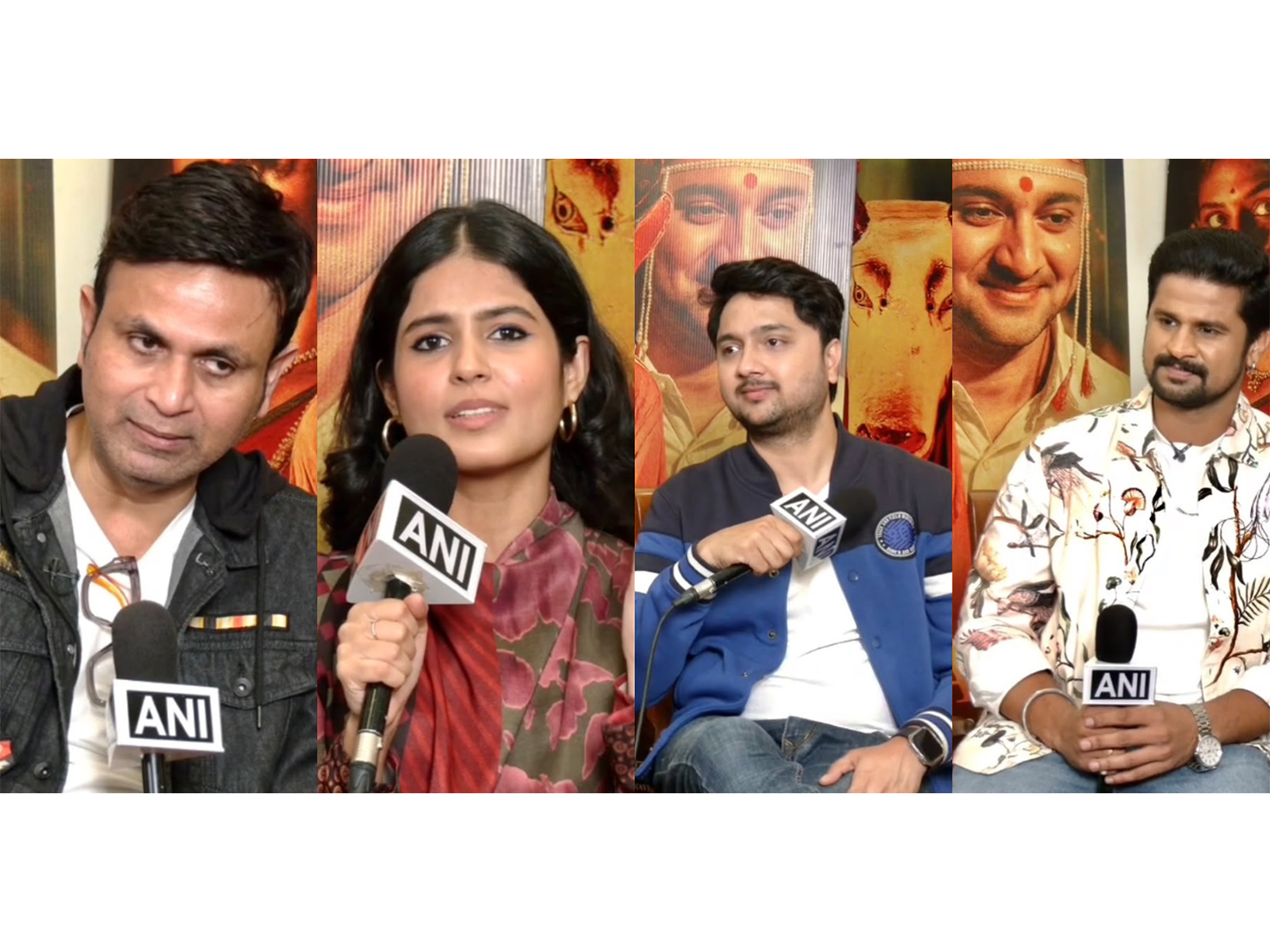
"Hyper-local is the new global": Santosh Davakhar, Ishita Deshmukh, Yogesh Sohoni, Nishad Bhoir on ‘Gondhal’s’ Oscar selection
Nov 10, 2026
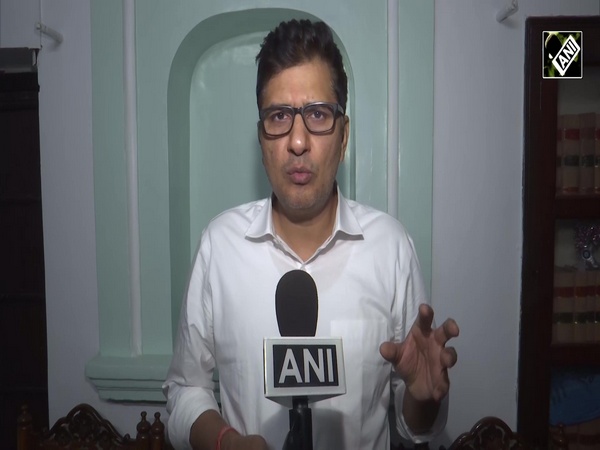
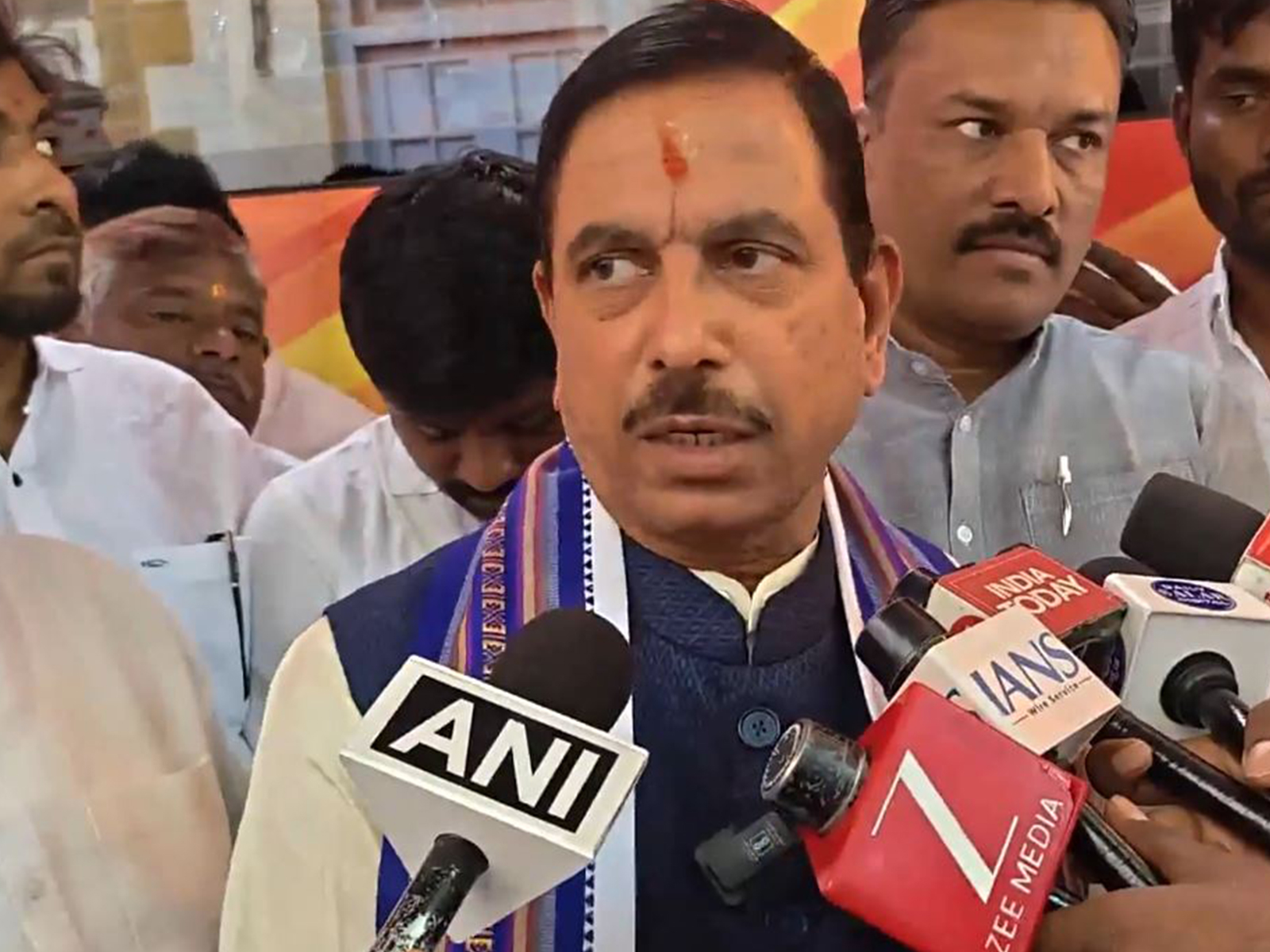
Mumbai (Maharashtra) [India], November 10 : With Marathi psychological thriller 'Gondhal' selected as India's official entry in the International Feature Film category for the 2027 Academy Awards, director Santosh Davakhar and actors Ishita Deshmukh, Yogesh Sohoni and Nishad Bhoir have expressed immense pride over the recognition, recalling the film's journey, their experiences on set and their hopes of bringing the coveted Oscar home.
Marathi film 'Gondhal' is directed by Santosh Davakhar and stars Kishor Kadam, Ishita Deshmukh, Yogesh Sohoni, Nishad Bhoir and Anuj Prabhu in the lead roles.Legendary composer Ilaiyaraaja wrote the music and background score. The film is produced by Diksha Davakhar under the banner of Davakhar Films.
In a conversation with ANI, the filmmaker and actors shared their reactions to the announcement, the challenges of bringing their respective characters to life and the efforts being made to take the film to an international audience.
Recalling the moment the team received the news, director Santosh Davakhar said the announcement was met with celebrations during a group call, adding that they had anticipated the possibility because of the way they had approached the film.
"We had a group call. Everyone was celebrating on the call. We had an inkling that something was brewing, that this could happen, because of how we had approached the film. The moment the official announcement came, we were really happy and we were celebrating... it felt like we were heading to the Olympics; that was the feeling. So we were celebrating that feeling, yeah," he said.
For Ishita Deshmukh, the announcement was particularly emotional as it coincided with the Ganpati festival. The actress said she was at home with her parents and grandmother when she received the news.
"We got on a group call, and it was during the Ganpati festival, so I was at home. As soon as the news broke, I was so glad I was with my parents; I ran to them and shared the news. My grandmother was there too—she didn't know what the Oscars were, so I explained it to her. For a while, it didn't really sink in for me, but as we kept seeing it on the news, having conversations with Sir, and talking with my co-actors, it finally hit me: 'Okay, our movie—my first film—is actually India's official entry for the Oscars,'" she recalled.
https://www.instagram.com/p/DdbLDXyhkg1/?utm_source=ig_embed&ig_rid=AUEzFjmdR3mNq0yz88QUWnw
Actor Yogesh Sohoni described the announcement as an unbelievable, dream-come-true moment, recalling how he immediately called his mother after hearing the news.
"It was unbelievable... like a dream come true. After ending the conversation and hanging up the call, I first called my mother and said, 'This is the news.' There was a ten-second silence, and then she broke the silence and told me, 'I'm proud of you, and God bless you.' That was the entire memory when I heard the news," he said.
Nishad Bhoir, meanwhile, was shopping for the Ganpati festival when he learnt about the film's selection. Recalling the moment, he said the news took time to sink in for him and his family.
"I was shopping for the Ganpati festival, and suddenly I came running out of a saree shop. Mobile reception was dropping there, but I could tell from everyone's expressions what had happened, and that's how I found out the news. It was a surreal experience and completely unbelievable. It took us two to three days just to digest it. When I shared it at home, the reaction was similar—my family was thrilled, but they didn't even know how to process it because it's such a massive achievement for us. We are truly grateful," he said.
Speaking about the idea behind 'Gondhal', Davakhar explained that the film draws inspiration from the traditional Gondhal ritual, which belongs to his Maratha community. Having grown up watching the performances, he was fascinated by how the ritual continues throughout the night, with villagers and devotees gathering until dawn.
"The Gondhal ritual belongs to my community—the Maratha community—and I have grown up watching Gondhal performances since childhood. When I observed its details—how this tradition runs all night until dawn, the ritual continuing overnight while all the devotees and villagers sit together and enjoy it—it sparked an idea: What if the villagers have gathered for the Gondhal ritual, but driven by their own greed, selfishness, and ego, they end up creating their own chaos [gondhal] amidst it?" he said.
He added that the ability of Gondhal performers to entertain audiences for nearly 12 hours inspired him to develop a story that could hold viewers' attention for a two-hour cinematic experience.
"Weaving a story around that concept clicked with me. Secondly, a tradition that runs from dusk till dawn entertaining people for 12 hours... if they can keep audiences engaged for 12 hours, I knew I could easily do it for two hours. That was one of the reasons. That is how I wrote Gondhal," he said.
The director also recalled conducting extensive research for the film, even visiting villages despite having a fractured leg at the time. He said he invited different groups of Gondhali performers, observed their performances and attended several ceremonies to understand the tradition in detail.
"After extensive research, my leg was fractured at the time, so I would go to the village, sit out in the fields, and invite several Gondhali performers. Five or six would come one day, a different group the next day, and so forth. I closely observed their performances and attended numerous Gondhal ceremonies, and the story developed organically from there. If you know how to entertain an audience and craft your work accordingly, it comes together. Thankfully, creative ideas flowed at that time, and people appreciated it; even the juries loved the craft we presented. It has been a total team effort. Right now, we are carrying the responsibility India has entrusted us with, representing the country at the Oscars," Davakhar said.
Deshmukh, who was born and raised in Indore, Madhya Pradesh, said she was familiar with the Maharashtrian ritual despite not growing up in Maharashtra. She recalled how her family's reaction after the film's release made her realise the significance of making her debut in her mother tongue.
"Even though I was born and raised in Indore, Madhya Pradesh, I was familiar with the Maharashtrian ritual of Gondhal. More than me, I'd say my mother was thrilled. After the film was released, the impact truly hit me when I saw how happy my family was that despite my Marathi not being very fluent, my debut film was in our mother tongue. I felt immensely grateful for that," she said.
Talking about her casting, the actress said she felt an immediate connection with the character and the script during her audition. She added that she worked extensively on her Marathi language and diction to prepare for the role.
"When I auditioned for the role, I could tell there was something special about the scene I performed. There was a connection, a calling-to the character, the story, and the script, making me realize I definitely wanted to be part of it. I worked very hard on my language and diction. You sometimes get that gut feeling inside that you simply have to do a project, and if that turns out to be your debut film, there's nothing quite like it. And that's what happened," Deshmukh said.
Explaining her understanding of Suman, her character in the film, Deshmukh said she viewed her as a human being with flaws rather than categorising her as positive or negative. She also spoke about the character's response to a patriarchal environment.
"Honestly, speaking of positive or negative, Suman is simply a human character. As humans, none of us are perfect; we are all flawed. Speaking of challenges, it's just human nature: if you place anyone, regardless of gender, into the situation Suman finds herself in, they might respond the exact same way. It portrays how she responds to an environment dominated by patriarchy—navigating and surviving within it," she said.
Bhoir recalled that his audition experience made him eager to secure the role, describing the story and character as too compelling to turn down. He said he was initially called back to perform a scene as a reference for another actress's audition, which eventually brought his performance to Davakhar's attention.
"The audition itself was very interesting. After performing my audition, I was eager: 'Man, I really must get this role.' It was so good that my sole focus was to do it justice. After we submitted the audition, I was called back again, and we shot the scene properly. I was called in as a reference for an actress's audition, and we filmed that tape together. We shot it in full costume, which caught Sir's [director Santosh Davakhar's] attention. Shortly after, I received a call saying, 'Yes, you are selected.' There was no reason whatsoever for me to say no. As actors, we are always waiting for such compelling stories and roles, wondering when we'll get an opportunity like this. The story and character were so strong that saying no was never an option," he said.
Sohoni also shared an interesting account of how he came on board the project. He said Davakhar initially asked him to audition while wearing a saree, which he eventually managed with the help of a friend's wife.
"I was on the set of a TV serial when he told me, 'Look, I'm sending you a script. Do one thing: record an audition, but shoot it draped in a saree.' I asked, 'How am I supposed to do it wearing a saree? It feels awkward asking a female artist on set, "Could you lend me your saree so I can shoot an audition?"' He replied, 'No, relax, go home and shoot it comfortably.'
"The following day, we had a break from shooting, so I visited a friend. His wife draped a saree on me and gave me cues for the opposing character. That's how we shot the audition and sent it to the director. He called me in for a meeting and said, 'You auditioned for one role, but I'm offering you a different character—one with more shades and more grey. Would you like to hear the narration?' I said, 'Yes, why not?' The way he narrated the entire film and script right there in front of me, I immediately said, 'Yes, I'm doing this film.' That's how I joined the project," he recalled.
Sohoni also described a physically demanding fight sequence shot in muddy water during extremely cold weather, calling it one of his most memorable experiences from the shoot.
"Yes, my fight sequence in the film. We were shooting in muddy water when the outside temperature was around 8 or 9 degrees Celsius. The entire crew wore jackets and sweaters, while Anuj [Prabhu] and I were filming this combat sequence, shivering in the freezing cold. That was truly a memorable, unique experience. Prior to that, we had extensive rehearsals; action director Manohar Verma put us in harnesses and practiced all the stunts on mattresses. But executing it was 100% a challenge because we spent over five hours submerged in water from night until morning," he said.
For Sohoni, mastering the rural Marathi dialect used in the film was another major challenge. He said the language differed considerably from the Marathi spoken in everyday conversations, requiring extensive rehearsals and workshops.
"Aside from that physically taxing fight sequence, the primary challenge was mastering the specific rural dialect. The Marathi we speak daily is quite different from what the script required. Learning that dialect and ensuring authentic pronunciation was a huge responsibility. We conducted multiple rehearsals and workshops. We even fully performed several scenes at the clubhouse of our director's apartment building. That kind of thorough preparation made it an enjoyable and distinctive journey," he said.
Bhoir said portraying a character whose personality was different from his own made the experience enjoyable. He added that actors draw from real-life experiences while ensuring that the characters they portray remain distinct from their personal lives.
"No, playing this role didn't change me like that, if these character traits entered my real life, it wouldn't be good for me! (laughs) So no such personal changes occurred, because our job as actors is to portray someone completely different from who we are in reality. We draw elements from real life into our performances, and positive characters always teach you something; every role imparts subtle lessons. But personally, it didn't change me. I thoroughly enjoyed performing this character precisely because I am nothing like him in real life, which made portraying him on screen even more exciting," he said.
With the Oscar campaign now underway, Davakhar said the team was following a three-phase process and had already begun arranging more than twice the required number of screenings in the first phase.
"The process involves three phases: Phase 1, Phase 2, and Phase 3. In the first phase, we are arranging more than double the required screenings, which is a great step forward," he said.
The director further revealed that representing India at the Oscars had been a long-standing ambition, adding that he had been following the awards closely for nearly a decade.
"I have been manifesting this for the last 6 to 7 years—to represent my country. I have been following the Oscars closely for the last 8 to 10 years, watching every winning film and every nominee in the top five. I really want an Oscar for my team and for my country. It's a proud moment because we made a film rooted in rich heritage, holding global appeal and strong craftsmanship. Every crew member, head of department, and actor contributed immensely, and it deserves to be celebrated," Davakhar said.
Deshmukh echoed the sentiment, saying the team was aiming high and hoping to bring the award home for India.
"Like a winner! Whatever we are doing, our goal is to bring the Oscar home for our country. We are aiming high, and we are manifesting it," she said.
Sohoni and Bhoir also expressed excitement about the film's Oscar journey, describing its selection as a significant milestone for the entire team.
"Whatever needs to be done for the Oscar campaign, we are putting in our utmost effort. We are trying our level best. Now let's see how things unfold, but we are genuinely excited. If we succeed, it will be a complete game-changer," Sohoni said.
Bhoir added, "And in itself, it's a huge milestone for our entire team..."
Agreeing with him, Sohoni said, "Hundred per cent. We feel truly blessed to be the lead pillars of this film. It means the world to us."
Davakhar also spoke about the film's reception and its efforts to reach audiences beyond Maharashtra. He said the film had not received a single negative review and had now been dubbed into Hindi and other languages with the involvement of experienced technicians.
"The film hasn't received a single negative review anywhere. Being a Marathi film initially, audiences nationwide may not have noticed it right away, but it has now been completely dubbed visually and acoustically by top technicians into Hindi and other languages.
"It is a psychological thriller, exploring devotion, deception, desire, and betrayal. It keeps you on the edge of your seat and offers a true theatrical experience. Watching it in cinemas will make you feel part of that world and ritual. I urge everyone to watch it in theaters—it's your film, India's film representing us at the Oscars. While our team focuses on the Oscar campaign, we need audiences to visit theaters and support its theatrical run," he said.
Deshmukh also urged audiences to watch the film, describing it as a psychological thriller rooted in folklore and highlighting its cinematic merit. "...wondering whether Indian cinema can achieve this, watching this film is your answer. It's a psychological thriller steeped in folklore with tremendous cinematic merit. Go watch it and see why India selected this film as its official entry to the Oscars. I truly believe hyper-local is the new global," she said.
The movie is set against the cultural backdrop of rural Maharashtra and explores the collision between ritual tradition, personal ambition and human vulnerability.
Set in Maharashtra, the story plays out over a single night during a Gondhal – a folk ritual in which devotion is expressed through song, dance, and theatrical storytelling.
'Gondhal', directed by Santosh Davakhar originally released in Indian theatres on November 14, 2025.