"I thought it was a beautiful idea...": Monica Bellucci says she challenged Hollywood ageism with her James Bond role at 50
Nov 29, 2026
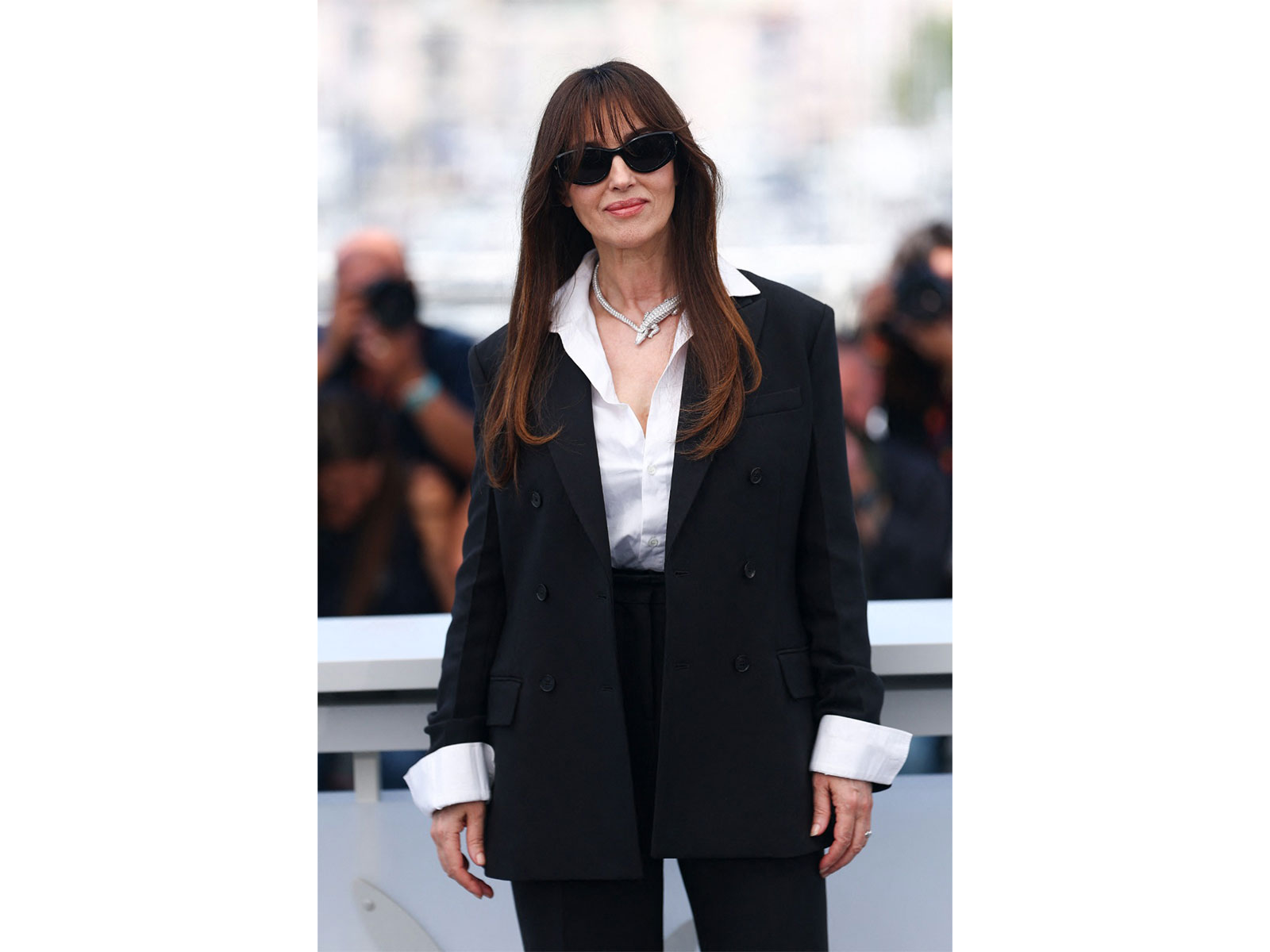
Washington [US], November 30 : Italian actor Monica Bellucci has spoken about challenging ageism in Hollywood, her historic role in the James Bond franchise and her experiences working with acclaimed filmmakers, including Mel Gibson and Tim Burton.
During a candid masterclass at the Marrakech Film Festival, the actor reflected on how turning 50 marked a significant turning point in her career and why she believes women are getting better opportunities in cinema today, as reported by Variety.
Bellucci made history in the James Bond franchise when she appeared as Lucia Sciarra in Sam Mendes' 2015 film Spectre at the age of 50, becoming the oldest actor to play a Bond woman.
She recalled that Mendes wanted to portray a mature woman in the franchise and described the opportunity as an important step towards challenging conventional ideas about age and women in cinema.
“He wanted to show a mature woman, and I thought it was a beautiful idea,” Bellucci said, recalling her conversation with the director.
“He told me, ‘Listen, I have a strong and unusual role that’s going to be surprising, a little revolutionary,” she added, as cited by Variety.
Reflecting on the significance of the casting, she said, “I was 50, and I had never seen a 50-year-old Bond woman. So I think I’m the oldest James Bond woman, lady or girl that we’ve ever seen.”
The actor said Spectre and Emir Kusturica's On the Milky Road arrived at a crucial stage in her life, helping her navigate the transition into her 50s.
“Suddenly, I had two very strong roles. Those two films helped me get through the transition of turning 50, which wasn’t easy for an actress,” she said.
Bellucci also reflected on the changing landscape of the film industry, particularly the growing presence of women behind the camera. She cited filmmakers Alice Rohrwacher, Rebecca Miller, Kaouther Ben Hania and Léa Mysius among the women directors she has enjoyed collaborating with.
“When I was younger, there weren’t as many female directors as there are today. It’s new to have so many female directors, screenwriters and even technicians on a set, so many women. We’re witnessing something completely new,” she said.
She added that working with women filmmakers often brings a different perspective to storytelling, highlighting the understanding and connection that can develop between women on a film set.
Discussing how her career has evolved with age, Bellucci said the roles offered to her have changed alongside her experiences and physical transformation.
“Our body is our working instrument. So the instrument changes and, consequently, the roles change. It’s another part of ourselves that’s expressing itself,” she said.
The actor also acknowledged that opportunities for women over 40 have improved considerably compared with earlier decades. She mentioned Susan Sarandon, Judi Dench, Jamie Lee Curtis and Meryl Streep as actors who have helped create space for women to continue playing compelling characters as they grow older.
Turning to one of her most celebrated performances, Bellucci revisited Giuseppe Tornatore's 2000 drama Malena, which earned two Academy Award nominations. The film follows a young woman whose beauty attracts attention and eventually leads to violence in a small Sicilian town during World War II.
Bellucci said the film's story, centred on a woman navigating a male-dominated society, remains relevant.
“The script was already very powerful because it tells the story of women living in a man’s world, the difficulty of those relationships, the violence. It’s about a woman who finds herself alone in a man’s world and has to deal with it. Ultimately, it’s still a very contemporary film,” she said.
She also addressed the use of nudity in cinema, explaining that she considers it a creative tool when it serves the character and the story rather than simply exposing the actor.
“I came from fashion, so I had a freedom with my body that came from the work I had done before,” Bellucci said.
“Even today, I think nudity can serve to bring a character to life. When I see films like ‘Anora’ or ‘Poor Things,’ these are films where the actresses’ bodies are very important in bringing the characters to life.”
Explaining her approach to intimate scenes, she added, “When you play a role, if nudity is part of that role, it’s simply a working tool. It’s not a way of exposing yourself. In fact, it’s like a costume that brings a role to life.”
The Italian actor also discussed her experience working with Mel Gibson on the 2004 biblical drama The Passion of the Christ, in which she portrayed Mary Magdalene. Bellucci said she chose the project because she wanted to collaborate with Gibson, despite having another action film opportunity at the time.
“I had another action film at the same time, and I chose ‘The Passion of the Christ’ because I wanted to work with Mel Gibson. I’d seen films of his that I liked, and it was an experience I wanted to have,” she said.
Despite the controversy surrounding the film's graphic violence and portrayal of Jewish figures, Bellucci said she had no regrets about being part of the project. She also praised Gibson's filmmaking abilities and his approach to working with actors.
“I think every time a film sparks a discussion, it means it was important to make it. Because discussing and exchanging ideas- that’s the power of cinema,” she said.
Bellucci further revealed that she had spoken to Gibson about his upcoming two-part follow-up, The Resurrection of the Christ, which he is currently filming.
“Yes, we spoke,” she said, adding, “I think he’s a great director.”
During the masterclass, Bellucci also recalled working with Keanu Reeves in The Matrix Reloaded, particularly the memorable scene in which her character, Persephone, asks Neo to kiss her as though he were kissing Trinity.
Asked about filming the kissing scene, she responded humorously, “It’s not tiring, is it? You can do it.”
She described Reeves as someone who is gentle and respectful, adding that the two had first met while working on Dracula before reuniting for The Matrix.
Despite her successful career in Hollywood, Bellucci said she has never felt the need to move to the United States, explaining that she remains deeply connected to her European roots.
“I like America. I love all these possibilities, all this energy, the possibility of making big films as well as independent films. And I like going there. But I feel profoundly European. I live between Paris and Rome, and I love that,” she said.
The actor also spoke about balancing her professional ambitions with her personal life, emphasising that her love for cinema does not come at the expense of her everyday experiences.
“I like cinema, but I prefer life,” she said.
Bellucci also reflected on her recent collaboration with Tim Burton in Beetlejuice Beetlejuice, in which she played Delores, the vengeful former wife of Beetlejuice. She revealed that Burton's drawings helped her understand the character and develop her performance.
“With all her scars, Delores is a bit of a parody of existence, a metaphor for life,” she said, adding that the role required three hours of makeup every day.
“We all have scars. We have to face them, continue to live with them and move forward,” she added.
Concluding the masterclass, Bellucci expressed optimism about the future of international cinema, particularly the growing visibility of Arab filmmakers. She praised the Marrakech Film Festival for showcasing emerging talent and films reaching audiences beyond their home countries.
She also delivered a message about the importance of preserving the theatrical moviegoing experience.
“I hope cinema will never disappear because I truly believe in cinema as one of the cultural elements that are essential to humanity,” she said.