India seen as stable global capital hub with USD 4.4 trillion market cap: Tuhin Kanta Pandey
Apr 17, 2026
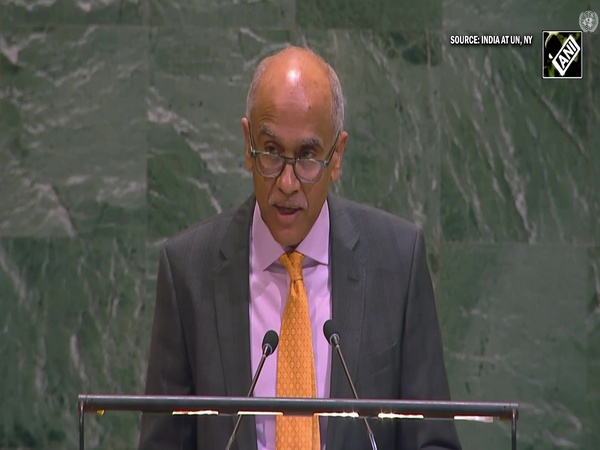
New Delhi [India], April 17 : India is increasingly recognized as a stable global capital hub with its market capitalization reaching USD 4.4 trillion and a total of USD 154 billion raised through equity and debt markets in FY26, according to Securities and Exchange Board of India (SEBI) Chairman Tuhin Kanta Pandey.
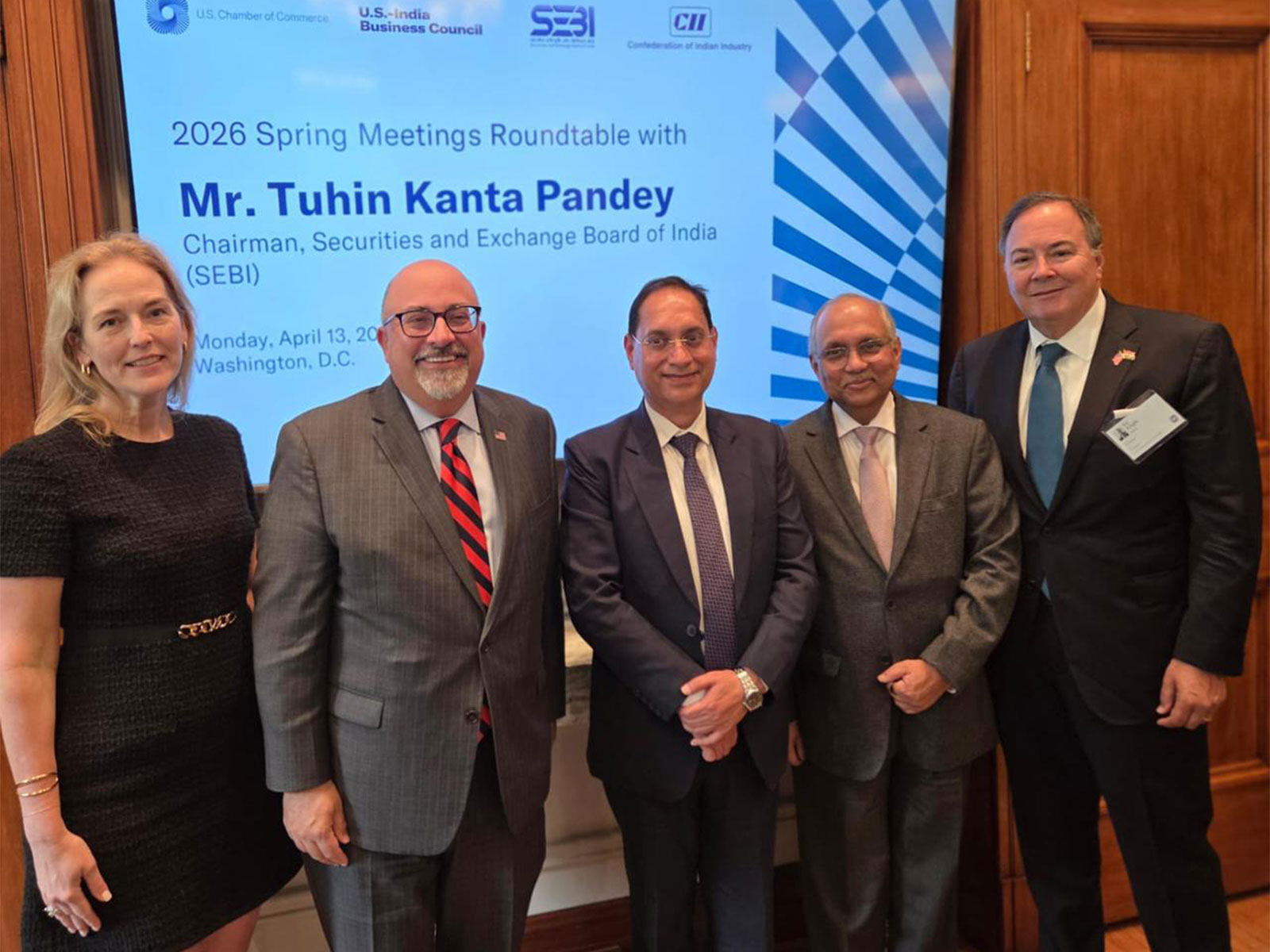
Speaking at a high-level interaction organized by the Confederation of Indian Industry (CII) and the US-India Business Council (USIBC) on the sidelines of the IMF-World Bank Spring Meetings, Pandey highlighted the resilience of Indian markets despite global volatility.
The interaction brought together global investors and financial institutions to examine the evolving framework of India's capital markets. Pandey noted that the market capitalisation is currently at about USD 4.4 trillion. In the year 2025, India ranked first globally in IPO volumes and third in capital raised. Over USD 154 billion has been raised through equity and debt markets in FY26, while mutual fund assets under management are approaching USD 900 billion, with Alternative Investment Fund (AIFs) commitments having crossed USD 175 billion.
The Chairman noted that the country's financial architecture now serves as a primary driver of economic growth, supported by a projected GDP growth of 7.6 per cent for the current fiscal year. He detailed the depth of the market, pointing out that India ranked first globally in IPO volumes and third in capital raised during 2025.
Pandey stated that India's capital markets have evolved into a structural pillar of the country's financial architecture, capable of mobilising capital at a global scale. India's GDP growth is projected at 7.6 per cent in FY26.
The discussion emphasized that India is no longer viewed merely as an emerging market but as a standalone investment destination. This shift is supported by institutional credibility and a diversified sectoral mix that includes technology, healthcare, and energy. Foreign Portfolio Investor (FPI) assets now stand near USD 780 billion, representing approximately 17 per cent of listed equity. Additionally, the corporate bond market is nearing USD 650 billion in outstanding value, providing critical financing for infrastructure.
Pandey highlighted that the approach focuses on achieving an optimal balance between investor protection, market development, and market integrity. Key reforms include the implementation of T+1 settlement cycles, streamlined IPO timelines, net settlement mechanisms for foreign portfolio investors, easing investment access for global investors, and strengthened governance frameworks for market infrastructure institutions.
Looking ahead, the regulator intends to simplify access for international participants. Pandey confirmed that SEBI is working on reviewing regulations to ease the registration process for foreign investors and harmonizing Know Your Customer (KYC) processes across different regulators.
These efforts include the establishment of a dedicated digital portal for foreign investors and easing KYC norms specifically for Non-Resident Indian (NRI) investors to strengthen the private capital and derivatives markets.
The participants noted that India remains a reliable anchor for global capital. While challenges regarding secondary market liquidity and taxation remain topics for future development, the expansion of alternative investment funds continues to provide necessary risk capital for emerging sectors like deep tech and climate technologies.