India's Defence Decade: From Indigenous Weapons to Diplomacy, Strengthening New Delhi's Strategic Position Ahead of 2047 Goal
Jun 17, 2026
New Delhi [India], June 17 : India's defence sector has undergone a significant transformation over the past 12 years, with the government focusing on strengthening defence diplomacy, boosting indigenous manufacturing, modernising military capabilities and expanding strategic partnerships across the world.
India's defence diplomacy has emerged as a key pillar of national security and strategic influence in the last decade, with New Delhi expanding ties with major global powers while maintaining its strategic autonomy.
Over the past decade, defence cooperation has moved beyond traditional military exchanges to include technology collaboration, industrial partnerships and joint manufacturing projects. India has also increased its participation in regional and multilateral security platforms such as the Quad, the Shanghai Cooperation Organisation (SCO) and the ASEAN Defence Ministers' Meeting-Plus (ADMM-Plus).
According to a government statement, these engagements demonstrate India's growing strategic confidence and its emergence as a responsible security partner in an increasingly complex geopolitical environment.
India's defence relationship with the United States deepened through a series of key agreements, including the Logistics Exchange Memorandum of Agreement (LEMOA) in 2016, the Communications Compatibility and Security Agreement (COMCASA) in 2018 and the Basic Exchange and Cooperation Agreement (BECA) in 2020.
India was also designated as a Major Defence Partner by the US and granted Strategic Trade Authorization-1 (STA-1) status.
The two countries expanded cooperation in emerging technologies through the Initiative on Critical and Emerging Technology (iCET), launched in 2023 and later continued under the TRUST framework in 2025.
In October 2025, India and the US signed a 10-year defence partnership framework aimed at strengthening joint exercises, technology collaboration and Indo-Pacific security cooperation.
India also maintained strong defence ties with Russia despite changing geopolitical circumstances. The partnership remains anchored in the India-Russia Intergovernmental Commission on Military and Military Technical Cooperation and continues to focus on projects such as the S-400 air defence system and upgrades to Su-30MKI fighter aircraft. The partnership has increasingly shifted towards co-production, technology collaboration and expanded maintenance and repair capabilities within India.
A major milestone in India's engagement with Europe came in January 2026, when India and the European Union signed a Security and Defence Partnership covering maritime security, cyber defence, counter-terrorism and space cooperation.
Defence cooperation with France continued to deepen through projects such as the Rafale fighter aircraft programme and the Kalvari-class Scorpene submarines. The sixth submarine under Project 75 was commissioned in January 2025. Cooperation has also expanded into aerospace manufacturing and engine technology development through partnerships involving Indian and French companies.
India strengthened defence relations with Japan through logistics support agreements and naval exercises, while ties with the United Arab Emirates evolved into a broader strategic partnership covering defence industry collaboration, special operations and counter-terrorism. Defence engagement with Australia also expanded following the elevation of bilateral ties to a Comprehensive Strategic Partnership.
At the multilateral level, India has used forums such as the Shanghai Cooperation Organisation (SCO) to advocate a strong counter-terrorism agenda. During the SCO Defence Ministers' Meeting in Qingdao in June 2025, India reiterated its policy of zero tolerance towards terrorism and called for collective action against weapons of mass destruction threats.
India's engagement with ASEAN countries also grew under the Act East Policy. Cooperation with countries such as Vietnam, the Philippines and Indonesia expanded through capacity-building initiatives, patrol vessel gifting and BrahMos missile-related collaboration.
The Quad has emerged as another major platform for India's strategic outreach.
India's role within the grouping has strengthened through initiatives such as the Malabar naval exercise and the Quad-at-Sea Mission in 2025, which marked the first combined Coast Guard exercise among all four members.
The report highlighted India's growing role in the Indo-Pacific region through its SAGAR vision and the MAHASAGAR doctrine launched in March 2025. These initiatives seek to position India as a net security provider across the Indian Ocean Region through naval presence, capacity-building efforts and multilateral engagement.
Alongside defence diplomacy, India has accelerated efforts to build indigenous military capabilities.
India demonstrated its growing technological capabilities through Mission Shakti in 2019, which showcased anti-satellite weapon capability, and Mission Divyastra in 2024, which involved the successful testing of a long-range missile capable of carrying multiple warheads, thus demonstrating India's Multiple Independently targetable Reentry Vehicle (MIRV).
Indigenous systems including Akash air defence missiles, BrahMos missiles, anti-drone systems and airborne surveillance platforms were deployed during Operation Sindoor. In August 2025, the Defence Research and Development Organisation (DRDO) also tested an advanced air defence system integrating missile interceptors, short-range air defence weapons and laser-based technologies.
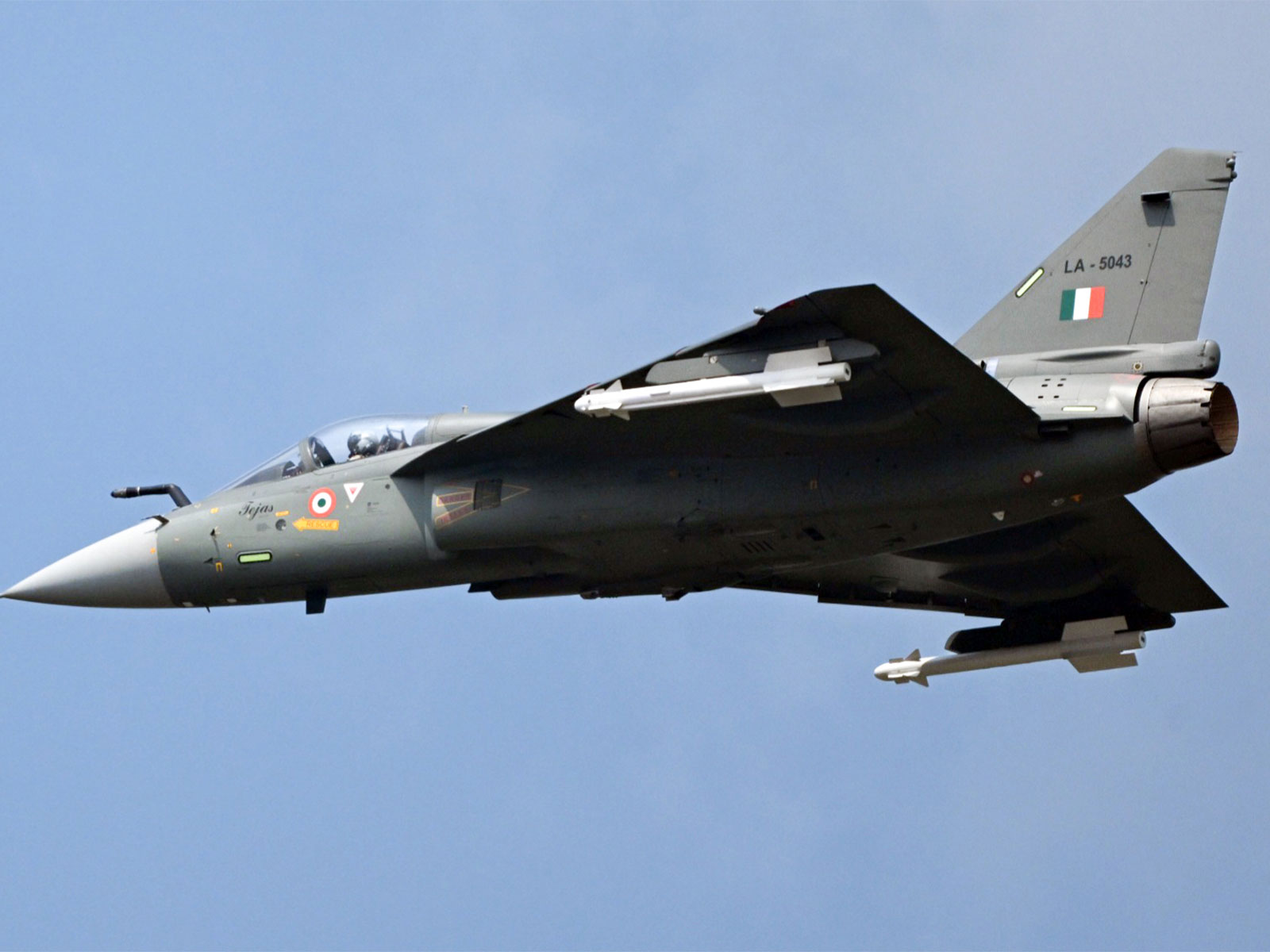
The report highlighted progress in next-generation technologies, including the induction of the indigenous Tejas fighter aircraft, the Arjun Mk-IA battle tank and the introduction of 75 Artificial Intelligence-based defence applications in 2022.
India also made advances in hypersonic missile technology. On January 9, earlier this year, DRDO successfully conducted a long-duration ground test of an actively cooled scramjet combustor, a key step towards developing future hypersonic weapons.
A new Hypersonic Wind Tunnel has also been established in Hyderabad to support these efforts.
The statement also underlined the importance of the Agnipath Scheme, launched on June 15, 2022, to create a younger and more technology-orientated military force. Under the scheme, Agniveers receive military training, skill development and educational opportunities, while also receiving nationally recognised skill certifications.
Summing up India's progress, the statement added, "India's defence journey over the past twelve years reflects more than military modernisation. It marks the rise of a nation determined to secure its future through indigenous strength."
It added that, "India is now viewed as a credible defence partner, reliable security provider, and emerging defence manufacturing hub."
The statement said that as India moves towards its 2047 goals, defence preparedness will increasingly be driven by innovation, resilience and self-reliance, with the foundation laid over the past decade expected to strengthen the country's role in shaping the future global security order.
India's annual defence production also reached an all-time high of Rs 1.78 lakh crore in the financial year 2025-26, registering a 15.6 per cent increase over the previous year and a 110 per cent rise since 2020-21.
Higher indigenous manufacturing, greater private sector participation, and rising defence exports all contributed to the growth.
Defence Minister Rajnath Singh on Wednesday welcomed the achievement and credited Prime Minister Narendra Modi's leadership and the efforts of stakeholders across the defence sector for the milestone.
In a post on X, Singh said, "Under the inspiring leadership of PM Shri @narendramodi, India's defence production is reaching new heights every year. I am delighted to inform everyone that India's annual defence production has surged to an all-time high of Rs 1.78 lakh crore in the Financial Year (FY) 2025-26."
According to the Ministry of Defence, the latest figure marks a 15.6 per cent increase over the previous financial year's output of Rs 1.54 lakh crore. It also represents a 110 per cent rise since FY 2020-21, when defence production stood at Rs 84,643 crore. Indigenous defence production has increased nearly fourfold from Rs 43,746 crore recorded in FY 2013-14.
MoD said Defence Public Sector Undertakings (DPSUs) and other public sector units accounted for about 76 per cent of the total production during FY 2025-26, while the private sector contributed 24 per cent. The private sector's share rose from 22 per cent in FY 2024-25 and reached an all-time high of around Rs 42,000 crore, reflecting its growing role in the country's defence manufacturing ecosystem.
The growth in domestic defence production has also contributed to a record performance in defence exports. India recorded defence exports worth Rs 38,424 crore during FY 2025-26, the highest ever, the MoD added.
The Ministry further stated that the achievement reflects the growing momentum of the government's push for self-reliance in defence manufacturing under the Aatmanirbhar Bharat initiative. Highlighting the rapid expansion of the sector, Singh said, "This milestone represents an impressive 15.6% growth over the previous fiscal year's output of Rs 1.54 lakh crore and a staggering 110% increase since FY 2020-21, when the figure stood at Rs 84,643 crore. Indigenous defence production has increased nearly fourfold from Rs 43,746 crore in FY 2013-14."
The Defence Minister also credited the Department of Defence Production and industry stakeholders, both public and private, for the sustained rise in output.
"The remarkable rise in India's defence production in recent years is the result of the collective efforts of the Department of Defence Production and all other stakeholders. This upward trajectory is a clear indicator of the country's expanding defence industrial base. With sustained policy support, several new initiatives, increased private sector participation, and growing export capabilities, the defence production sector is poised for continued acceleration in the years ahead," the Defence Minister added.