India's Real Estate Boom: Residential and Commercial Sectors Enter a New Growth Phase
Sep 28, 2026
NewsVoir
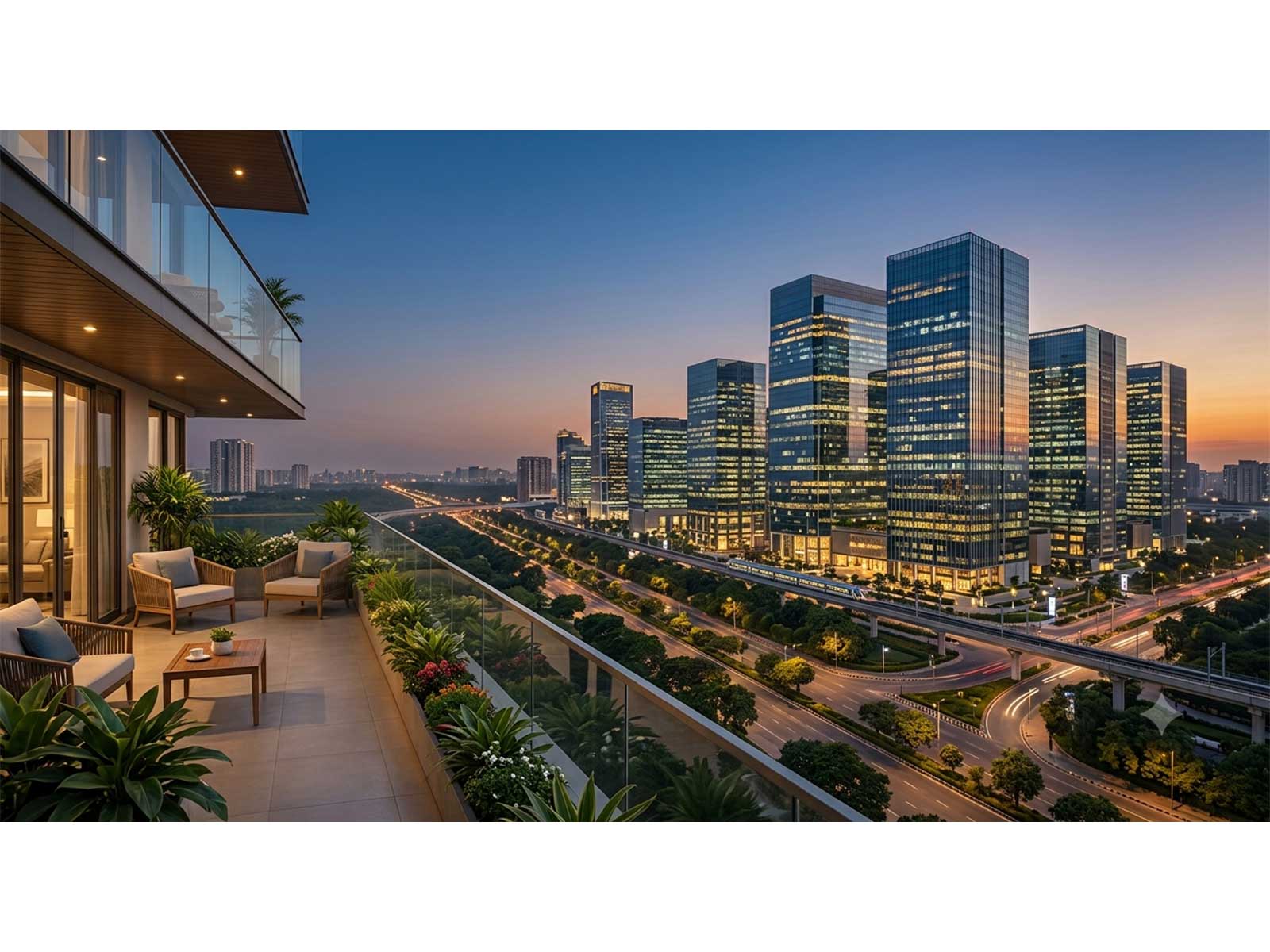
Delhi NCR [India], September 28: The interesting thing about India’s real estate market in 2026 is not simply that demand remains strong. It is where that demand is coming from, and what buyers and occupiers are willing to pay for.
Residential sales across the top seven cities rose 8% year-on-year to 70,631 units in Q1 2026, while homes priced at Rs 1 crore and above accounted for 71% of sales, compared with 59% a year earlier, according to JLL.
Arjun Gehlot, Director, Ambience Group, said, “Homebuyers are looking at the residence as a long-term lifestyle decision. Space, planning, location and the quality of the surrounding environment are becoming more important in the purchase conversation. The willingness to allocate a higher budget is also visible in the continued demand for luxury housing, particularly in established urban markets where buyers already understand the value of the location.”
Commercial real estate is seeing its own expansion. CBRE recorded 45.5 million sq ft of office absorption in H1 2026, the highest half-year figure recorded, with GCCs accounting for about 43% of leasing.
Sandeep Chhillar, Founder and Chairman, Landmark Group, said, "India's commercial and residential sectors are no longer moving in parallel, they are reinforcing each other. On the commercial side, GCCs alone are projected to grow by 41% by 2030, driving demand for Grade-A offices that go well beyond location, occupiers today are evaluating connectivity, floor plate flexibility, sustainability credentials and the broader business ecosystem around a building. Gurugram exemplifies this convergence, where a maturing corporate infrastructure has simultaneously strengthened residential absorption in premium micro-markets. The current growth phase is therefore not a cyclical uptick - it is a structural reset, and the developers who build for that reality rather than the last cycle will define what Indian real estate looks like a decade from now."
Developers are also responding to a clear shift in the composition of demand. JLL recorded a 45% year-on-year rise in launches priced above Rs 1 crore in Q1 2026, with the Rs 1.5-3 crore segment registering a 134% increase in launches.
B.K. Malagi, Vice Chairman, Experion Developers, said, “India’s residential market today is firmly driven by end-users, but buyers are equally conscious of the long-term value of their investment. Location, rental potential, quality of construction and the future growth of the micro-market are increasingly shaping purchase decisions. As ticket sizes rise, buyers are also placing far greater emphasis on execution, delivery and the credibility of the developer. This is ultimately creating a more discerning market where quality and trust will differentiate the strongest developments.”
Prateek Tiwari, Managing Director, Prateek Group, said, “There is greater clarity among buyers about what constitutes value in a home. It is not only the apartment itself, but also the neighbourhood, access, open spaces and everyday convenience. This is supporting demand for strategically located residential projects in established markets, where buyers are thinking about both present use and the longer-term potential of the location.”
Dr. Gautam Kanodia, Founder, KREEVA and Kanodia Group, said, “Luxury housing has become more closely linked to the overall experience of living. Buyers are looking for privacy, design, wellness and better common spaces, but also for a location that holds its relevance over time. This is creating a different conversation around luxury, where the home is increasingly viewed as part of a larger lifestyle and not simply as a physical asset.”
Ashwinder R. Singh, Vice Chairman, BCD Group and Chairman, CII Committee on Real Estate (NR), said, “India’s real estate story is no longer being driven by housing or offices in isolation. Jobs create offices, offices create economic clusters, and economic clusters create housing demand. Infrastructure then expands the geography of that growth. What we are seeing today is this entire cycle beginning to reinforce itself, with end users, businesses and institutional capital participating at the same time. That is what makes the current phase structurally different from earlier real estate cycles.”
Karan Khanna, Founder, Apex Acreages, says “One of the notable shifts in the market is the increasing traction for luxury and premium residential projects, alongside continued activity across the expanding housing segment. Notably, CBRE recorded over 61,000 residential sales in Q2 2026, along with a rising share of high-end apartment sales. From what we see on the ground, factors such as location, product quality, amenities and long-term value are increasingly influencing decisions. This is also shaping how developers position projects and how investors assess opportunities across markets."
The common thread across both markets is a more deliberate buyer and occupier, with real estate increasingly being chosen around how a location will work over the next decade, not merely how it looks today.
(ADVERTORIAL DISCLAIMER: The above press release has been provided by NewsVoir. ANI will not be responsible in any way for the content of the same)