JD Vance dismisses Iran's peace talks denial as "Persian tactic", claims US holds "all the cards"
Jul 01, 2026
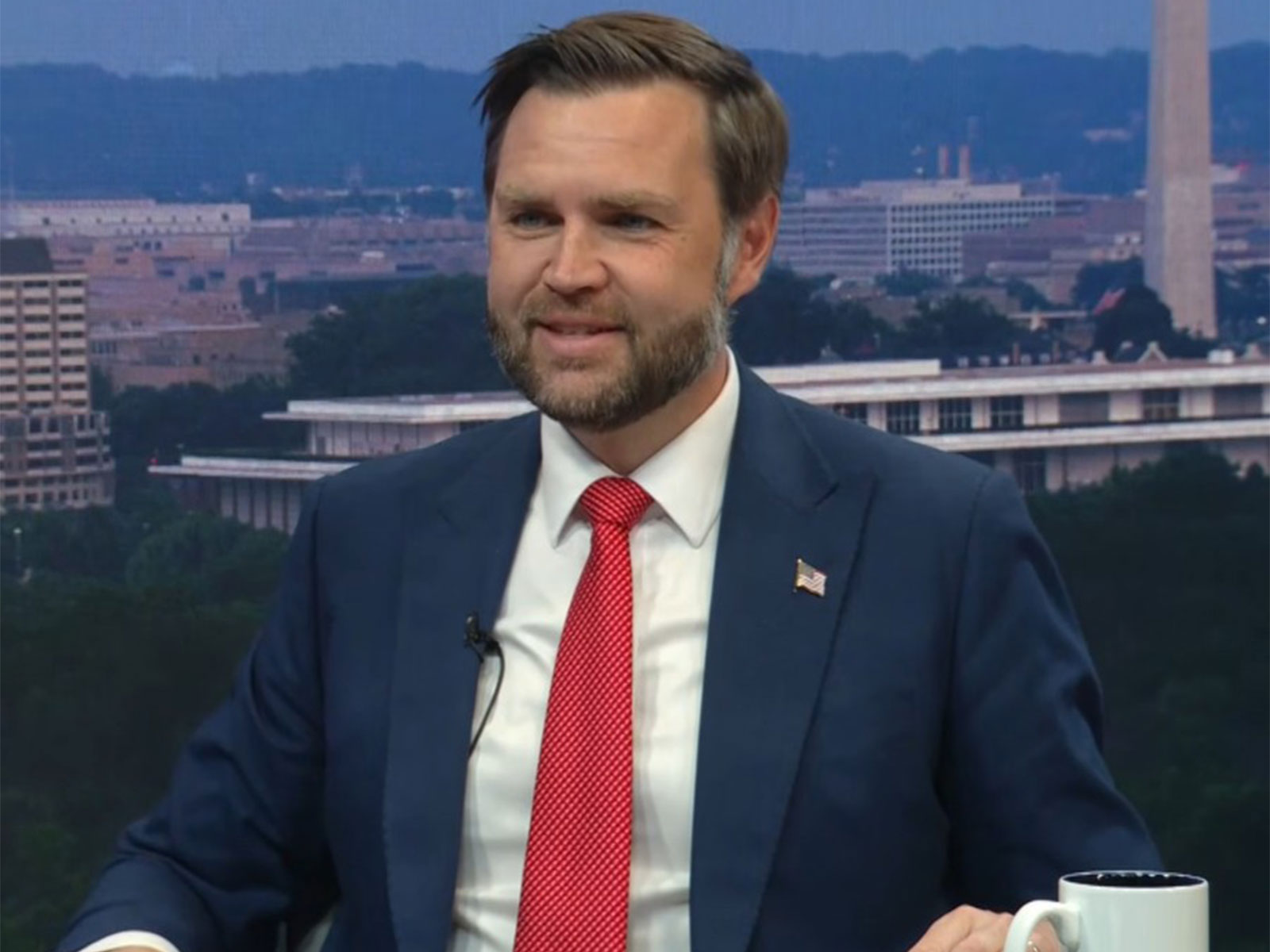
Washington, DC [US], July 1 : US Vice President JD Vance has characterised Tehran's public denials regarding active talks with Washington as a "Persian negotiating tactic", while asserting that the United States holds a commanding position regardless of the final outcome of the dialogue.
Speaking across a series of interviews on Tuesday, Vance confirmed that technical discussions between the two nations are progressing despite repeated official denials from Iran. He underscored that the US maintains immense leverage following what he described as the destruction of Iran's nuclear capabilities.
During his appearance on The Michael Knowles Show, the Vice President confirmed that technical-level engagements between Washington and Tehran are actively progressing to build upon previous rounds of dialogue.
"There were scheduled talks, really technical talks, building on the negotiation that we've already had. Those are definitely happening tomorrow," Vance stated.
The Vice President took aim at Tehran's contradictory public messaging, pointing out that Iranian officials are dismissing the existence of broader peace talks while simultaneously acknowledging ongoing technical discussions.
"They'll say, 'No, no, there aren't peace talks ongoing, but there are technical talks between the United States and Iran about the peace deal.' It's a Persian negotiating tactic and a Persian rhetorical device that I don't understand," Vance remarked.
Elaborating further in a separate interview with Fox News, Vance explained that the administration is evaluating Iran based on its tangible actions on the ground rather than its public rhetoric.
"We care a lot less about what the Iranians say. We care a lot more about what they do," the Vice President emphasised.
Vance noted that while Washington has detected a mix of encouraging and concerning signals from Tehran, any binding agreement would necessitate "real concessions" from the Iranian leadership.
"What the president has told us is work the problem, see where the negotiation is going to lead, and if it doesn't lead to a successful resolution on the diplomatic side, we still have a lot of optionality," Vance added, referring to the administration's strategic flexibility.
The diplomatic movement intensified as White House envoys Steve Witkoff and Jared Kushner travelled to Doha following an announcement by President Donald Trump that Iran had requested a meeting in the Qatari capital.
However, Tehran subsequently denied scheduling any direct negotiations with Washington. Instead, the Iranian side stated that the Doha discussions would focus strictly on executing specific provisions of the memorandum of understanding through Qatari mediation, including the unfreezing of Iranian financial assets.
Reiterating the American position on HBO's Real Time with Bill Maher, Vance insisted that the United States is positioned to emerge victorious irrespective of whether these diplomatic tracks yield a permanent treaty.
"If we make the final deal, then great," Vance said. "If we don't make the final deal, their nuclear programme is still destroyed. They're still much weaker as a country, so my attitude is America wins either way."
The Vice President firmly maintained that Iran's nuclear infrastructure has been "functionally destroyed" and argued that Tehran's capacity to enrich uranium has been effectively neutralised.
When questioned during the interview on whether the nuclear framework had been completely dismantled, Vance countered, "What part of it is not destroyed? The thing that you have to destroy is their ability to enrich uranium, which has been destroyed."
To back his assessment, Vance pointed to global economic indicators, noting that oil prices hovering around USD 73 a barrel reflect tangible outcomes of the ongoing diplomatic push. He further argued that the smooth flow of increased oil shipments through the critical Strait of Hormuz indicates that diplomatic channels are yielding progress.
Nevertheless, Vance acknowledged that executing the ceasefire memorandum signed between US President Donald Trump and Iranian President Masoud Pezeshkian would face operational hurdles.
"It is always going to be a little messy when you're dealing with the Iranians," Vance observed.
Looking ahead, the Vice President offered the prospect of normalised bilateral ties, indicating that Washington remains prepared to overhaul its adversarial stance if Tehran permanently forsakes its nuclear ambitions.
"If they are willing to give up nuclear weapons ambitions for the long term, then the United States is willing to fundamentally transform our relationship with that country," Vance affirmed.
"If they're willing to change, we're willing to change too; if they're not willing to change, we still fundamentally have all the cards, and I think that's a good place to be," Vance stated.
These high-level comments come amid unresolved concerns regarding Iran's existing stockpile of 60 per cent enriched uranium, an issue critics label a major roadblock to a final deal. Addressing the deadlock, International Atomic Energy Agency (IAEA) Director General Rafael Grossi noted that diluting the stockpile or moving it overseas remains a viable pathway as the diplomatic talks continue.