Karnataka CM Shivakumar seeks Centre’s support for Mekedatu project, protection of Western Ghats and 1,000 govt schools
Nov 13, 2026
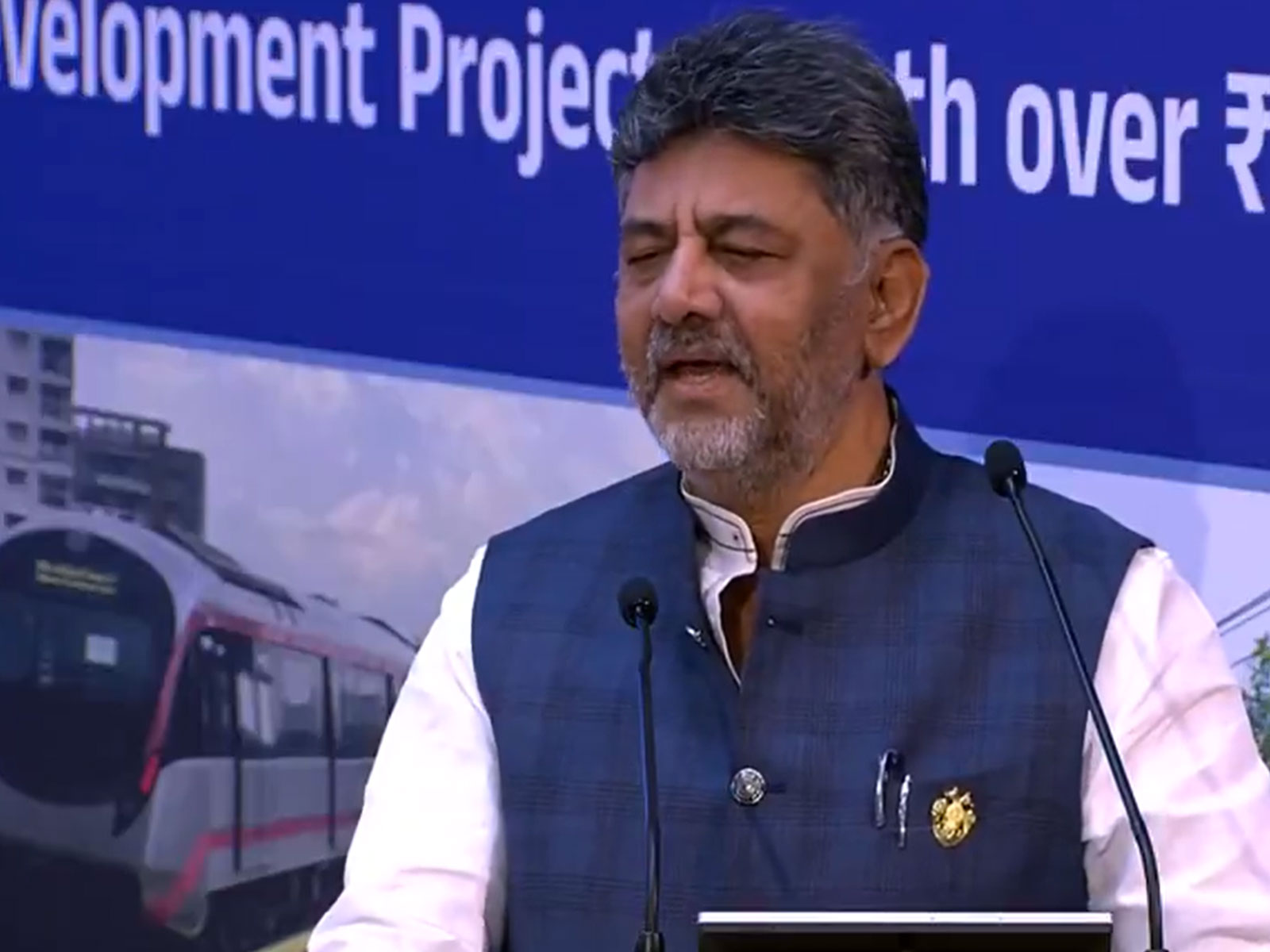
Mysuru (Karnataka) [India], November 13 : Karnataka Chief Minister DK Shivakumar on Friday urged the Centre to expedite statutory clearances for the Mekedatu balancing reservoir project, withdraw the Kasturirangan report recommendations on the Western Ghats and align corporate social responsibility (CSR) initiatives with the state's guidelines to upgrade 1,000 government schools into Karnataka Public Schools.
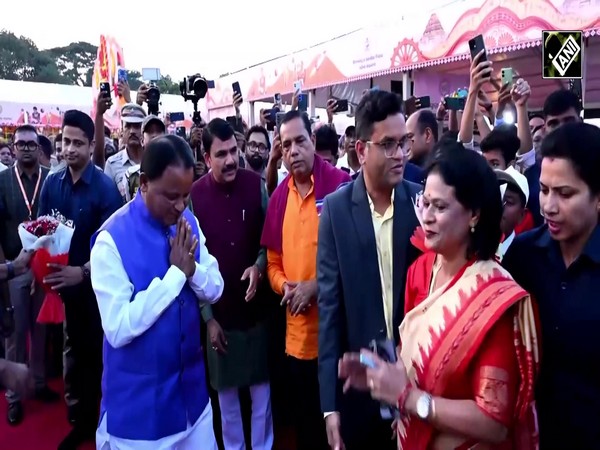
Addressing the inauguration of CoSMOS (Centre of Space and Modern Optical Sciences) in Mysuru in the presence of Prime Minister Narendra Modi, Shivakumar placed three key demands before the Centre, calling for cooperation between the Union and State governments on critical developmental priorities.
On the Mekedatu project, Shivakumar said the Supreme Court had already delivered its verdict on the balancing reservoir project and urged the Centre to grant the pending statutory clearances to enable the drinking water project to proceed without further delay.
The contentious Mekedatu multi-purpose balancing reservoir project across the Cauvery River has been a long-standing demand of the Karnataka government to address drinking water requirements for Bengaluru and generate hydroelectric power, while facing regulatory requirements and objections from downstream Tamil Nadu.
On the Western Ghats issue, he said the Karnataka Legislature had unanimously passed a resolution opposing the recommendations of the Kasturirangan report following extensive public consultations and meetings in the affected regions. He urged the Union Government to respect the sentiments of local residents and withdraw the recommendations, citing concerns over livelihoods.
Karnataka has unanimously rejected the Centre’s seventh draft notification to declare 20,668 sq. km of its territory as a Western Ghats Ecologically Sensitive Area (ESA), citing severe threats to local livelihoods and flawed satellite mapping.
Raising concerns over migration to urban centres for education and employment, Shivakumar said the trend was changing population patterns in the state. He cited figures indicating that migration for education and work had increased from 31 per cent in 2002 to 47 per cent in 2026 and could reach 70 per cent over the next two decades if the trend continued.
To address the issue, he urged the Ministry of Corporate Affairs to issue advisories aligning corporate CSR initiatives with Karnataka's Corporate Social Responsibility (CCSR) Guidelines. He said this would facilitate the upgradation of 1,000 government schools into Karnataka Public Schools and strengthen public education.
Earlier, highlighting the significance of CoSMOS, Shivakumar said the facility would add a new scientific landmark to Mysuru, a city known for its heritage, knowledge and culture. He thanked Union Finance Minister Nirmala Sitharaman for bringing the project to Mysuru.
"If Bharat Van nurtures the future of our planet, CoSMOS will nurture the future of our young minds," he said, drawing a parallel between the Miyawaki-based Bharat Van initiative and the new science facility.
He said a developed India required both a greener planet and a generation of scientific thinkers, adding that CoSMOS was not merely a planetarium but an initiative to encourage curiosity and give direction to young minds.
Underscoring Karnataka's contribution to India's space programme, Shivakumar said the country's space journey was incomplete without the state's contributions, from Aryabhata, India's first satellite, to Chandrayaan, Aditya-L1 and the Gaganyaan mission.
"India's rockets may rise from launch pads, but the ideas, engineering and scientific talent behind many of these missions have deep roots in Karnataka," he said.
He also highlighted the role of academic institutions in Karnataka in encouraging students to participate in satellite development and space research, saying such initiatives demonstrated how young talent could contribute to national missions.
Describing CoSMOS as an advanced facility offering an immersive experience of the universe, he said making science experiential could transform curiosity into excitement and eventually lead to innovation.
Emphasising the need to decentralise access to scientific infrastructure, Shivakumar said world-class science facilities should reach every region of Karnataka and not remain confined to major cities.
"A student's opportunity to touch the sky should never depend on whether the child is born in Bengaluru or in a remote village," he said.
He asked the Department of Science and Technology to explore establishing a CoSMOS-like facility in North Karnataka to provide students in the region with similar opportunities.
Highlighting the state's outreach initiatives, he said the Mobile Digital Planetarium Project had enabled more than 19.21 lakh students and teachers to experience astronomy in their schools.
Quoting former President APJ Abdul Kalam, "Dream, dream, dream. Dreams transform into thoughts and thoughts result in action," the Chief Minister stressed the need to support young researchers through fellowships, training and greater opportunities.
He said the Karnataka Space Technology Policy 2025-30 aimed to support startups, strengthen research, develop skilled talent and foster collaboration between industry and academic institutions.
Shivakumar also noted that space technology had applications beyond rockets and satellites, with the potential to transform agriculture, weather forecasting, disaster management, communication and public services.
He congratulated the Indian Institute of Astrophysics, the University of Mysuru and all those associated with establishing the facility, dedicating CoSMOS to the students, researchers and people of Karnataka.
Referring to the broader relationship between the Centre and the state, he invoked Swami Vivekananda, saying, "Be bold when you are defeated and be large-hearted when you are victorious."
He said cooperation and mutual respect should guide efforts to address developmental priorities.
"The sky is the limit, but for our young minds, even the sky is only the beginning," he said.