Malda mango traders push for airport reopening to boost exports and farmer earnings ahead assembly elections
Apr 21, 2026
Malda (West Bengal) [India], April 21: The Malda Mango Association has called for the reopening of Malda airport to enable direct export of mangoes from the district, which is known for having one of the highest mango outputs in India.
With production expected to reach around 4-5 lakh metric tonnes this year--similar to previous years--an operational air cargo facility would allow traders to export mangoes directly to international markets.
This, in turn, could ensure better returns for orchard owners and farmers.
Traders have also urged the establishment of mango-based processing industries and the provision of necessary government certifications to facilitate exports. Their demands come at a time when West Bengal is witnessing a two-phase Assembly election, scheduled for April 23 and April 29.
Ujjal Saha, President of Malda Merchant Association, told ANI that India's highest mango production takes place in West Bengal, and within the state, Malda district has the highest output.
"There is a possibility of producing around 5 lakh metric tons of mangoes here. Malda is known across India as the "Mango City," and its mangoes are famous nationwide," Saha said.
Pointing out that Malda has three mango varieties that have received prestigious Geographical Indication (GI) tag-- Fazli, Khirsapati (Himsagar), and Lakshmanbhog-- Saha said: "Malda mangoes have become even more popular."
He said there are around 150 varieties of mangoes found in Malda, many of which are also popular in foreign countries. "Last year, a mango festival was held in Qatar, where the Malda district from West Bengal participated and even won an award."
Generally, the Malda Mango Association President said Malda mangoes are exported in limited quantities to Europe, the Middle East, and other countries, but there are many challenges in exporting them.
"Malda's economy is largely agro-based, with mangoes playing a central role. Air connectivity under the UDAN scheme is very important here. Due to the lack of such facilities, mangoes cannot be directly exported abroad. If air connectivity improves or the closed airport is reopened, direct exports would become possible," Saha emphasised.
Another mango businessman from Malda, Pritam Sarkar, said: "There is strong demand for this, and people are urging the government to reopen the airport to boost export business."
Every year, during elections, Sarkar said, the issue of Malda mangoes is widely discussed. "Many political leaders visit Malda and raise the topic, but after elections, no one follows up on it."
At present, another mago trader, Arpit Mandal, said "the central government has an agency called the Agricultural and Processed Food Products Export Development Authority (APEDA), which provides support such as subsidies and assistance for exports, but reopening of Malda airport would help us to directly export mangoes and get more benefits.
This year, he said, there is an expectation of a good production of around four lakh metric tons of mangoes in Malda. "To preserve this produce, it is essential to establish mango-based food processing industries," Mandal said.
"There is global demand for mango pulp, but without processing, exports cannot grow. Since mangoes perish within three months, a significant portion gets wasted.
Therefore, setting up mango-based processing industries and reopening the airport are crucial steps. For exporting to foreign countries, government certification is also required."
Another businessman, seeking anonymity, told ANI that representatives have raised issues with various authorities, including the central and state governments, and have written to the Finance Minister, APEDA chairman, and the Food Processing and Horticulture Ministry, but no response has been received so far.
"To protect Malda's famous GI-tagged mangoes, more initiatives are needed from the government. While the West Bengal government is making efforts within its limited powers, stronger intervention from the central government is necessary. Without this, the mango industry cannot be sustained, and local farmers will not be able to earn adequate profits."
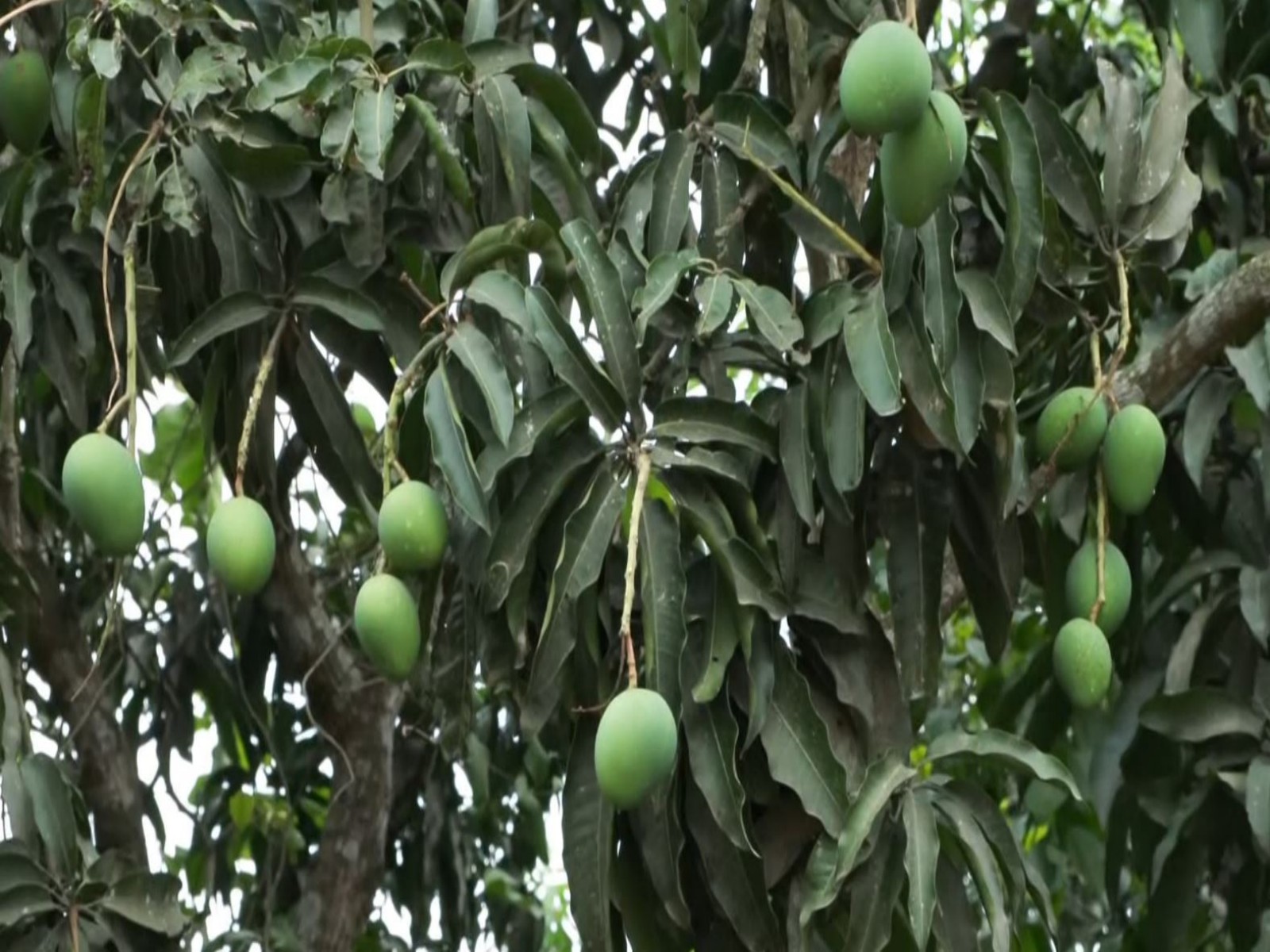
Krishna Mandal, a Mango orchard owner, said Malda has around 50-60 varieties of mangoes, including Himsagar, Patali, Fazli, Lakshmanbhog, Amrapali and Langda.
"Mangoes from here are exported to all across the country, like Uttar Pradesh and Delhi, and even to foreign countries such as Bangladesh and the Middle East," Krishna said.
However, Krishna sai, mangoes are sold at a price of around Rs 10-15 per kilogram in Malda, which is quite low. "When these mangoes are sold outside, they fetch much higher prices."
Pointing out that mango harvesting will begin in Malda, and currently the yield is good, Mandal said: "We have also informed the local MLA that Malda mangoes should be sent to markets outside the region so that farmers can get better prices. We have raised this issue with politicians, emphasising that exporting mangoes will ensure fair value for the produce."
The summer fruit Mango is cultivated across nearly 31,500 hectares in Malda, yielding an average annual output of about 4-5 lakh metric tonnes.
Approximately 10 lakh people in the district depend directly or indirectly on mango cultivation and its associated trade for their livelihoods.