New US rule raises recurring H-1B costs for visa-dependent employers
Aug 10, 2026
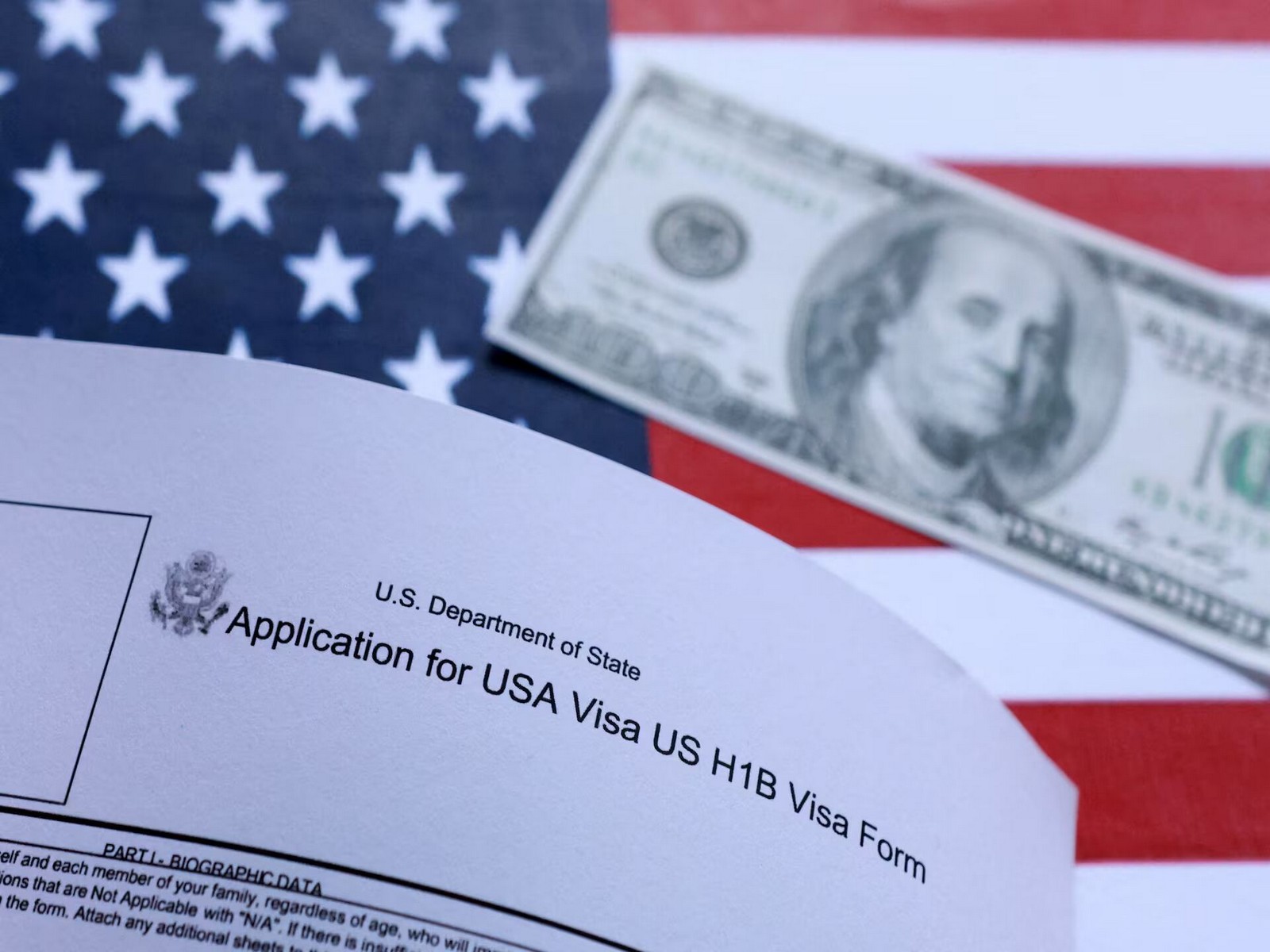
Washington, DC [US], August 10 : The US Department of Homeland Security (DHS) has expanded a USD 4,000 fee on H-1B petitions and a USD 4,500 levy on L-1 petitions to encompass visa extensions submitted by specific employers, even when workers remain with the same firm.
Scheduled to take effect on September 9, the final rule is poised to substantially raise recurring immigration expenses for businesses relying heavily on foreign talent.
The regulation applies exclusively to firms employing at least 50 workers in the United States, where over 50 per cent of the domestic workforce collectively holds H-1B, L-1A or L-1B status.
Under the updated mandate, such companies must submit the 9/11 Response and Biometric Entry-Exit Fee every time they seek an extension for a covered worker's stay.
Previously, the fee was generally restricted to applications involving initial employment or a change of employer. Extensions processed by the existing employer for the same staff member were exempt, provided the separate fraud-prevention fee was not triggered.
Addressing the rationale behind the revision, DHS noted, "The regulatory changes correct DHS's interpretation of statutory language to require that covered employers submit the 9-11 Biometric Fee for all extension of status petitions, regardless of whether the related fraud prevention and detection fee applies."
While the actual fee rates remain unchanged, the adjustment significantly widens the volume of applications liable for these existing charges.
Impacted employers will incur USD 4,000 for each qualifying H-1B application and USD 4,500 per L-1 filing. Amended petitions that do not request a duration extension for the worker's authorised status will continue to be exempt.
The financial obligation rests entirely on the employer, with DHS dismissing proposals that would allow foreign professionals to fund the charge if their companies were unwilling to pay.
Clarifying the mandate, the department stated, "The statutes and existing regulations specify that the fee is required to be paid by the employer."
Official documentation acknowledged potential indirect ramifications for Indian technology experts and skilled professionals if companies re-evaluate the expenses associated with repeated visa extensions. Industry stakeholders had cautioned that escalating costs could deter organisations from retaining H-1B staff, suppress legal immigration, and adversely affect foreign nationals navigating extended employment-based green card wait times.
However, federal officials dismissed these concerns, maintaining that the requirement affects a specific subset of companies and represents a modest expenditure relative to overall salaries, relocation allowances and recruitment overheads.
DHS further pointed out that H-1B demand has consistently outstripped the annual statutorily capped limit for over ten years, projecting no decline in total foreign skilled hires.
Government estimates project that the expanded collections will yield an additional USD 37.9 million in fiscal year 2026 and USD 40 million in fiscal year 2027.
The policy shift marks a considerable expansion. Data indicates that between fiscal years 2018 and 2025, approximately 27 per cent of H-1B filings by covered firms incurred the biometric levy. Under the newly implemented legal interpretation, about 75 per cent of their H-1B petitions would have been subject to the charge.
DHS acknowledged that its prior reading of the law was flawed. Although Congress originally included extension applications when establishing the levy in 2015, DHS had previously tied its enforcement to conditions where the fraud-prevention fee was also applicable.
Defending the statutory alignment, the department asserted, "The best interpretation of that statute is that the 9-11 Biometric Fee applies to all extension of status petitions even when the Fraud Fee is not applicable."
Revenue generated from the fee funds the biometric entry-exit programme used to verify foreign nationals arriving in and departing from the US. Half of the collected funds, up to a designated cap, support the dedicated biometric account, while the remaining portion is directed to the US Treasury's general fund.
DHS highlighted that annual fee receipts dropped from USD 158 million in fiscal year 2016 to USD 25.6 million in fiscal year 2025, maintaining that broader enforcement is essential to sustain facial-comparison and related identification systems across American land borders, sea terminals and international airports.