"No patchwork fix": Sean Duffy seeks USD 50 billion to overhaul ageing air traffic control system, urges to pass Modern Skies Act
Nov 14, 2026
Washington DC [US], November 14 : US Transportation Secretary Sean Duffy has urged Congress to approve nearly USD 50 billion in funding to overhaul the country's ageing air traffic control (ATC) infrastructure, warning that temporary repairs would not be sufficient to prevent further disruptions after a nationwide ground stop exposed vulnerabilities in the Federal Aviation Administration's (FAA) telecommunications network.
Duffy has called for the passage of the Modern Skies Act, which proposes an additional USD 20 billion for modernising air traffic control technology, replacing ageing airport infrastructure and developing world-class airports.
The proposal builds on the USD 12.5 billion already allocated by Congress under President Donald Trump's Working Families Tax Cut Act. Duffy has separately said that another USD 7 billion to USD 10 billion would be required for software upgrades.
In a post on Facebook, Duffy attributed the nationwide disruption to decades-old analogue equipment that could not cope with the demands of modern aviation.
“Today’s nationwide ground stop happened because our air traffic control system is operating on DECADES-OLD, analog equipment that simply cannot compete with the demands of the 21st century,” he said.
He added that the FAA was modernising the ageing infrastructure with the initial USD 12.5 billion allocation but stressed that the funding was insufficient to complete the overhaul.
“President Donald J. Trump is asking Congress to give us the resources to build a state-of-the-art air traffic control system. Let’s not do a patchwork fix to a system that’s critical for every single family,” Duffy said, urging lawmakers to pass the Modern Skies Act.
The funding appeal follows a nationwide ground stop imposed by the FAA after a telecommunications outage disrupted air traffic control operations across the United States, triggering thousands of flight delays and cancellations.
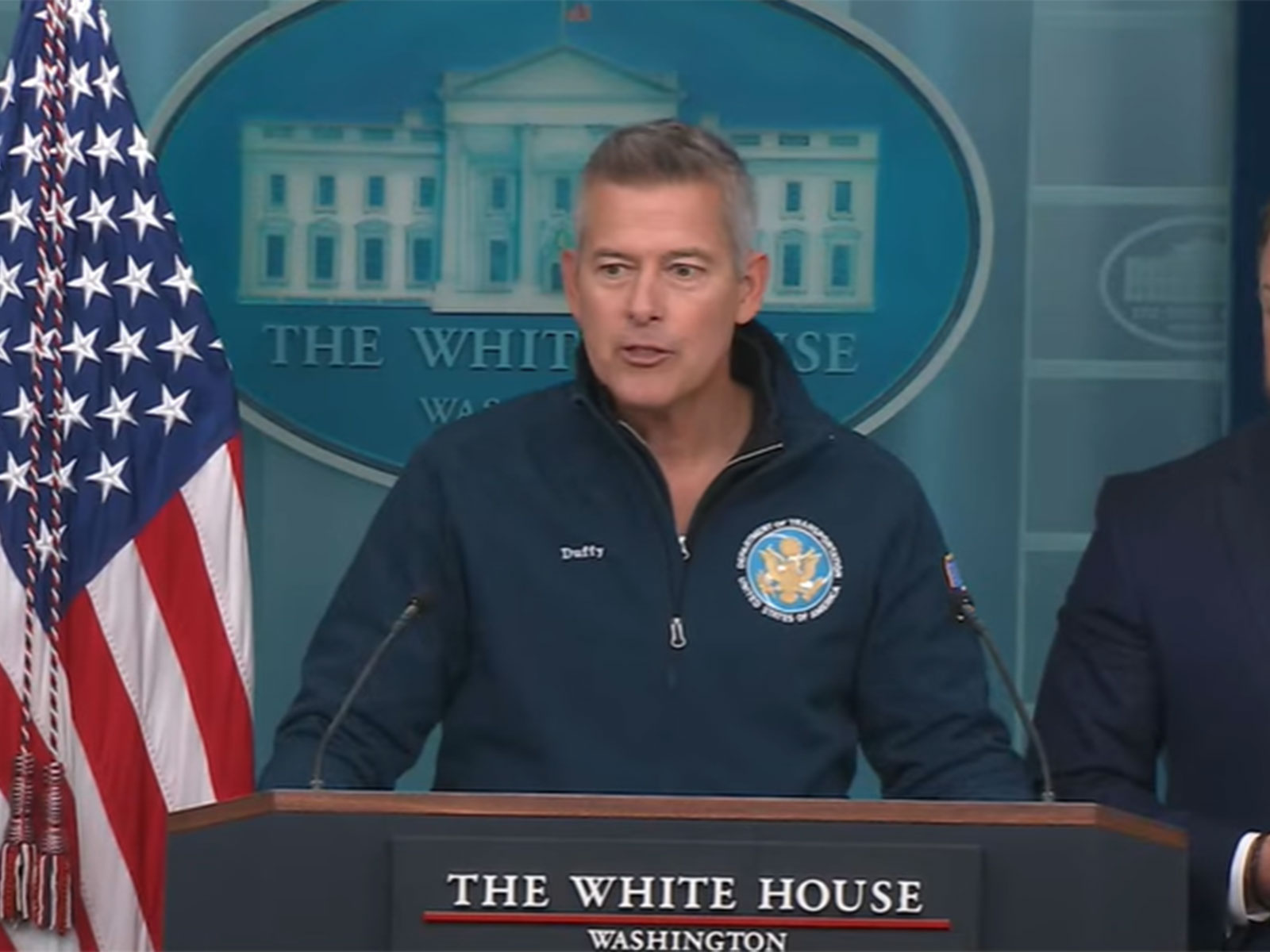
Addressing reporters, Duffy said the disruption began at approximately 3:36 pm (local time), when radar and communication systems at air traffic control centres and Terminal Radar Approach Control (TRACON) facilities across the country experienced instability.
"At 3:36 p.m., we experienced instability for our radar and our communications in our centres and our TRACONs across the country," he said.
Explaining the decision to halt flights, Duffy said controllers began receiving inconsistent radar information and communication signals from aircraft, prompting authorities to activate established safety procedures.
"The TRACONs and the centres, we started to have inconsistency in the data from the radars and our communication with airplanes. And we have procedures for this. Our pilots are well trained, our air traffic controllers are well trained, and at that point we issued a ground stop," he said.
More than 3,500 aircraft were airborne when the ground stop was announced, Duffy said, adding that authorities coordinated their safe landing. Critical aviation operations, including medical evacuation flights, cargo movements carrying life-saving medicines and law enforcement operations, were allowed to continue.
"We didn't lose all telecom, we didn't lose all radar, but that instability—because of an abundance of caution and making sure we keep the American flyer safe—we did the ground stop, but we were going to allow those life-saving movements to still occur," he said.
Duffy attributed the disruption to the country's legacy telecommunications infrastructure, which relies on time-division multiplexing (TDM), an analogue technology. He said ageing switches and routers became overloaded with data, resulting in inconsistent information being transmitted through the system.
"We have TDM telecom. So, this is analog telecom. Our switches, our routers actually got overloaded with data, and they went down. And—I shouldn't say they went down—they started to give us inconsistency in the data from those routers, and because of that we shut the system down," he said.
He added that newer Internet Protocol (IP) switches installed under the Trump administration continued functioning during the incident, while older equipment experienced technical instability.
Under the proposed Modern Skies Act, USD 10 billion would be allocated to complete upgrades to the digital architecture supporting air traffic control, including controller safety separation tools, telecommunications networks and advanced air traffic flow management technology. Another USD 10 billion would go towards replacing ageing control towers, airport facilities and runways, while the remaining USD 10 billion would establish a grant programme for airports serving between five million and 25 million passengers annually.
The legislation would also provide the FAA with greater flexibility to deploy modern radars, radios, electronic flight strips and surface-awareness technology.
Duffy said the administration had already made progress through the initial USD 12.5 billion allocation, including replacing outdated copper wiring with high-speed fibre, transitioning radios and installing new surveillance technology at airports.
However, he said additional investment was necessary to complete the modernisation programme. During a separate briefing on the overhaul, Duffy said the government would need another USD 7 billion to USD 10 billion for software development and deployment, adding that the process would require time for testing, debugging and training.
The FAA has also begun deploying digital towers, with systems operational at Bartow Executive Airport in Florida and Kenai Municipal Airport in Alaska, according to an agency announcement on November 6. Five additional airports are expected to receive the technology.
Digital towers use advanced cameras and displays to provide controllers with a continuous 360-degree view of runways, taxiways and surrounding airspace.
FAA Administrator Bryan Bedford said the technology would provide controllers with greater visibility and information to support critical decisions. He described the initial USD 12.5 billion allocation as a "critical down payment", adding that the Modern Skies Act would help complete the transformation of the National Airspace System.
The proposed legislation has received support from several aviation industry organisations, including Airlines for America, the Air Line Pilots Association, the National Air Traffic Controllers Association and the American Association of Airport Executives.
Meanwhile, US Homeland Security Secretary Markwayne Mullin said there was no indication that the telecommunications outage was linked to a cyberattack or a separate Microsoft disruption.
"I want to make sure everybody understands that there is no connection between this and Microsoft. I know a lot of people are making that jump. So far, what we've seen, there is actually no cyberattack. We're still working through that process. Our teams are working," Mullin said.
He added that the Federal Emergency Management Agency had activated its centres to assist passengers who might require essential medication or other support because of the disruption.
According to flight-tracking platform FlightAware, approximately 7,000 flights were delayed or cancelled following the outage. Air India also warned of possible consequential disruptions to its flights to and from the United States, advising passengers to check their flight status before travelling to airports.