Not All Flakes Mean Dandruff: Why Dry and Oily Flakes Need Different Scalp Care
Nov 04, 2026
VMPL
New Delhi [India], November 4: You’ve tried the anti-dandruff shampoo your best friend swore by. You’ve tested the lemon-and-curd hack from the family WhatsApp group, and you’ve religiously applied weekly oil massages. Yet, those persistent white specks on your shoulders refuse to leave.
If this sounds familiar, the issue might not be the effort you are putting in—it’s likely that your scalp requires a completely different kind of care.
Flakes Are Not One-Size-Fits-All
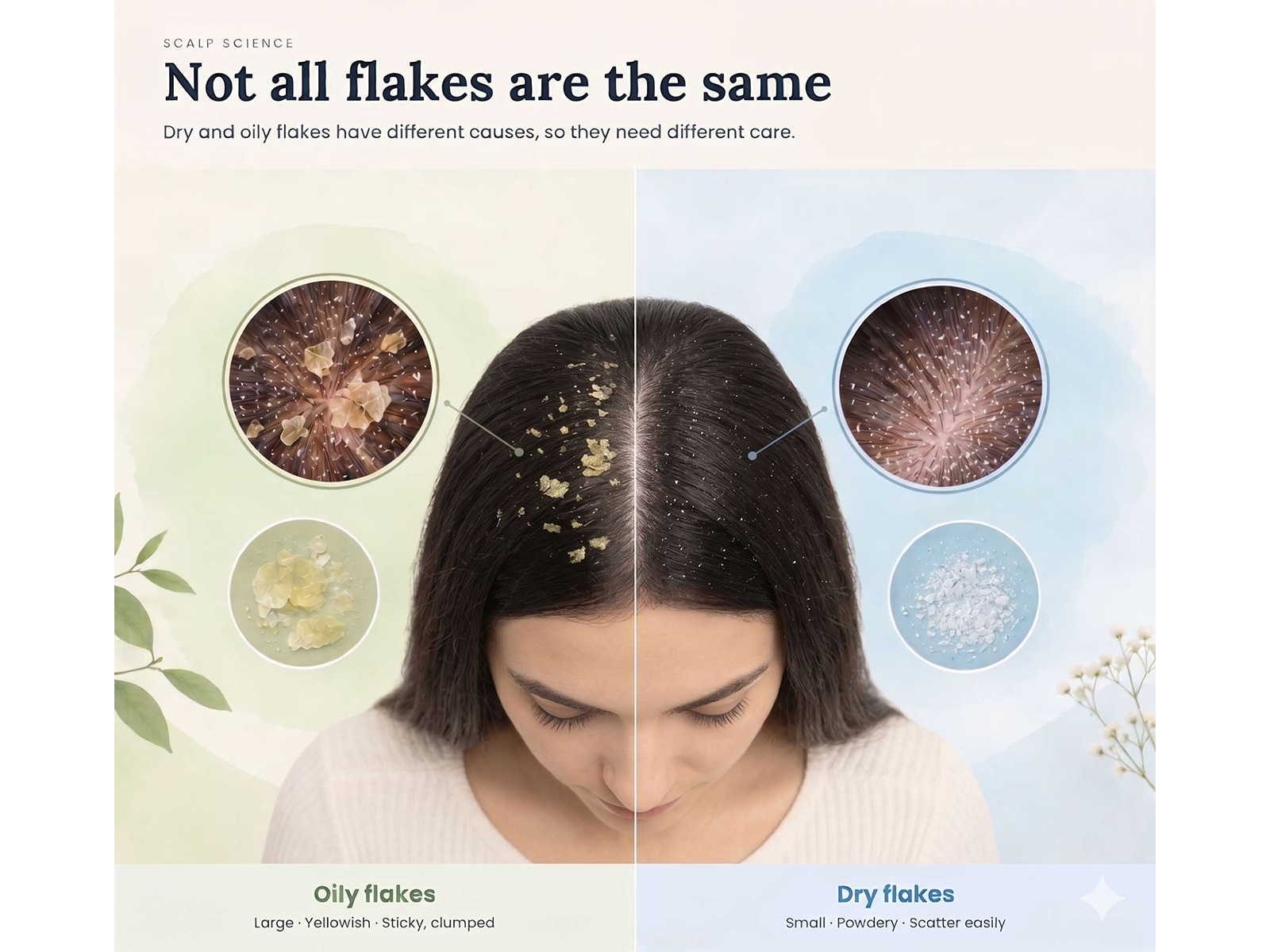
It is easy to label every visible flake as classic dandruff. However, scalp flaking stems from distinct underlying causes, even if the visual symptoms occasionally overlap. A dehydrated, dry scalp and an oily, dandruff-prone scalp both shed skin, but the mechanisms driving them are entirely different. Naturally, their solutions must be different, too.
Know Your Flakes: Oily vs. Dry
* Oily Flakes: These tend to be larger, yellowish or off-white, and often feel sticky, heavy, or clumped together. They occur on an oilier scalp and are frequently accompanied by intense itchiness and hair that gets greasy shortly after washing.
* Dry Flakes: These are noticeably smaller, lighter, and powdery. They scatter easily when you brush your hair or scratch your head. This type of flaking usually comes with a tight, dehydrated scalp and overall hair dryness.
What is Dandruff, Really?
True dandruff is a physiological condition closely linked to an overgrowth of Malassezia—a yeast-like fungus that naturally lives on the human scalp. On oily scalps, this microorganism feeds on excess sebum (oil). This process generates irritating by products that cause inflammation and trigger rapid cell turnover, leading to visible, clumped flakes and persistent itching.
"Dandruff is not simply a matter of visible flakes. It involves a complex interplay of the scalp's natural oil production and an individual's unique susceptibility to irritation. Understanding these core drivers is essential for choosing effective scalp care, rather than treating every instance of flaking with the same harsh remedy" says Dr. Manoj Kumar H Parekh.
Why the Wrong Shampoo Can Backfire
Reaching for a standard anti-dandruff shampoo for every single flake often creates more problems than it solves. Formulations built to strip excess sebum and fight fungal overgrowth are usually too harsh for an already dehydrated scalp, leaving it even tighter, more irritated, and flakier than before. Conversely, relying solely on heavy, rich moisture masks will fail to clear an oily scalp battling fungal-driven dandruff.
"The goal isn't to declare one type of shampoo superior to another, but to select a precise formulation suited to your scalp's immediate biological needs. If severe flaking or irritation persists, consulting a dermatologist is always more effective than endlessly rotating through off-the-shelf hair products." says Dr. Manoj Kumar H Parekh.
Matching Your Scalp to the Right Solution
Effective scalp health comes down to targeted, pH-balanced care. Brands like Sebamed, recognized for their specialized pH 5.5 approach to protecting the skin's protective acid mantle, design tailored formulas for distinct scalp environments:
* For Oily Flakes: Formulations such as Sebamed Anti-Dandruff Shampoo utilize active ingredients like Piroctone Olamine to target microbial growth and gently dissolve stubborn, oily flakes.
* For Dry Flakes: Formulations such as Sebamed Anti-Dry Revitalising Shampoo leverage plant-based proteins and gentle conditioning complexes to deeply hydrate, soothe tightness, and reduce dry scaling.
Before buying another product or trying another DIY remedy, take a closer look at what your hair is shedding. Are your flakes heavy and clumped, or light and powdery? Listening to what your scalp is actually telling you is the fastest route to a clear, healthy hair foundation.
(ADVERTORIAL DISCLAIMER: The above press release has been provided by VMPL. ANI will not be responsible in any way for the content of the same.)