NPS Trust chief backs India's private credit readiness, stresses governance for pension inflows
Jul 09, 2026
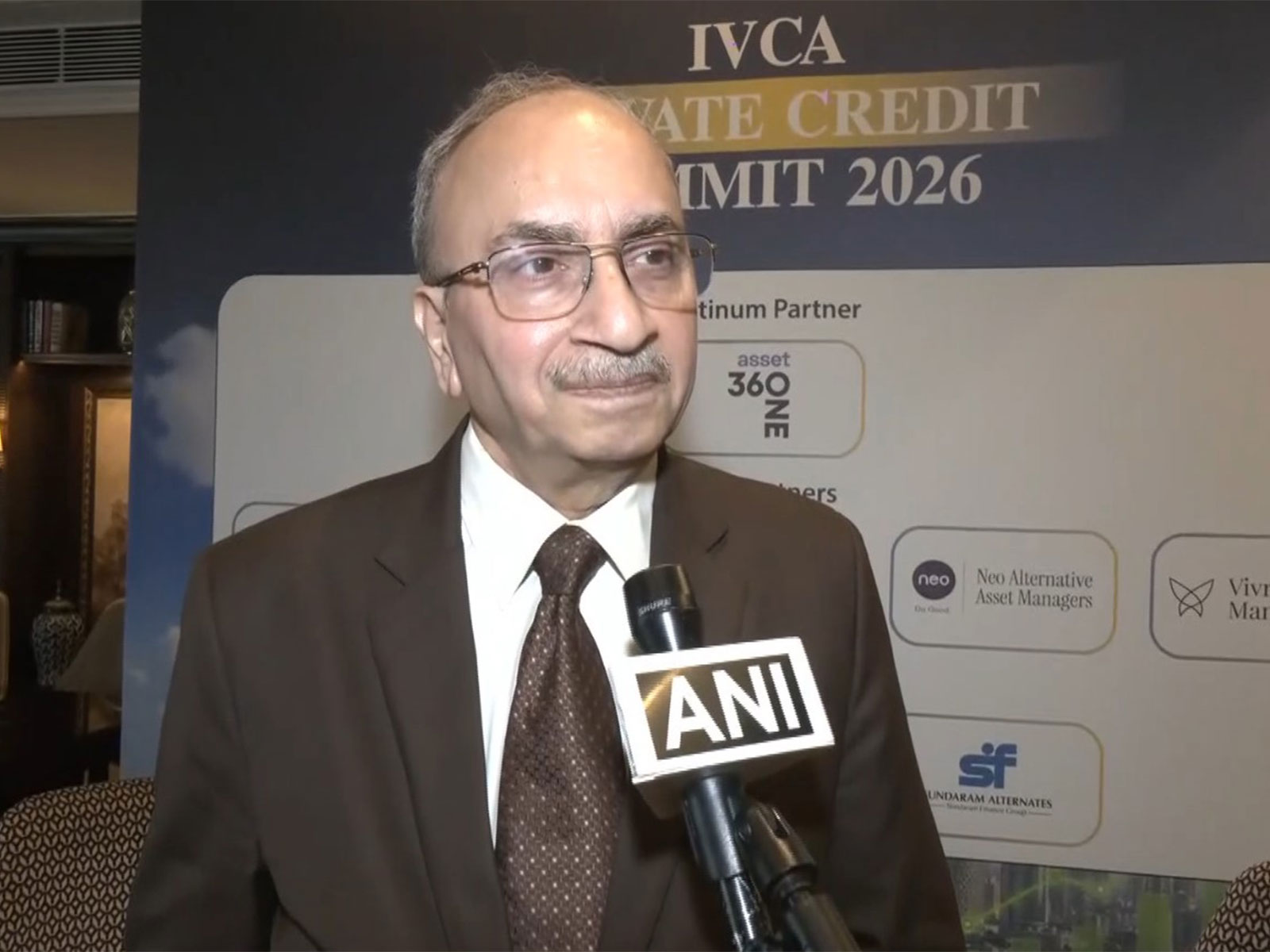
Mumbai (Maharashtra) [India], July 9 : India's credit ecosystem is structurally sound and well-equipped to absorb massive institutional capital inflows, driven by deep underlying market demand, National Pension System (NPS) Trust Chairperson Dinesh Kumar Khara said on Thursday.
In an exclusive interview with ANI on the sidelines of the IVCA Private Credit Summit 2026 in Mumbai, Khara highlighted that the domestic credit landscape presents excellent expansion opportunities, backed by a banking sector currently growing at a robust 14 to 15 per cent.
However, for private credit to become a core bet for long-term retirement assets, the NPS Trust Chief asserted that governance and meticulous fund manager due diligence remain non-negotiable prerequisites.
"Governance is a very, very critical aspect when it comes to pension fund managers investing. And obviously, when it comes to actually doing the due diligence, that is something which is very important," Khara told ANI.
He emphasized that pension wealth is structurally distinct from traditional investments that carry a short horizon of three to five years.
"This money is available for a very long time... and that kind of allocation can actually help the enterprise to create value," Khara added, noting that enterprises must demonstrate long-term viability and consistency of returns to attract such sticky capital.
Describing the Indian pension fund industry as currently being in a "nascent stage," Khara projected phenomenal future growth as domestic financialization deepens and public trust in retirement investment vehicles strengthens.
During a fireside chat at the summit, Khara elaborately expanded on the broader alternate debt landscape, pointing out that the Indian private credit market operates heavily on equity risk capital from family offices and UHNIs, maintains a low-leverage structure, defaults are highly unlikely to trigger a systemic domino effect across the broader financial system.
He mentioned that regulators are closely monitoring the maturity of fund managers, evaluating future policy relaxations and leverage rules based on how responsibly the industry scales.
Concurrently, bodies like the NPS and EPFO are actively building frameworks to channel pension and insurance wealth into private credit, he added. This institutional shift is backed by strong historical data showing low volatility and narrow performance dispersion, with post-IBC real estate funds delivering net returns above 14 per cent.
To support this, SEBI is working to eliminate transactional friction in the bond market, particularly for lower-rated (BBB) tranches where private credit creates the most value, Khara noted.
While global FDI funds prioritize legal stability and robust recovery frameworks over tax rules, domestic investors are advocating for a lower, standardized tax rate on interest income to expand the capital base.
The government is carefully balancing these complex tax structures, having already signaled serious intent through recent withholding tax and capital gains alignments to attract long-term global and domestic pools, he concluded.