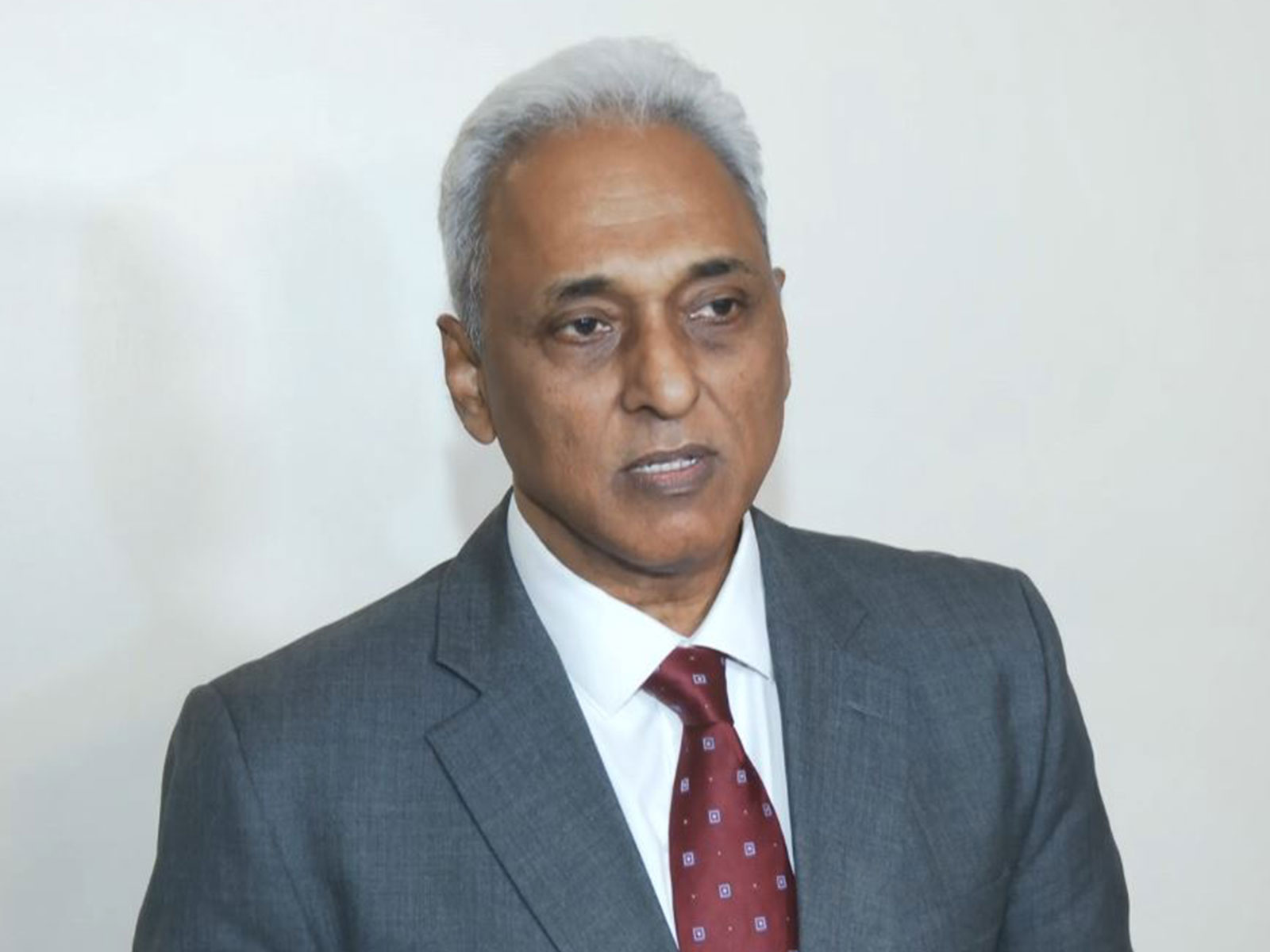
PFRDA aims to achieve Rs 100 lakh crore pension corpus well before 2040: Chairman S Ramann
Nov 04, 2026
Mumbai (Maharashtra) [India], November 4 : The Pension Fund Regulatory and Development Authority (PFRDA) aims to achieve Rs 100 lakh crore in assets under management (AUM) well before 2040, accelerating beyond its current growth projections through digital innovation, greater financial awareness and wider pension inclusion, Chairman S Ramann said on Wednesday.
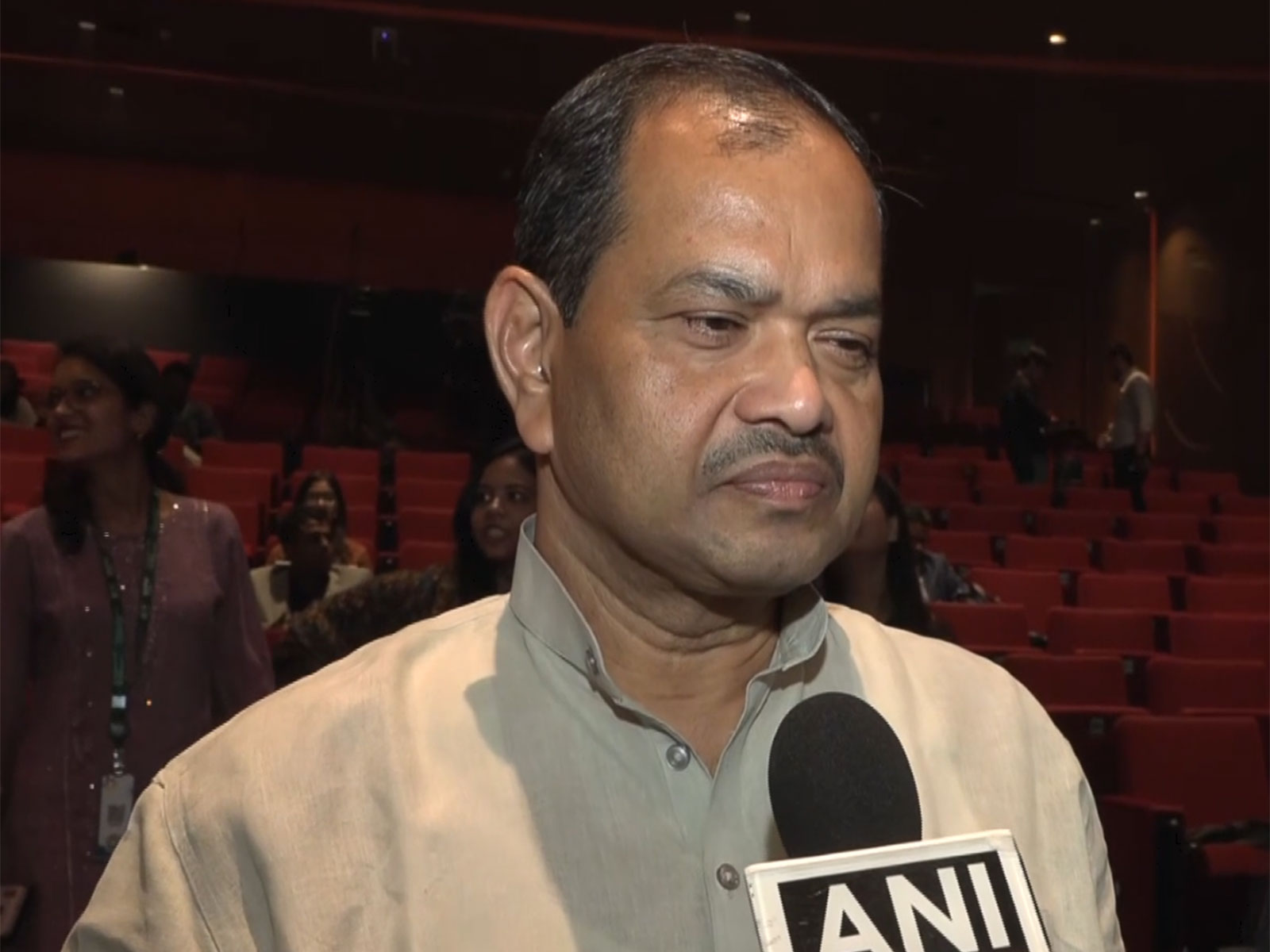
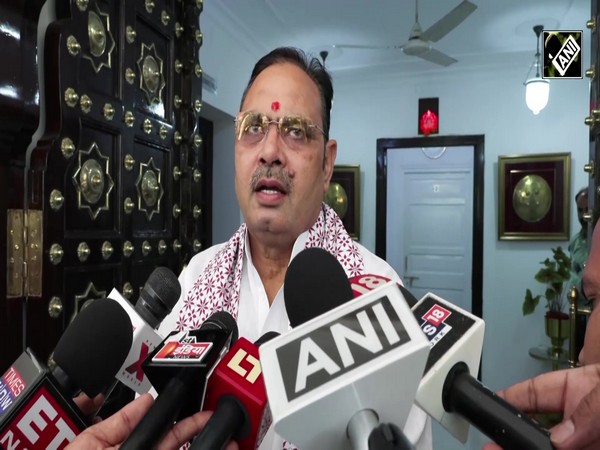
Speaking to the media on the sidelines of the 'Leadership Event on NPS Tatkal' in Mumbai, Ramann said the pension corpus is projected to reach Rs 100 lakh crore by 2040 based on the current growth trajectory, but the regulator is working to achieve the milestone much earlier.
"Given the way NPS is growing, Rs 100 lakh crore will come automatically," he said, adding that the regulator's digital initiatives and awareness campaigns could help accelerate the growth of pension assets.
"What we are saying is that through our efforts, the digital platforms we are creating and the awareness we are increasing, we can achieve this milestone earlier," Ramann said.
Highlighting the need for sustained efforts, he said, "We have to continue these efforts every year. It cannot be a situation where we make an effort this year and do nothing afterwards."
Ramann also emphasised that the growing pension corpus could contribute significantly to India's infrastructure financing and economic development.
"When it comes to infrastructure financing, a very large proportion of infrastructure investment in several other countries comes from pension funds," he said.
"Therefore, the investments we make using NPS funds also contribute to nation-building. We have to look at both these objectives together," he added.
Highlighting the importance of expanding pension coverage among lower-income groups, informal-sector workers and gig workers, the PFRDA Chairman said financial flexibility and ease of contributions would play a crucial role in encouraging retirement savings.
"For lower-income segments and informal workers who do not have a salaried income, liquidity is incredibly critical. They find it difficult to save," he said.
Explaining how the National Pension System (NPS) could address these challenges, Ramann said, "What we are saying is that, for lower-income groups, the informal sector and gig workers, we will make NPS the easiest place to save."
"Through UPI, you can transfer Rs 10 on a daily basis or even on an hourly basis. It is entirely up to you because there is now no transaction charge under NPS," he added.
Ramann clarified that Rs 10 is the minimum contribution amount, while Rs 250 would be collected as the minimum contribution at the time of opening an NPS account.
"What we are saying is that a minimum contribution of just Rs 250 will be collected at the time of opening the account. But more importantly, we need to inculcate the discipline of saving money," he said.
On the cost structure of pension products, Ramann highlighted that NPS remains among the lowest-cost retirement savings products globally, making it attractive for both subscribers and financial institutions.
"Given the low commissions available under NPS, it is actually the lowest-cost product anywhere in the world. The total commission is 0.2 per cent of AUM per year," he said.
He further noted that NPS Tatkal had been designed to enable banks to acquire pension subscribers at a low cost, with an onboarding fee of Rs 100 and an annual commission of 0.2 per cent on an AUM basis.
According to Ramann, banks could also benefit from long-term customer relationships, as pension subscribers generally remain associated with the system for several decades.
Linking the digital pension initiative with the government's broader financial inclusion objectives, Ramann referred to Prime Minister Narendra Modi's emphasis on leveraging India's Unified Payments Interface (UPI) infrastructure to expand pension coverage.
"The Honourable Prime Minister, in one of his addresses, also mentioned that it was time to use the UPI architecture so that pensions could grow in the same way that UPI transformed the payments system," he said.
Highlighting the simplified digital onboarding process under NPS Tatkal, Ramann said the initiative would enable customers to open pension accounts through their existing banking and UPI infrastructure without having to enter their personal details again.
"'Teen click mein NPS apna' — that is the motto, the slogan we have coined," he said.
Explaining the process, Ramann added, "It actually works in three clicks, as you have seen. Customers do not have to enter any details because virtually all the information is already available in the KYC records held by banks."
He further said, "If you complete the PFRDA NPS Tatkal onboarding journey right now, the entire process will be completed in 10 seconds."
Ramann expressed confidence that digital onboarding could significantly accelerate pension inclusion, with the regulator expecting four to five crore customers over the next two to three years.
"We are hopeful that within two to three years, we should easily get four to five crore customers. It could be much more," he said.
On the importance of long-term retirement savings, Ramann emphasised that the NPS framework is designed to preserve a substantial portion of subscribers' accumulated funds for their retirement years.
"NPS, by design, does not allow easy withdrawals. There is a maximum of 25 per cent of the account that can be withdrawn," he said.
"So, we are assured that the subscriber, the person saving money, will have at least 75 per cent of the corpus available in old age," he added.
Reiterating PFRDA's broader vision of expanding retirement savings coverage, Ramann said the regulator aims to transform India into a pension-oriented society through greater accessibility, financial education and digital adoption.
"What we want is for India to become a pension society," he said.
Highlighting the existing pension coverage gap, Ramann said India has approximately 60 crore people in its workforce, while NPS and the Atal Pension Yojana (APY) together have around 10 crore subscribers.
He noted that NPS has approximately 1.5 crore government subscribers and 1 crore non-government subscribers, indicating significant potential for further expansion.
"We do not have any specific target to cover 60 crore people because it is a moving number. The potential subscriber base is much larger than where we are today. NPS Tatkal will give us the scale," he said.