“Process of decolonisation not about erasing history,” says Amit Shah in Mumbai; outlines long-term vision for Asiatic Society
Sep 13, 2026
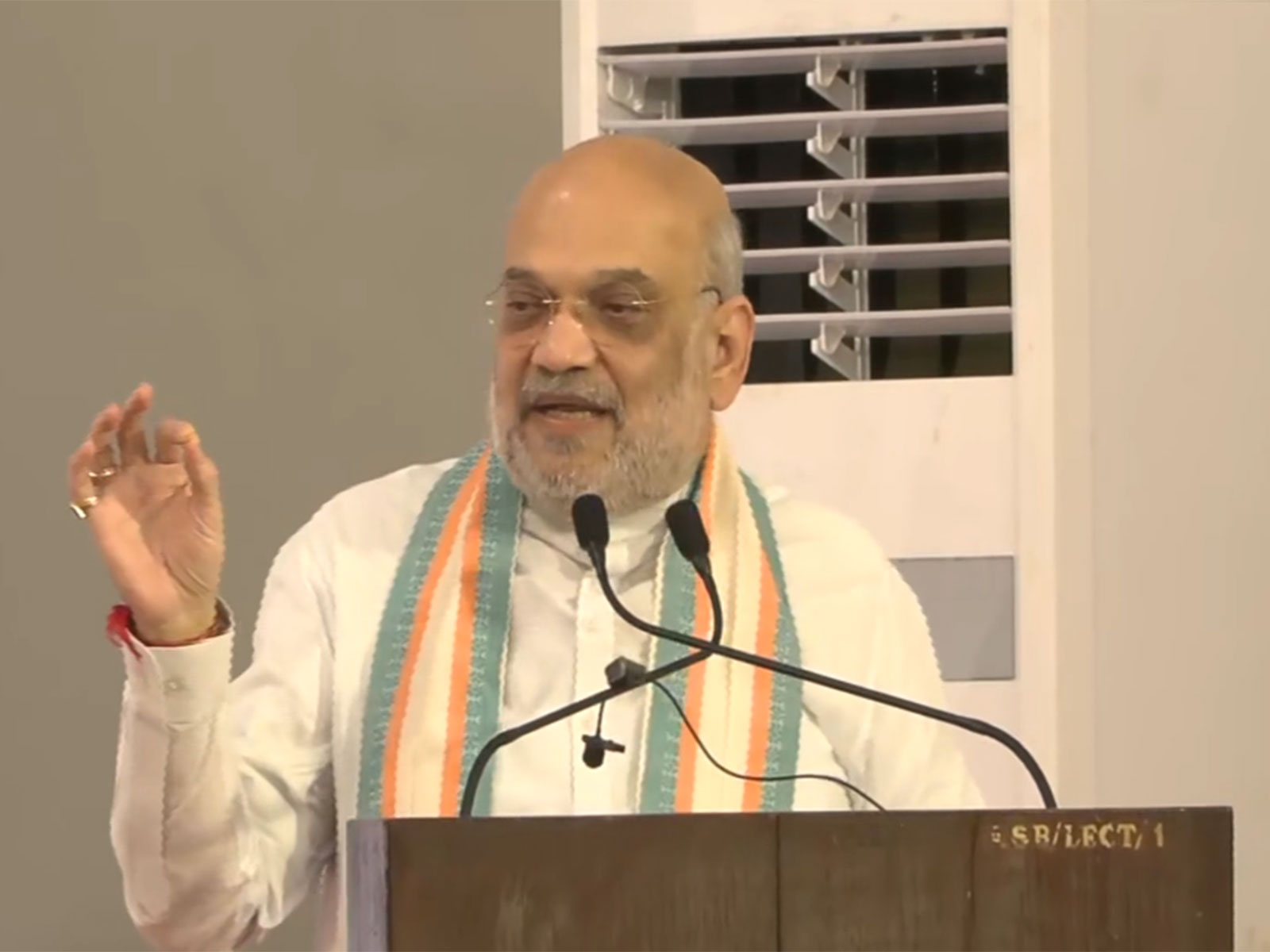
Mumbai (Maharashtra) [India], September 13 : Union Home Minister Amit Shah on Sunday visited the Asiatic Society of Mumbai and inaugurated the 'Ganesh Gyanarthi' exhibition, where he asserted that the true essence of decolonisation lies in presenting authentic history from an Indian perspective rather than erasing the past.
Addressing a gathering alongside the institution's newly elected committee, Shah emphasised that knowledge traditions must be liberated from colonial frameworks that historically intertwined intellect with political dominance.
“The new committee that has been formed, it is their responsibility to understand the objectives of the Indian knowledge tradition and take the knowledge that is bound within a building of a few square meters, and spread it across the nation, spread it across the world, and gain acceptance for it,” Shah said.
Pointing out the historical convergence of knowledge and administration under British rule, Shah added, “Many such things are lying here. The British worked to weave knowledge and power into each other. Our task is to completely detach knowledge and power, so that power is created and built on the foundation of knowledge, and the country functions on that basis. The Asiatic Society must work to build such a system.”
Addressing debates surrounding historical preservation, Shah rejected claims that history is being unlawfully altered.
“Many times, there is talk in the country that history is being erased. I do not agree with those scholars. The process of decolonisation is not about erasing history. It means presenting history completely, authentically, and from an Indian perspective before the people once again. That is decolonisation, and it must happen,” Shah said.
“Because they made history, knowledge, traditions, and culture a tool to preserve their own power. Today, to free knowledge from that, we have moved forward toward decolonisation,” Amit Shah added.
Highlighting the rich archival holdings of the institution, Shah noted the presence of rare manuscripts.
He said, “A great deal of things are lying here, including an illustrated copy of the Mahabharata. Such texts of Jain Kalpasutra and Buddhism are hardly available anywhere else; such texts are lying here. Much knowledge is present here that should have come out a long time ago.”
Praising the cultural legacy of Maharashtra, Shah stated, “Maharashtra is the land of Saraswats (scholars). The priority and importance of Saraswati (knowledge) have been determined in the very energy of this land from the beginning. My expectation from the new team that has come to the Asiatic Society of Mumbai is that the reservoir of knowledge lying here, the ocean of knowledge that has been bound, should be expanded.”
Shah further outlined a three-pronged vision for the society's growth and explained, “This expansion should take place from three perspectives. The Asiatic Society should work to seek out and bring scholars from Maharashtra and across the nation who can dive into the ocean of knowledge within this building. All such libraries across the country where heritage is preserved should be brought together on a common platform under the leadership of the Asiatic Society of Mumbai.”
Proposing a grassroots archival initiative, Shah asked, “However, can the Asiatic Society launch a campaign to collect ancestral documents lying in the homes of pundits across the villages of Maharashtra? Can these be collected and linked with the Gyan Bharatam manuscript survey? Can research facilities be established here across various departments under the Gyan Bharatam National Manuscript Campaign? Because within these manuscripts lies immense knowledge, and there is a need to conduct research on this knowledge. A great power to take the nation forward lies within them.”
Amit Shah recalled the conceptualisation of the mission and shared, “When I held the first informal meeting for the Gyan Bharatam Manuscript Mission before the mission was formally established, a Jain monk said that the seeds to make India the best in the world, economically and in terms of defence, lie within these manuscripts, and research arrangements must be made for them.”
Reflecting on the engagement, Shah said, “When I had agreed to come here, I did not know that a speech program would be organised. But I was informed the day before yesterday. It was very good to meet all of you, I felt good. And with this new team, I will come once comfortably to sit together in an informal manner like this as well. This should be taken forward.”
Home Minister advocated for active collaboration with the central government, suggesting grassroots campaigns to be connected with the Asiatic Society of Mumbai to trace, archive, and study ancestral documents preserved across villages and households in Maharashtra.
“And across the country, in every village, in every city, in every state, all institutions of this kind should be connected with the Asiatic Society of Mumbai to create a shared pool of knowledge. It should be made available for students across the country, for researchers across the country, and for scholars across the country.”
The Union Home Minister urged the citizens to move forward in using Indology for the welfare of the entire world
“My endless, endless best wishes to the new team. May you do well, work to take the Indian knowledge tradition forward, and let us move forward in using Indology for the welfare of the entire world. This is my request to all of you,” Amit Shah said.