Second Iranian supertanker evades US Navy blockade to reach Indonesian waters, says TankerTrackers
May 04, 2026
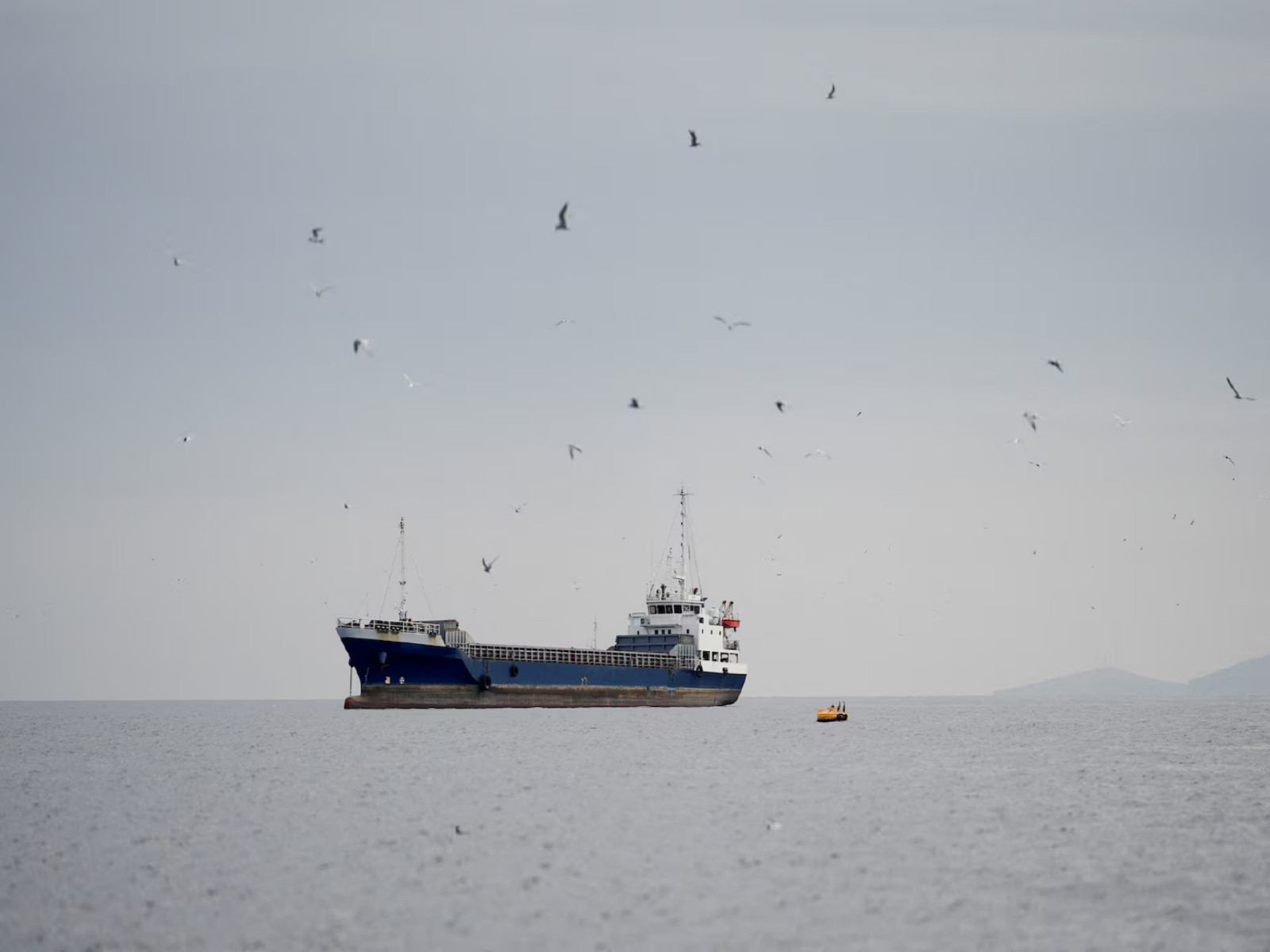
Jakarta [Indonesia], May 4 : An oil shipping monitoring firm has reported that a second Iranian Very Large Crude Carrier (VLCC) has successfully evaded the US Navy and is currently navigating Indonesian waters towards the Riau Archipelago.
In a report shared on X, TankerTrackers.com stated that the vessel, identified as the DERYA, is traversing the Lombok Strait in Indonesia. This movement follows a failed attempt to deliver 1.88 million barrels of Iranian crude oil to India in mid-April.
https://x.com/TankerTrackers/status/2051103403292393891?s=20
Detailing the tanker's movements, TankerTrackers.com noted, "We then spotted her continuing south after that, at a time when her sister ships in the area were being redirected back to Iran by the US Navy." The monitoring group further added that the ship is "currently underway to her rendezvous point in the Riau Archipelago."
This development follows an earlier disclosure by the tracking firm that another Iranian supertanker, the HUGE, had also managed to bypass the US Navy. That vessel, which is carrying 1.9 million barrels of oil, was similarly spotted in the Lombok Strait heading towards the Riau region.
According to data provided by the monitoring firm, approximately 25 tankers departed from Iran with crude oil during the month of April. Within this fleet, the US Navy successfully redirected seven vessels back to Iranian ports, while US forces seized another two tankers.
The reporting from TankerTrackers.com suggests that the remaining vessels from the April departures have either reached their intended destinations or have arrived at their designated rendezvous points. This includes the National Iranian Tanker Company's vessel HUGE, which successfully bypassed the US Navy to reach the Asia-Pacific.
Transporting over 1.9 million barrels of crude oil, with an estimated value of nearly USD 220 million, the HUGE was last spotted off the coast of Sri Lanka more than a week ago. The monitoring firm noted that the vessel had not transmitted on the Automatic Identification System (AIS) since March 20, following its departure from the Strait of Malacca for Iran.
These findings coincide with claims by Iranian state media on April 29 that at least 52 ships had successfully breached the American blockade. Despite these reported breaches, Al Jazeera reports that US officials contend the blockade is proving effective and has resulted in the loss of billions in revenue for Tehran.
Washington asserts that the country is currently unable to export oil and will be pressured to store its supplies until storage capacity is exhausted and production is forced to a halt.
Amid these tensions over oil exports, Donald Trump has announced a new initiative titled "Project Freedom" to assist commercial vessels currently trapped in the Strait of Hormuz.
In a post on Truth Social on Sunday (local time), Trump explained that various nations had reached out for American help to ensure their ships could navigate out of the strategic waterway safely.
Trump noted that these requests came from "Countries from all over the World, almost all of which are not involved in the Middle Eastern dispute going on so visibly, and violently, for all to see."
He stated that these nations asked if the United States could "help free up their Ships, which are locked up in the Strait of Hormuz, on something which they have absolutely nothing to do with."
Asserting that the US would step in to guarantee the safe passage of these vessels, Trump maintained that the move was "For the good of Iran, the Middle East, and the United States."
He further clarified that Washington has informed these nations that American forces "will guide their Ships safely out of these restricted Waterways, so that they can freely and ably get on with their business."
Trump emphasised that the operation focuses on ships from regions "that are not in any way involved with that which is currently taking place in the Middle East."
He confirmed that he had instructed his representatives to relay that the US "will use best efforts to get their Ships and Crews safely out of the Strait."
Once these vessels have cleared the area, Trump indicated they would stay away for the foreseeable future, noting that "they said they will not be returning until the area becomes safe for navigation, and everything else."
According to Trump, "Project Freedom" is scheduled to commence on Monday morning (Middle East time).
He framed the movement as a way to "free up people, companies, and Countries that have done absolutely nothing wrong" and described the crews as "victims of circumstance."
Labelling the mission a "Humanitarian gesture on behalf of the United States, Middle Eastern Countries but, in particular, the Country of Iran," Trump highlighted the deteriorating conditions for those on board.
He pointed out that "Many of these Ships are running low on food, and everything else necessary for large-scale crews to stay on board in a healthy and sanitary manner."
However, Trump issued a stern warning against any attempts to disrupt the mission, stating that if the process is "interfered with, that interference will, unfortunately, have to be dealt with forcefully."
The maritime initiative comes as Trump revealed that US officials are currently engaged in "very positive discussions" with Tehran.
He suggested these talks "could lead to something very positive for all," even as he simultaneously rejected Iran's latest conflict-resolution proposal as "not acceptable."
In response, Iranian Foreign Ministry spokesperson Esmaeil Baghaei confirmed that Tehran is reviewing Washington's reply to their submission.
As reported by Iran's Tasnim news agency, the Iranian proposal seeks an end to hostilities on multiple fronts, including Lebanon, while demanding the withdrawal of US forces near Iran, the release of frozen assets, and the lifting of sanctions.
While the US has advocated for a two-month ceasefire, Iran is reportedly pushing for a shorter 30-day window, prioritising a permanent end to the war over a temporary truce.